
Title Alzheimer’s Disease and Its Impact on Human Health
Alzheimer's disease is one of the most common neurodegenerative disorders affecting the elderly population worldwide. It is characterized by a progressive decline in memory, thinking abilities, and cognitive functions. This disease gradually affects a person’s ability to perform daily activities and maintain independence. Alzheimer’s disease is considered the most common cause of dementia, a condition that leads to deterioration in intellectual and social abilities.
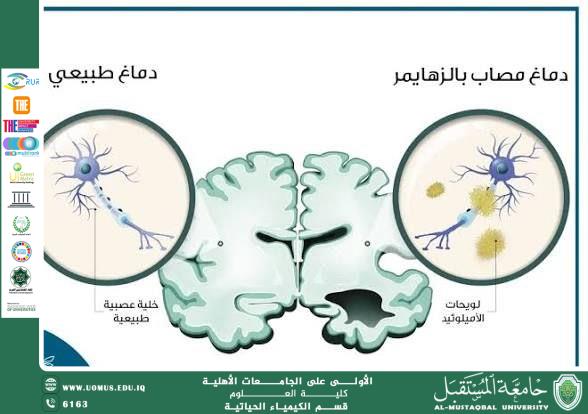
The development of Alzheimer’s disease is associated with complex changes in the brain that lead to the damage and loss of nerve cells. Scientific studies have shown that the accumulation of abnormal proteins in the brain plays a major role in the progression of the disease. Among the most important of these proteins are Beta-amyloid and Tau protein. These proteins accumulate in the brain forming plaques and neurofibrillary tangles that disrupt communication between neurons and eventually lead to cell death.
The symptoms of Alzheimer’s disease usually begin gradually. Early signs often include mild memory loss, particularly difficulty remembering recent events or newly learned information. As the disease progresses, patients may experience increased confusion, difficulty concentrating, and problems with language and decision-making. In advanced stages, individuals may suffer from severe memory impairment, behavioral changes, and a loss of the ability to perform basic daily tasks independently.
Although the exact cause of Alzheimer’s disease is not fully understood, several risk factors have been identified. Aging is considered the most significant risk factor, as the likelihood of developing the disease increases with age. Genetic factors may also play an important role in certain cases. In addition, some health conditions such as cardiovascular diseases, hypertension, and diabetes may contribute to an increased risk of developing Alzheimer’s disease.
Currently, there is no complete cure for Alzheimer’s disease. However, several medications are used to help manage symptoms and slow the progression of cognitive decline. Among these medications are Donepezil and Memantine. These treatments work by improving communication between nerve cells and supporting cognitive functions for a limited period of time.
Recent research suggests that adopting a healthy lifestyle may help reduce the risk of developing Alzheimer’s disease. Regular physical activity, maintaining a balanced diet, engaging in continuous learning, and participating in social activities are considered beneficial for maintaining brain health. Adequate sleep and mental stimulation are also important factors that may contribute to reducing the risk of neurodegenerative disorders.
In conclusion, Alzheimer’s disease represents a major health challenge due to its increasing prevalence and significant impact on patients and their families. Increasing awareness of this disease and encouraging scientific research aimed at understanding its causes and mechanisms are essential steps toward developing more effective prevention and treatment strategies in the future.
Al-Mustaqbal University
The First Among Iraqi Private Universities