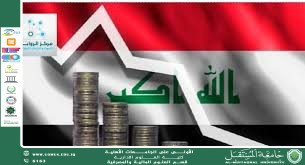
Monetary Policy and Economic Reform in Iraq
Modern political theory has emphasized the importance of monetary policy in positively impacting the overall economic situation by providing productive capital. This capital directly contributes to generating the necessary funds to create a foundation for economic growth. Interest rates should be proportional to the level of growth and the quantity of products, ultimately leading to a balanced economic policy.
This is crucial for achieving many objectives related to sound policy and, consequently, to a balanced economic policy overall. But on the political level, efforts have certainly expanded the money supply and increased the volume of currency in circulation. This expansion should be accompanied by development in economic activity and local growth, which provides the necessary protection for national forces against a slight decline and deterioration in purchasing power and the value of the exchange rate against other currencies. This expansion, while achieving an increase in supply and a rise in the local level, affects the appropriate level to achieve what consumes the general budget, avoids a deficit, and provides more money.
However, in Iraq, the actual performance of policy has been different. The money supply was only 12 trillion dinars in 2003, while today it has reached more than 100 trillion dinars. The current projection is 2026, without reaching this large size in terms of growth in the mass, which is witnessing a clear impact at the effective level. This is due to the change in inequality and poverty, as the accumulated wealth has not developed in the production of service products. Rather, the results have been the opposite after graduation. The main sector (agriculture) has lost a large percentage of human resources due to this large increase in the workforce. This necessitates real growth in the internal and external output, which indicates a clear failure of the forces to achieve the necessary strengths. The responsibility for the economic reform, especially that which the Iraqi people aspire to, is not to show that the country has an industrial base to operate at a rate of 24% of the general budget before the occupation in 2003, to be transformed into buildings and equipment that affect the revolutionaries and the economy faces almost partially in locally made products and transformation. The basic factors of this large weight and large size and continuous over time are included, not in the current cases that are threatening, especially imminent, at a good level, well and financially.