Sustainable Development (Asst. Prof. Sarab Abbas Jasim)
Women are considered a fundamental element in building and developing societies, as sustainable development in its comprehensive meaning cannot be achieved without the active participation of women in various fields of life. Sustainable development is not limited to the economic aspect only, but also includes social, environmental, and cultural dimensions. Women play a central role in all these aspects, whether within the family, society, or state institutions.
Throughout history, women have proven their ability to contribute to the development of society through their participation in education, work, care, and guidance. They are the first educators of generations, through whom values, principles, and behaviors are shaped, all of which influence the future of society. Therefore, empowering women scientifically, culturally, and professionally is considered an essential step toward achieving sustainable development based on justice, equality, and equal opportunities.
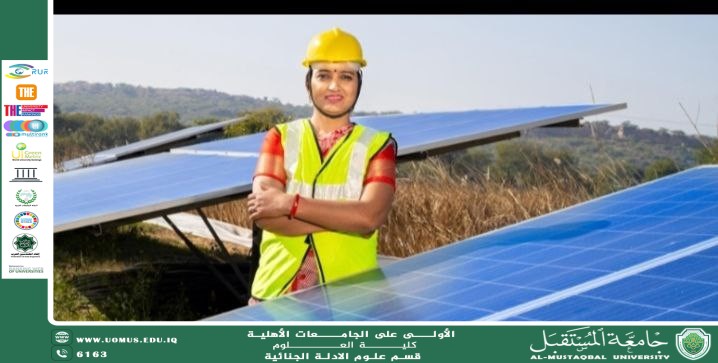
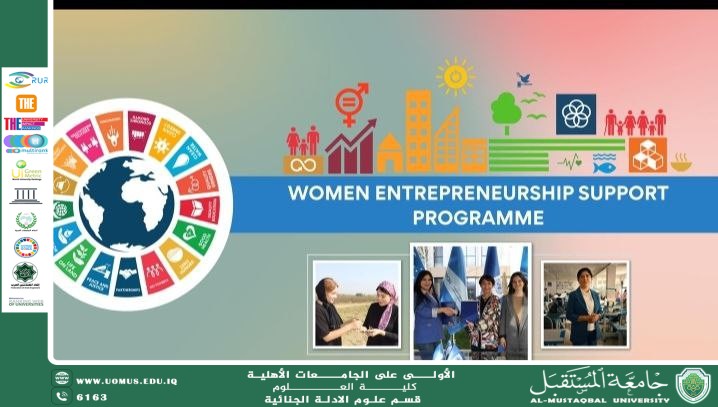
In the economic field, women contribute to supporting production, increasing income, and improving living standards, whether through their work in official sectors or through small projects, home-based businesses, and community initiatives. Women’s participation in the labor market benefits not only women themselves, but also has positive effects on the family, society, and the national economy as a whole. Moreover, empowering women economically helps reduce poverty and unemployment, which are among the most significant challenges facing sustainable development.
In the social field, women play an important role in strengthening family cohesion and spreading health, educational, and cultural awareness. They contribute to raising children to respect the environment, rationalize consumption, and preserve resources, all of which are values closely linked to the concept of sustainable development. Women also participate in voluntary work and social activities that aim to serve society and improve quality of life.
On the environmental level, women have come to play a prominent role in spreading environmental awareness and participating in initiatives that call for environmental protection and the responsible use of natural resources. As partners in managing family affairs and daily life, women are able to influence individuals’ consumption behavior, such as reducing waste, recycling, and conserving water and energy. This makes them important actors in achieving environmental sustainability.
Despite this significant role, women in some societies still face many challenges that hinder their full participation in the development process, such as limited educational opportunities, weak economic empowerment, social restrictions, and insufficient participation in decision-making. Hence, the importance of developing policies and programs that support women and provide them with a suitable environment for creativity, work, and participation becomes clear, because the progress of society is closely linked to the progress and empowerment of women.
True sustainable development can only be achieved through a balanced partnership between men and women, based on recognizing women’s abilities and giving them the position they deserve in various fields. Women are not merely supportive elements in development; rather, they are key partners and influential forces in building the present and shaping the future. Therefore, supporting and empowering women represents a real investment in the development of societies and the sustainability of their progress.
Al-Mustaqbal University – the first university in Iraq.