Cellular immunity vs. humoral immunity(Asst. Lecturer Huwayda Nazzal Hussein)
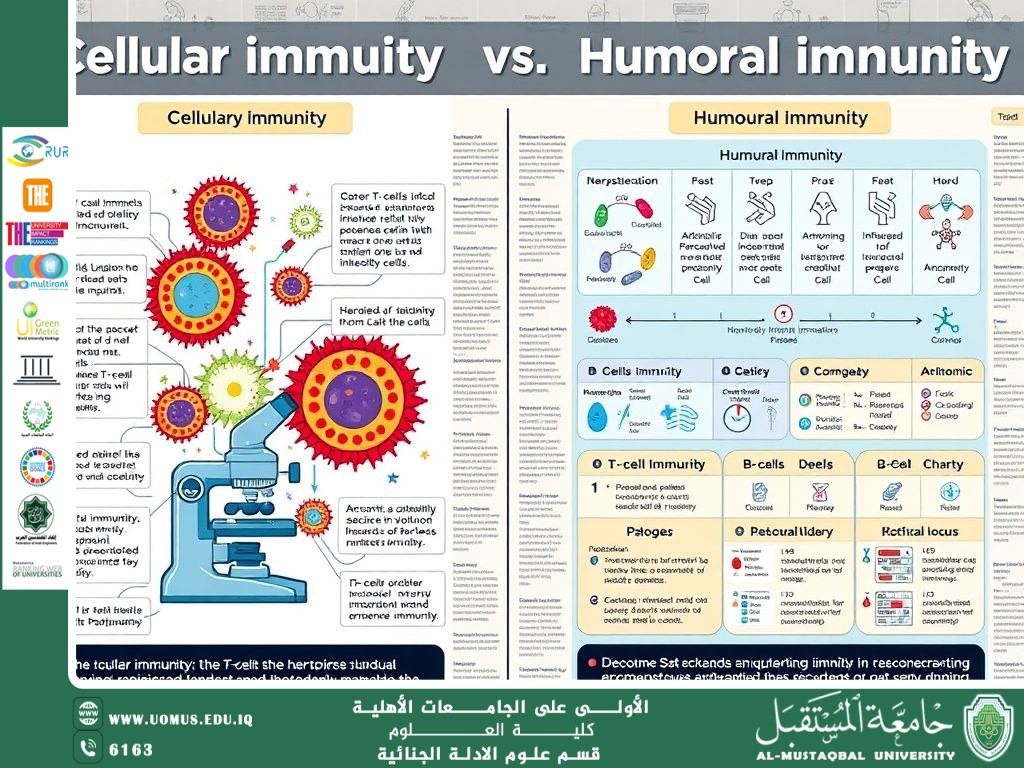
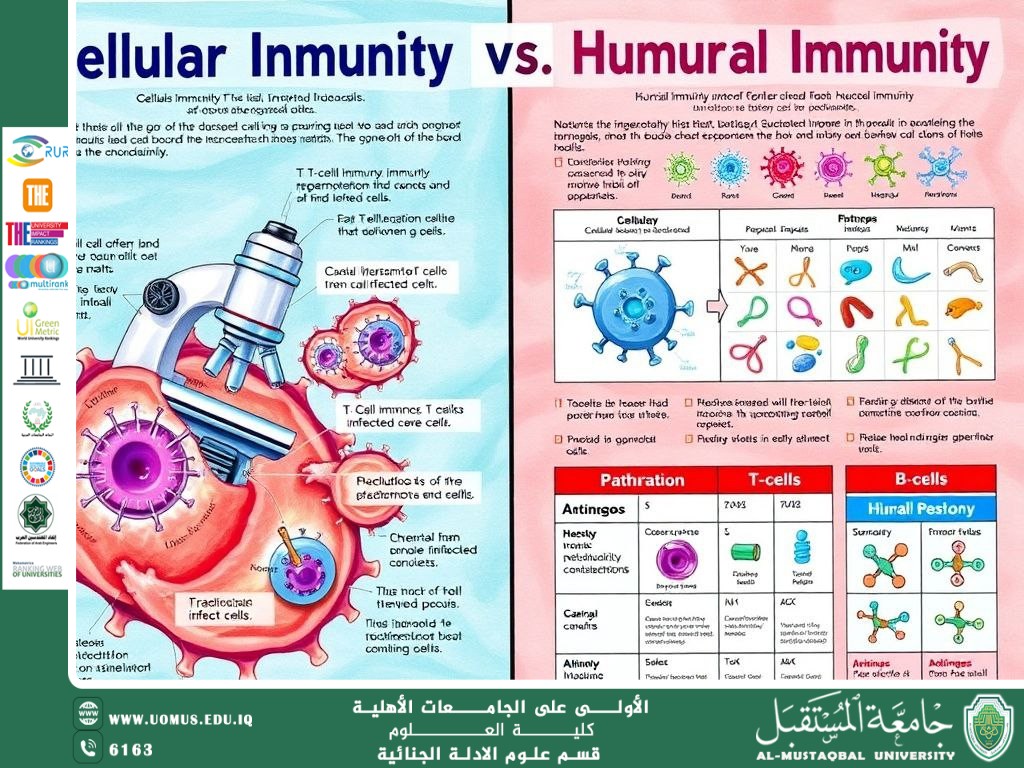
The human immune system functions through a complex network of cells and molecules that protect the body from pathogens such as bacteria and viruses. Adaptive immunity can be divided into two major types: humoral immunity and cellular immunity.
Humoral immunity mainly involves B lymphocytes (B cells). When the body encounters an antigen, B cells differentiate into plasma cells that produce antibodies. These antibodies bind to antigens on pathogens and help neutralize them or mark them for destruction by other immune cells.
Cellular immunity, on the other hand, is mediated primarily by T lymphocytes (T cells), especially cytotoxic T cells. These cells recognize infected or abnormal cells and destroy them directly.
The main difference between the two types is that humoral immunity targets pathogens present outside cells, while cellular immunity focuses on infected cells inside the body. Both systems work together to provide comprehensive protection against infections.
Al-Mustaqbal University – the first university in Iraq.