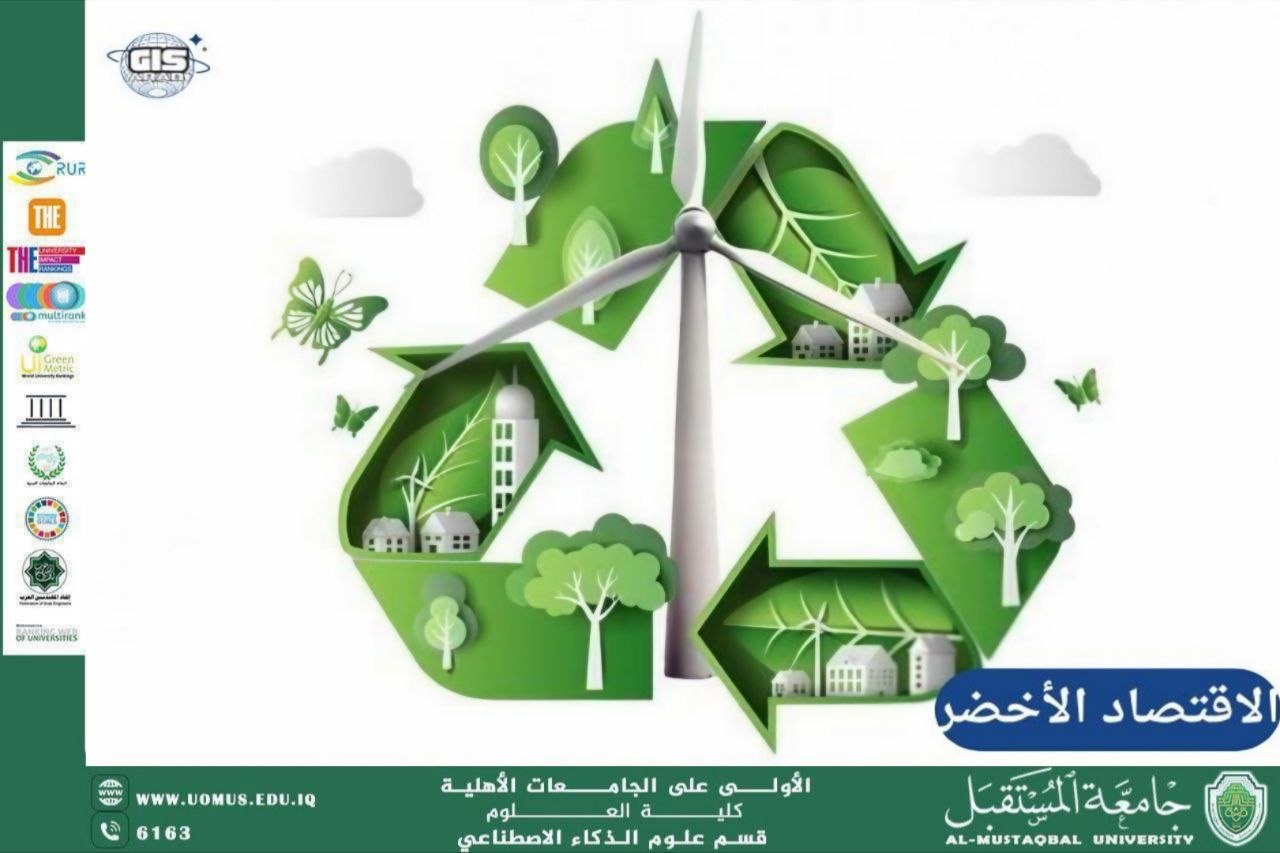
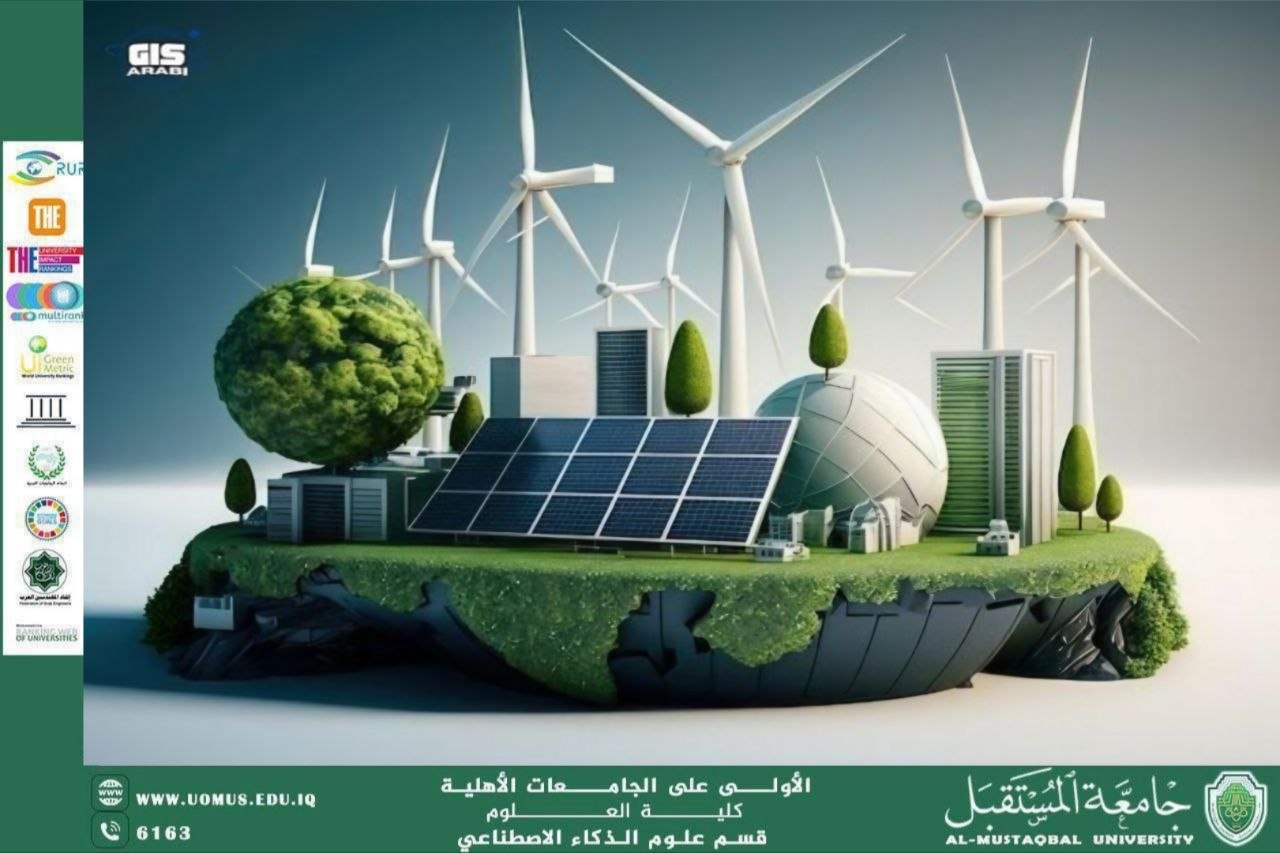
An academic article titled "The Green Economy as an Alternative to Traditional Development" by Lecturer Samar Hussein Hilal
Green economy as an alternative to traditional development
Environmental pollution has become one of the most prominent challenges facing humanity in the modern era, encompassing air, water, soil, noise, and radiation pollution, all of which directly and indirectly impact human health. Polluted air contains fine particles and toxic gases such as carbon monoxide, sulfur dioxide, and nitrogen oxides, leading to respiratory problems such as asthma, bronchitis, and chronic lung diseases. Water pollution caused by industrial and agricultural waste disposal results in the spread of gastrointestinal diseases and heavy metal poisoning, such as mercury and lead, affecting liver and kidney functions. Soil contamination with pesticides and heavy metals compromises food quality and increases the risk of cancers and endocrine disorders. Excessive noise contributes to high blood pressure, sleep disturbances, and psychological stress, while exposure to industrial or radioactive radiation increases the likelihood of cancer and immune system disorders. The psychological impacts of environmental pollution include anxiety and depression due to living in polluted and unhealthy environments, which in turn affect quality of life. Vulnerable populations include children, the elderly, and individuals with chronic illnesses, whose resistance to pollution is lower. To address these challenges, it is essential to implement strict policies to reduce harmful emissions, enhance environmental awareness, promote clean energy sources, improve industrial and agricultural waste management, and develop continuous environmental quality monitoring systems. Civil society and health institutions play a key role in tracking environmental issues and influencing policymakers to establish preventive strategies. Investment in scientific research studying the link between various pollution types and human diseases contributes to developing effective solutions, while international cooperation is crucial to combat transboundary pollution effects. Individual awareness, such as using clean transportation and preserving natural resources, can mitigate health risks. Ultimately, maintaining a clean environment is not merely an aesthetic requirement or luxury; it is an investment in human health and future life quality, and a vital necessity for ensuring the sustainability of life on Earth for coming generations.