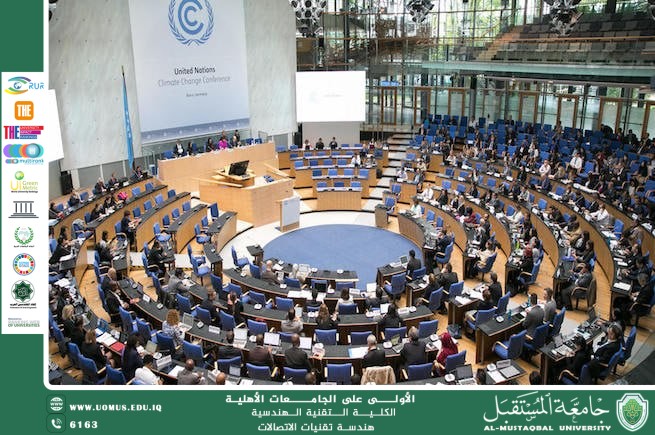

International Responsibility in Addressing Climate Change
International responsibility in addressing climate change is considered one of the most important issues occupying the global community in the modern era. This is due to the wide-ranging impacts of this phenomenon on the environment, economy, public health, and food security across countries worldwide. Climate change is no longer a local issue affecting a single state; rather, it has become a global challenge that requires comprehensive international cooperation, as its effects cross borders and impact all nations to varying degrees. International responsibility is reflected in the commitment of states to take collective actions aimed at reducing harmful emissions and maintaining environmental balance in order to protect both present and future generations.
This responsibility has emerged through international agreements that aim to establish a legal framework regulating states’ obligations in this field. One of the most prominent of these is the Paris Agreement, which emphasizes the importance of limiting the rise in global temperatures and reducing greenhouse gas emissions. It also obliges countries to develop clear national plans to achieve shared environmental goals, taking into account differences in economic and technological capacities. This agreement reflects the principle of “common but differentiated responsibilities,” which means that all countries share the duty of protecting the environment, while industrialized nations bear greater responsibility due to their historical contribution to global pollution.
International responsibility is also demonstrated through the provision of financial and technical support to developing countries to help them address the impacts of climate change. These countries are often the most affected, despite contributing less to global emissions compared to industrialized nations. Therefore, international institutions and environmental organizations work to provide funding programs and development projects that promote the use of clean energy, improve natural resource management, and enhance the ability to adapt to extreme climate phenomena such as droughts, floods, and rising temperatures.
Moreover, international responsibility includes strengthening scientific cooperation and the exchange of expertise among countries. Addressing climate change requires the development of modern technologies that reduce dependence on polluting energy sources and encourage the use of sustainable alternatives such as solar and wind energy. In addition, raising environmental awareness within societies and promoting national policies that support environmental sustainability are essential components of this responsibility.
The success of international responsibility in this field depends on the genuine commitment of states to implement their obligations rather than merely issuing political declarations. The climate threat continues to grow over time and requires a real response based on justice and international cooperation. Through such collaboration, better environmental protection can be achieved, ensuring a more stable future for humanity.
Prepared by:
Assistant Lecturer Hassanin Alaa Mohammed
Al-Mustaqbal University – The Leading Private University in Iraq