Green Chemistry: Towards a Safe and Sustainable Chemical Industry
Assist. Prof.Dr. Thamer Abdul Hamza Al-Alwani
Al-Mustaqbal University
College of Health and Medical Technologies
Department of Radiology Technology
Green Chemistry
Green chemistry refers to the field of chemical products that reduce sweating through more precise production processes and testing in industries that widely use commercial materials. Green chemistry aims to increase the safety of finished products and reduce the production of hazardous waste (such as oils and pesticides, which contribute to oxygen depletion and have a significant impact on many other green spaces). For these reasons, green chemistry is also known as advanced chemistry, and it has been gaining popularity for the past three decades. Green chemistry is the adoption and design of chemical products and processes that reduce or eliminate the use of hazardous materials, with the goal of preventing pollution at its source and promoting environmental and economic sustainability. For these reasons, many scientists in the fields of chemistry and the environment began to seriously and systematically consider green chemistry in 1991, spearheaded by Paul Anastas at the U.S. Environmental Protection Agency (EPA), where a research program focused on preventing pollution at its source rather than treating it was launched. This concept was formally codified with the publication of the Twelve Principles of Green Chemistry in 1998.
The awarding of the Nobel Prize in Chemistry to several scientists in 2001 (Knowles, Noyri, Sharpless) and 2005 (Yves Chauvin, Robert H. Grubbs, Richard R. Schrock) for their research in areas of chemistry largely considered green chemistry played a significant role in promoting the importance of green chemistry research and helped create greater awareness among scientists that the future of chemistry must be greener.
Applications of Green Chemistry:
- Using renewable raw materials instead of fossil fuels.
- Developing safe and environmentally friendly solvents (such as water or supercritical carbon dioxide).
- Using catalysts to increase reaction efficiency and reduce energy consumption.
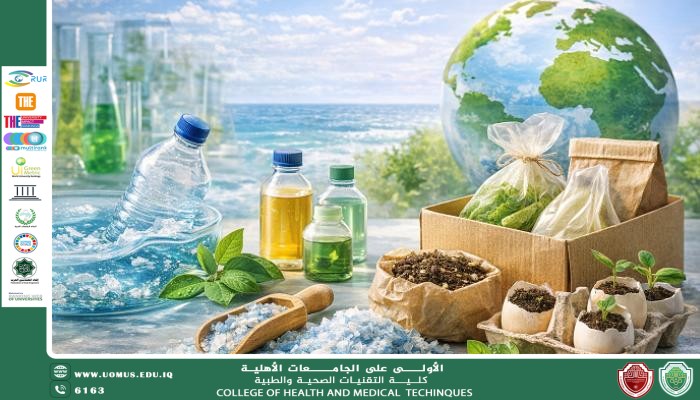
- Designing biodegradable materials (bioplastics).
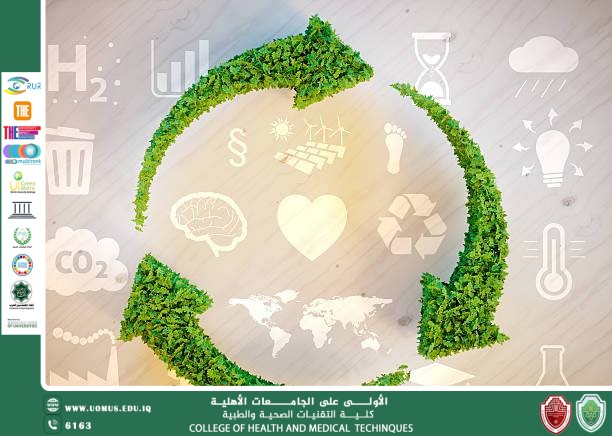
- Green chemistry is an essential tool for achieving sustainable development, combining economic efficiency with environmental protection.
Principles of Green Chemistry:
There are twelve principles, and nine of these have been selected based on our current needs in our country.
1. Preventing waste formation is preferable to treating or cleaning waste after it has been generated.
2. Designing industrial processes to maximize the integration of all materials used in the process into the final product. 3. Designing synthetic methodologies that utilize and generate materials with minimal or no toxicity to human health and the environment. 4. Designing chemical products that maintain effectiveness and function while minimizing toxicit 5. Using auxiliary materials (such as solvents, separation agents, etc.) as little as possible and in a harmless manner when used.
6. Attention should be paid to the environmental and economic impacts of energy requirements, and these should be minimized. Artificial processes should be conducted at ambient temperature and pressure. 7. Raw materials or primary materials should be renewable wherever technically and economically feasible.
8. Chemical products should be designed so that they do not settle in the environment at the end of their life cycle and decompose into harmful byproducts.
9. Materials used in chemical processes should be selected and designed to minimize the risk of chemical accidents, including emissions, explosions, and fires.
Through these objectives and the methods for achieving them, we must design processes to maximize the amount of raw materials that ultimately end up in the final product. We should utilize renewable resources as raw materials and energy sources, and employ safe and environmentally friendly materials, including solvents, whenever possible. We must also avoid generating waste, which is considered the ideal form of waste management.
It is crucial that we adhere to these principles to create a clean environment and maintain a healthy and green environment.