Employing Modern Teaching Methods in Teaching English in Iraq
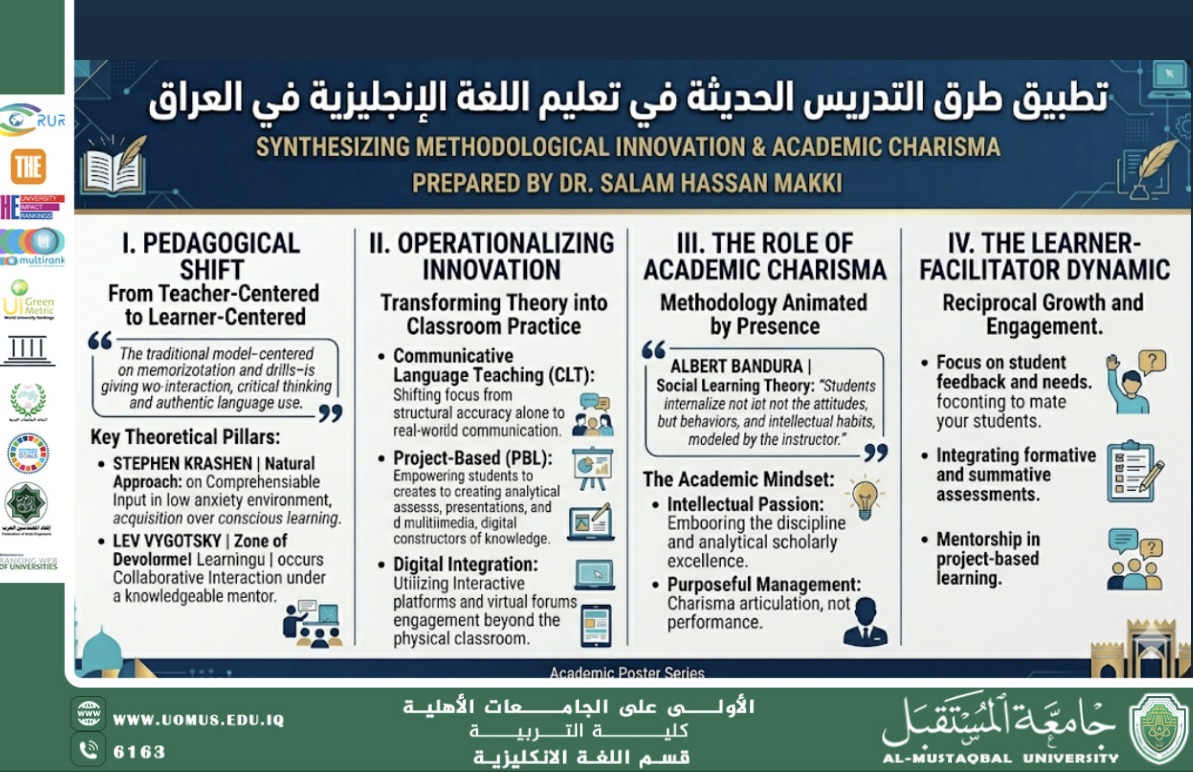
The teaching of English in Iraq is gradually shifting from traditional methods—focused on memorization and grammar drills—to modern, student-centered approaches that promote interaction, critical thinking, and real communication. This change also redefines the teacher’s role as a facilitator, mentor, and intellectual leader.
Modern theories support this transformation. Stephen Krashen emphasizes the importance of comprehensible input in a low-anxiety environment, encouraging communication over strict correction. Meanwhile, Lev Vygotsky highlights the value of collaboration through his concept of the Zone of Proximal Development. These ideas stress interaction, guidance, and active learning.
In practice, methods such as Communicative Language Teaching, project-based learning, and digital tools can be applied in Iraqi classrooms. These approaches encourage students to actively participate, think critically, and use language in meaningful contexts rather than passively receive information.
However, successful teaching depends not only on methods but also on the teacher’s mindset and presence. A passionate and knowledgeable teacher inspires students and creates a motivating learning environment. Albert Bandura explains that students learn through observation, meaning teachers serve as role models in both behavior and thinking.
In Iraqi universities, where student levels vary, combining modern techniques with strong academic guidance is essential. Lessons can move from engagement to discussion and finally to independent thinking, turning classrooms into interactive learning spaces.
In conclusion, improving English teaching in Iraq requires both modern strategies and strong academic influence. When effective methods are combined with an inspiring teacher, learning becomes active, meaningful, and impactful.
by Dr. Salam Hassan Makki
جامعه المستقبل الاولى في العراق