Renewable Energy and the Future Toward Sustainability
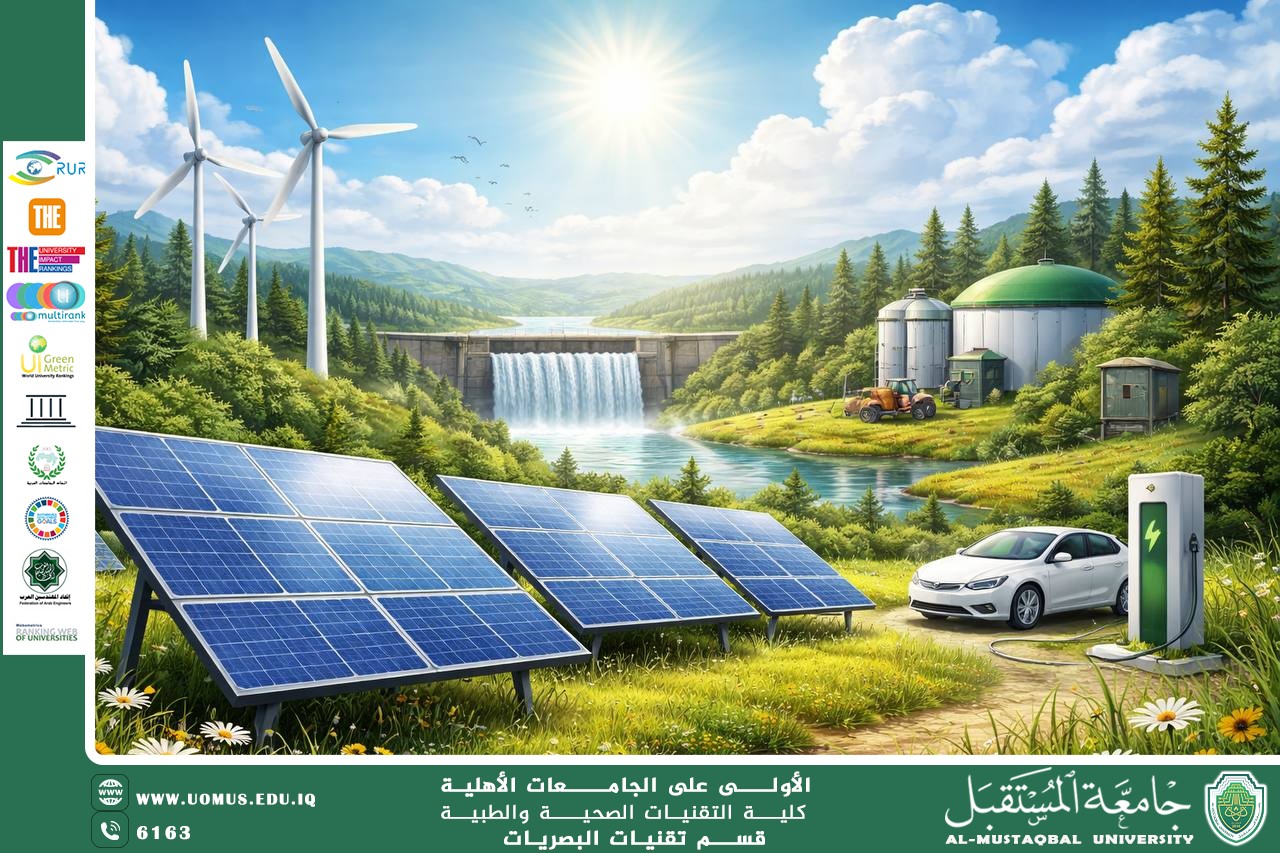
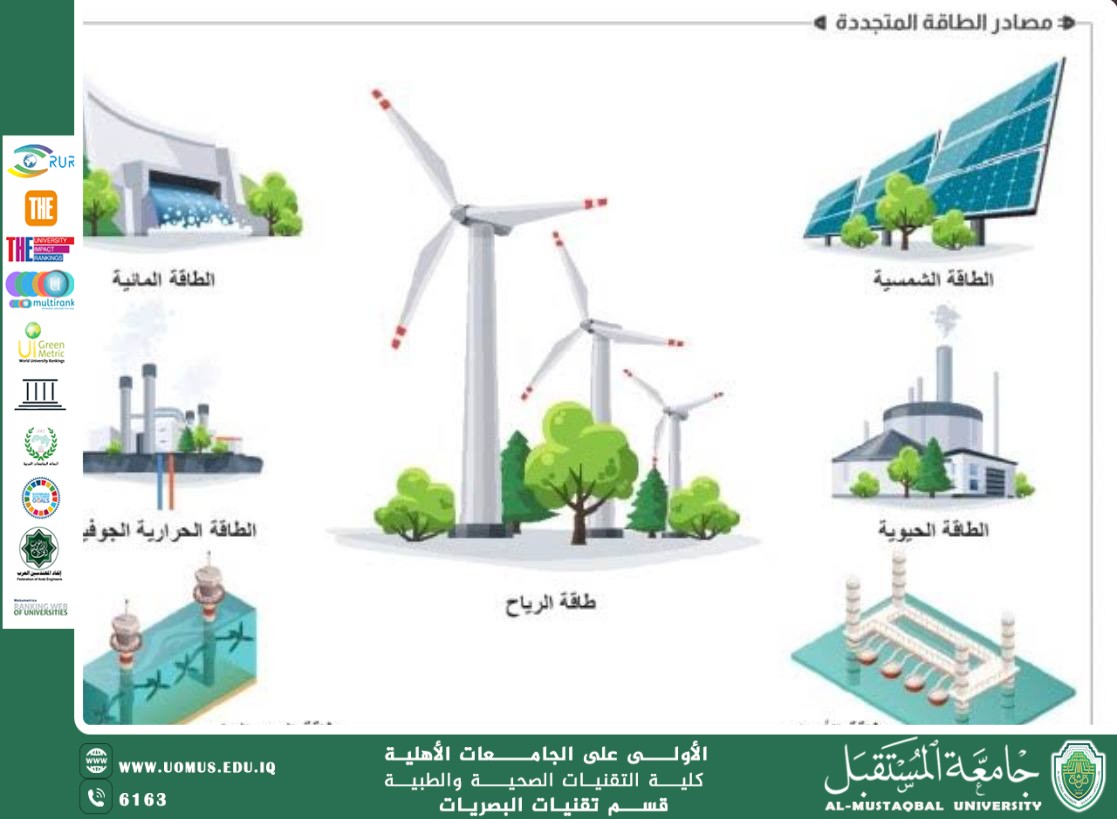
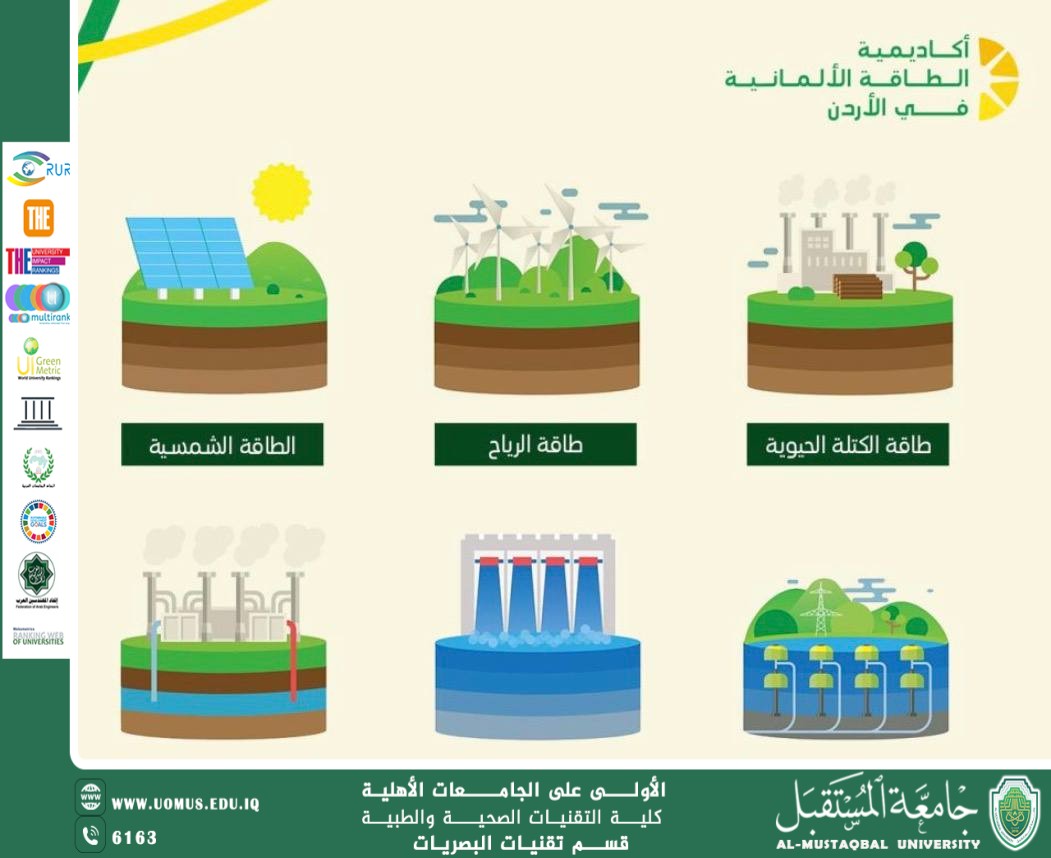
Renewable energy is considered one of the most important solutions to address growing environmental challenges, particularly climate change and environmental pollution. It includes energy sources such as solar energy, wind energy, hydropower, and biomass, all of which are naturally replenished and sustainable over time.
Currently, most countries rely heavily on fossil fuels such as oil and coal. The combustion of these fuels releases large amounts of greenhouse gases, especially carbon dioxide, which contributes to global warming and climate change. Therefore, transitioning to clean energy sources has become an urgent necessity to protect the environment and human health.
Renewable energy offers several advantages, including reducing environmental pollution, conserving natural resources, and providing sustainable energy for future generations. Additionally, it creates new job opportunities in green industries and clean technologies.
Despite its benefits, renewable energy faces some challenges, such as high initial installation costs and dependence on natural conditions like sunlight and wind speed. However, continuous technological advancements are helping to overcome these challenges and improve efficiency.
In conclusion, renewable energy is a cornerstone for building a sustainable environmental future. It represents a strategic and essential choice for maintaining ecological balance and achieving sustainable development.
Mrs. Reham Safaa Najem
University of Al-Mustaqbal – The First and Leading Private University