

The Impact of Excessive Water Consumption on Body Electrolyte Balance.
Introduction
Water is essential for life, constituting about 50–60% of total body weight. It participates in nearly all vital physiological processes. While health organizations recommend adequate daily intake, excessive consumption driven by the belief that “more is better” can have adverse effects. This article reviews the physiological roles of water, the potential benefits of higher intake within normal limits, and the risks associated with overconsumption, with guidance on safe boundaries.
Physiological Roles of Water
Water contributes to:
• Regulation of body temperature through sweating.
• Transport of nutrients and oxygen via the bloodstream.
• Elimination of waste products through the kidneys.
• Lubrication of joints and tissues.
• Maintenance of electrolyte balance (sodium, potassium).
Potential Benefits of Increased Water Intake (Within Normal Limits)
1. Improved Kidney Function
Adequate hydration dilutes urine, which may reduce salt crystallization and lower the risk of urinary stone formation.
2. Enhanced Cognitive Performance
Even mild dehydration can impair attention; proper hydration restores optimal mental performance.
3. Indirect Support for Skin Health
By promoting circulation and overall fluid balance.
4. Appetite Regulation
Drinking water before meals may reduce overeating in some individuals.
What Happens When Water Is Consumed Excessively?
When intake exceeds the kidneys’ excretion capacity (about 0.8–1.0 L/hour in healthy adults), a serious condition can occur:
Hyponatremia (low blood sodium)
Mechanism
• Excess water dilutes sodium concentration in the blood.
• Water shifts into cells due to osmotic gradients.
• Cells swell; the brain is at greatest risk due to the confined space of the skull.
Symptoms
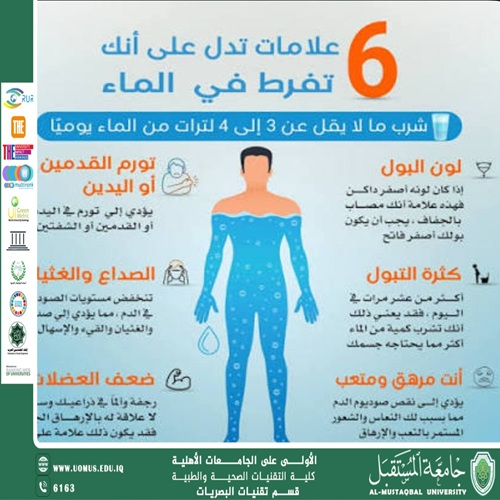
• Headache, nausea, vomiting.
• Confusion and dizziness.
• Muscle cramps.
• In severe cases: seizures, coma, and potentially death.
Other Effects of Overhydration
Effect Scientific Explanation
Renal strain Increased filtration workload over time
Electrolyte imbalance Disruption of sodium and potassium levels
Frequent urination Loss of electrolytes and sleep disturbance
Mild limb swelling Due to expanded fluid volume
Who Is at Higher Risk?
• Athletes who drink large volumes of water without electrolyte replacement.
• Individuals with heart or kidney disease.
• People taking diuretics.
• Those following “water challenges” without medical awareness.
What Is a Safe Amount?
There is no one-size-fits-all rule, but practical guidance includes:
• 2–3 liters per day for adults in moderate climates.
• Increase intake with heat, sweating, and physical activity.
• Use urine color as a guide: pale yellow indicates good hydration.
• Avoid drinking more than 1 liter per hour.
Conclusion
Water is vital, but “more” is not always “better.” Balanced hydration supports bodily functions, whereas excessive intake may lead to hyponatremia and serious complications. Moderation, attention to body signals, and context-based intake are the keys to healthy hydration.
Tamara nuhad abaas
University of Al-Mustaqbal – The First and Leading Private University