Article Title: "The Problematics of Color in Contemporary Ceramics between Form and Content"By: Asst. Lect. Saja Fadhil
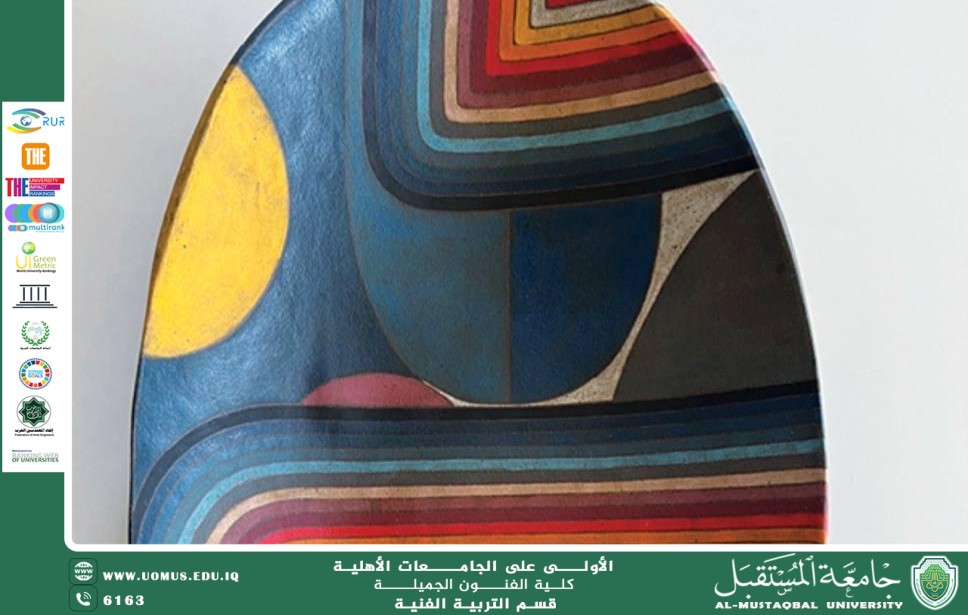
Color is one of the most prominent visual elements contributing to the transformations of contemporary ceramic art. It is no longer confined to being a superficial aesthetic value or a complementary decorative element; rather, it has become an active structural component that participates in shaping meaning and producing significance within the artwork. With this transformation, a problematic relationship has emerged between color as a formal manifestation—linked to the surface and external appearance—and the content that reflects the idea or expressive dimension. This has made color a dialectical axis in reading contemporary ceramic works.
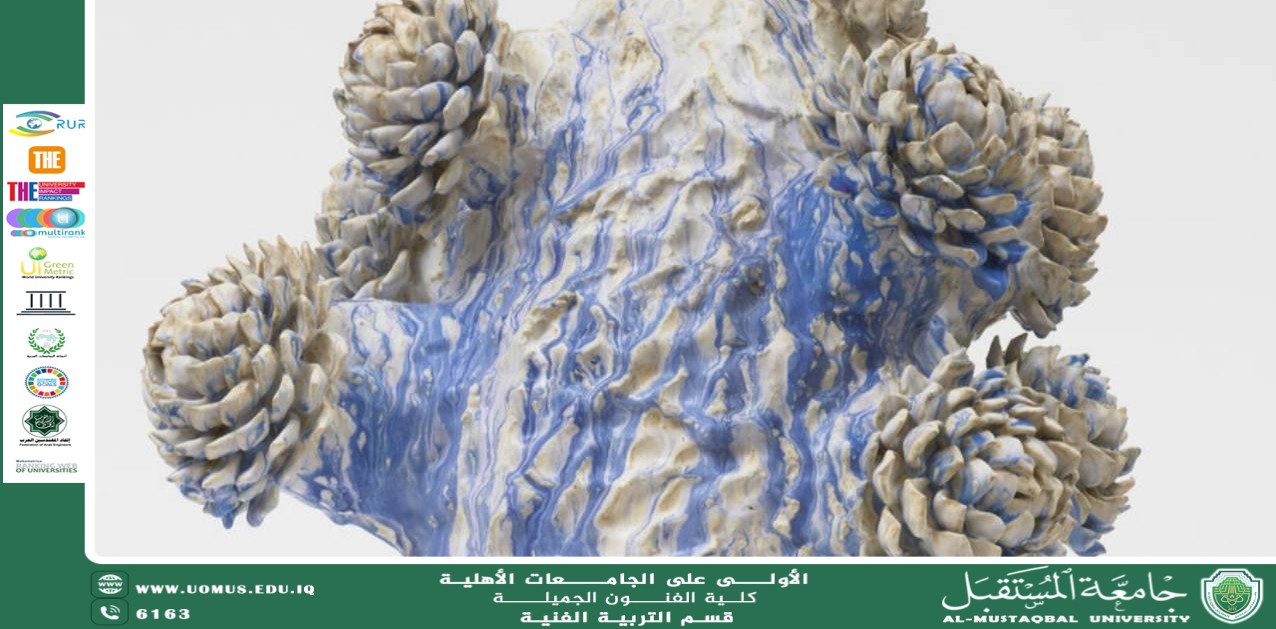
Technically, color in ceramics is linked to the glazing layer that covers the surface, granting it various visual properties such as luster, transparency, and depth. However, these properties are not static or under the artist's full control; they are influenced by complex factors including clay type, glaze composition, kiln temperatures, and chemical reactions during the firing process. Consequently, color turns into a variable and unstable element, lending the ceramic work an experimental nature and an unpredictable dimension. In this context, color plays a formal role in highlighting mass, emphasizing texture, and organizing visual relationships between the parts of the work, linking it to the external structure and its perceptual appearance.
However, contemporary ceramics has transcended this traditional understanding, granting color a deeper role that goes beyond the boundaries of form toward expressing content. Color has become a means of visual communication carrying psychological, symbolic, and cultural connotations. It can reflect specific emotional states or refer to symbolic meanings rooted in the collective consciousness. Color is no longer just a visible attribute but an understood language, capable of conveying ideas and evoking responses in the recipient without the need for additional mediums. In this framework, artists intentionally employ color to create visual tension or semantic paradox, sometimes contradicting the form or reinterpreting it, which enhances the depth of the aesthetic experience and provides the work with multiple dimensions for interpretation.
The experimental trend in contemporary ceramics has contributed to deepening this problematic. Artists have moved toward exploring new possibilities for materials and techniques, freeing themselves from the traditional constraints that dictated the use and function of color. This has led to the emergence of bold and diverse works where colors overlap and interact in unusual ways, producing complex visual effects that carry both formal and expressive dimensions simultaneously. This orientation toward experimentation has not only enhanced the aesthetic value of ceramic work but has also contributed to redefining the role of color as a dynamic element that participates in constructing meaning rather than being a mere superficial addition...Almustaqbal University, The First University in Iraq..