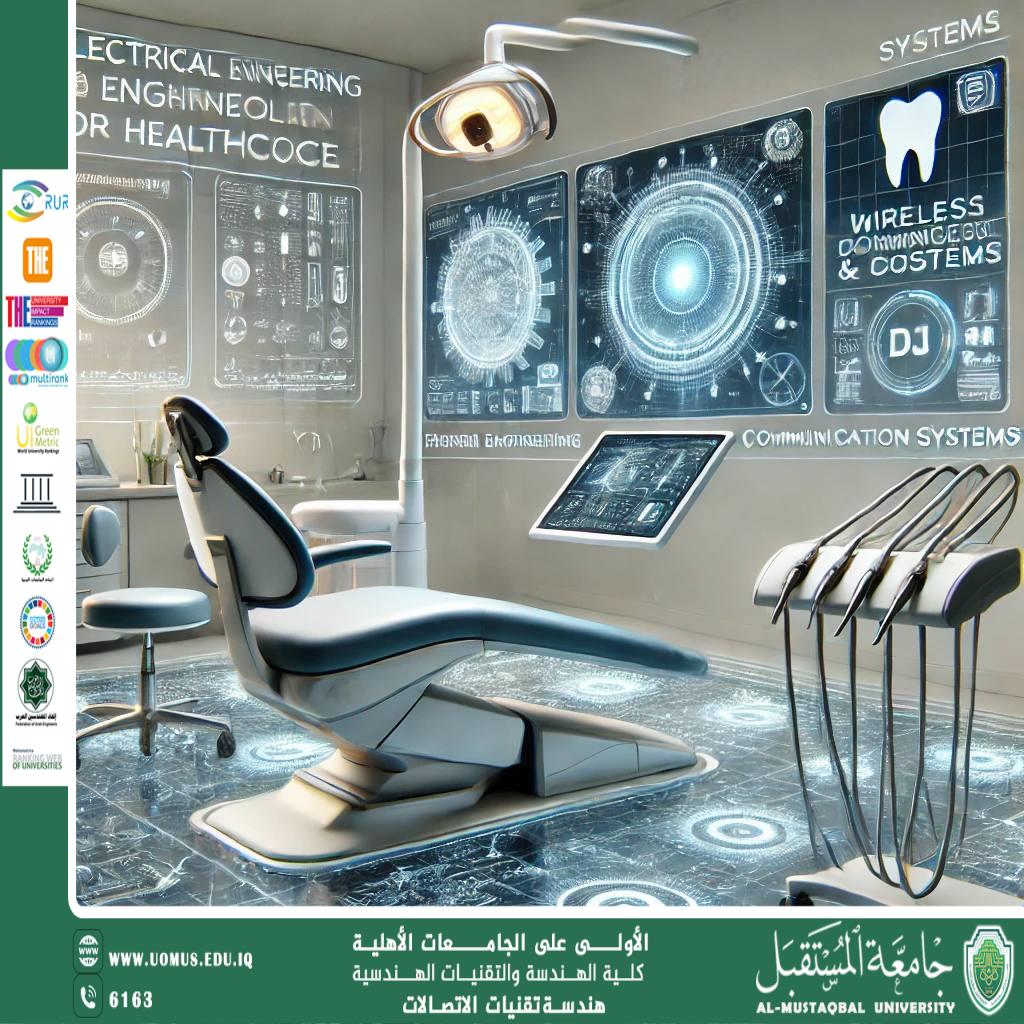
"Future Technologies in Dentistry: The Role of Electrical Engineering and Communications in Developing Smart Devices and Supporting Sustainability in Healthcare"
<br />"The dental sector has witnessed remarkable development in recent years thanks to modern technologies, with electrical engineering and communications playing a central role in driving this sector toward the future. One of the most prominent developments is the invention of smart devices that contribute to improving diagnosis and treatment, as well as enhancing the effectiveness of healthcare services. This includes the application of advanced sensing technologies, which rely on complex electrical systems capable of accurately analyzing medical images, such as digital radiography devices, which help in early detection of oral diseases, thus accelerating the treatment process and avoiding complications.<br /><br />On the other hand, modern communication technologies allow doctors to remotely communicate with patients via advanced networks, making healthcare more accessible, especially in remote areas. Additionally, connected smart devices allow doctors to continuously monitor patients' conditions, contributing to better management of chronic diseases and providing timely care. These solutions highlight the role of electrical engineering in creating an advanced medical environment that promotes innovative and safe healthcare.<br /><br />In terms of sustainability, these technologies are a major support in achieving sustainable development goals, especially the third goal related to good health and well-being. For example, 3D printing helps in producing dental prostheses more efficiently, reducing medical waste and lowering production costs. Moreover, modern medical devices are highly efficient in energy consumption, which reduces their environmental footprint and enhances healthcare sustainability.<br /><br />In conclusion, the integration of electrical engineering and communications in dentistry represents a significant step toward providing more effective, advanced, and sustainable healthcare. These technologies not only enhance the quality of healthcare services but also directly contribute to achieving sustainability goals, especially by reducing waste and energy consumption, making healthcare more sustainable and less impactful on the environment."<br /><br />