

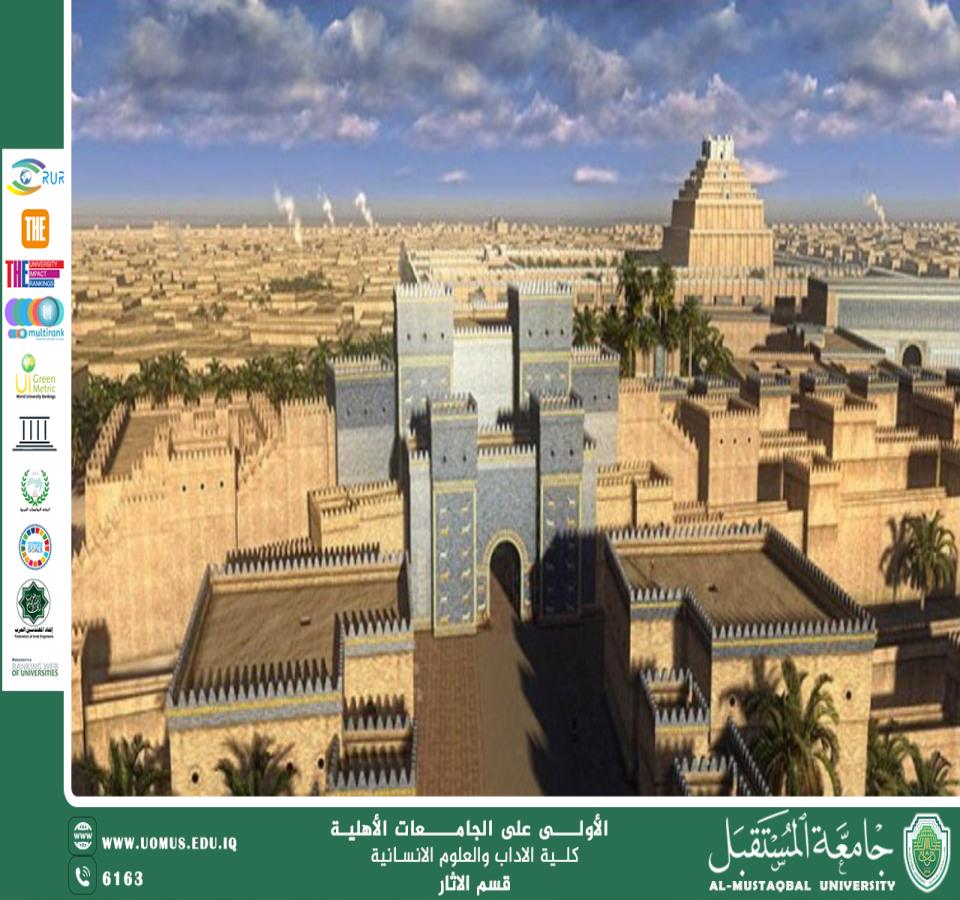
The Archaeological City of Babylon: A Legacy of History and an Unforgettable Civilization
The Archaeological City of Babylon: A Legacy of History and an Unforgettable Civilization<br />Administrative Officer Kawthar Aqeel Kazim.<br />Introduction<br />Babylon is considered one of the greatest ancient cities that served as a center of civilization in Mesopotamia, and it has influenced the course of history and human culture through the ages. Today, Babylon attracts archaeologists, history enthusiasts, and cultural tourism aficionados due to its remarkable archaeological landmarks and as a testimony to a rich and magnificent civilization.<br /><br />History and Origin<br />Babylon arose on the banks of the Euphrates River and developed into a major political, economic, and cultural center. During the reign of King Nebuchadnezzar II, the city reached its zenith in architecture, arts, and sciences. Babylon played a pivotal role in the exchange of cultural and commercial experiences between the East and the West, making it a crossroads of diverse cultures.<br /><br />Archaeological Landmarks and Architectural Achievements<br />Among Babylon’s most prominent landmarks are:<br /><br />Massive Walls and Historic Gates: Babylon was surrounded by huge fortifications that rendered it a well-defended city.<br />The Hanging Gardens: Although there is ongoing debate about their actual location, they remain a symbol of Babylonian civilization and a testament to its architectural splendor and prosperity.<br />Temples and Palaces: The ruins of temples and palaces still reveal the exquisite design and innovative construction techniques of the ancient builders.<br />Cultural and Civilizational Significance<br />Babylon became a symbol of innovation in fields such as writing, sciences, and the arts. The cultural achievements of Babylon contributed to the development of writing systems, law, and administration, and the city served as an inspiration for many later civilizations. Moreover, Babylon played a vital role in transmitting cultural and literary heritage through inscriptions and texts recorded on clay tablets.<br /><br />Archaeological Discoveries and Modern Findings<br />Recent archaeological excavations have unveiled many secrets about Babylon. Clay tablets and inscriptions have been discovered that narrate the lives of its inhabitants and provide details about their administrative and religious systems. These findings help researchers better understand the foundations and evolution of Babylonian civilization over the centuries.<br /><br />Cultural Tourism and the Importance of Preservation<br />Today, Babylon is an important tourist site that attracts visitors from around the world. Its architectural and artistic remains vividly illustrate the life of an ancient civilization that left a lasting imprint on history. Preserving and restoring these artifacts is both a challenge and an opportunity to enhance historical and cultural awareness for future generations, as well as to boost cultural and economic tourism in the region.<br /><br />Conclusion<br />The archaeological city of Babylon stands as a living testament to human ingenuity and creativity in the fields of architecture, arts, and sciences. By preserving its heritage and highlighting its historical significance, we contribute to enriching the global cultural identity and pave the way for learning the lessons that ancient civilizations can offer in our modern era.<br /><br />Al‑Mustaqbal University – The Premier University in Iraq.