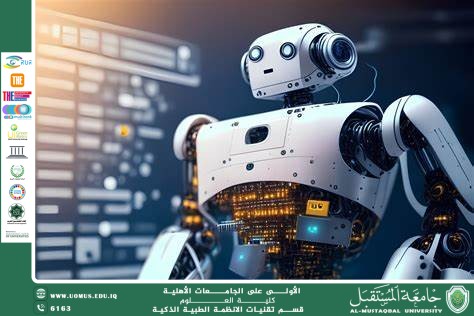
How Smart Robots Contribute to Enhancing Rehabilitation Processes(Asst. Lecturer Ali Salim Haleem).
Smart robots have become one of the key tools in improving rehabilitation processes, as they use advanced technologies to help patients restore their motor functions after injury or surgery. Thanks to artificial intelligence, these robots can design personalized rehabilitation programs based on each patient's needs, enhancing the effectiveness of the treatment and accelerating recovery.<br />Smart robots allow patients to perform exercises under the supervision of a robot, which can adjust the level of difficulty and progress based on the patient’s ability at each stage of rehabilitation. These robots can also provide emotional and psychological support by interacting with the patient in a way that encourages continued treatment.<br />In cases such as burn injuries or strokes, smart robots may provide exercises to stimulate muscles and nerves, helping to restore lost motor functions. Additionally, robots can track the patient’s progress precisely, enabling continuous adjustments to the treatment to achieve the best results.<br />As these robots evolve, they are expected to become an essential part of rehabilitation processes, reducing the need for intensive manual interventions and increasing patients' ability to interact with their surrounding environment.<br /><br /><br />Al-Mustaqbal University is the first University in Iraq.<br />