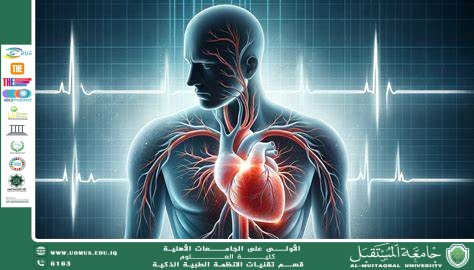
The Role of Biosensors in Early Detection of Heart Attacks(Najat Hameed Jasim).
Biosensors represent an important advancement in the early detection of heart attacks, allowing healthcare to be more proactive and specialized. These sensors are capable of monitoring various vital signs in real-time, such as heart rate, blood pressure, oxygen levels, and stress levels. By analyzing this data, changes that indicate a risk of a heart attack can be detected before the situation worsens.<br />Small and advanced biosensors that can be worn on the body are effective tools for early detection of heart attacks, as they send direct data to doctors or hospitals. These technologies allow the physician to continuously monitor the patient's condition without being physically present in the hospital, helping take immediate preventive actions when necessary.<br />In the event of sudden changes in vital signs, such as an increase in blood pressure or a change in heart rate, alerts are sent to the treating physician, helping them make quick decisions, such as transferring the patient to the hospital or starting immediate treatment. This technology not only provides prevention but also helps reduce response times and minimize damage caused by heart attacks.<br /><br />Al-Mustaqbal University is the first University in Iraq.<br />