
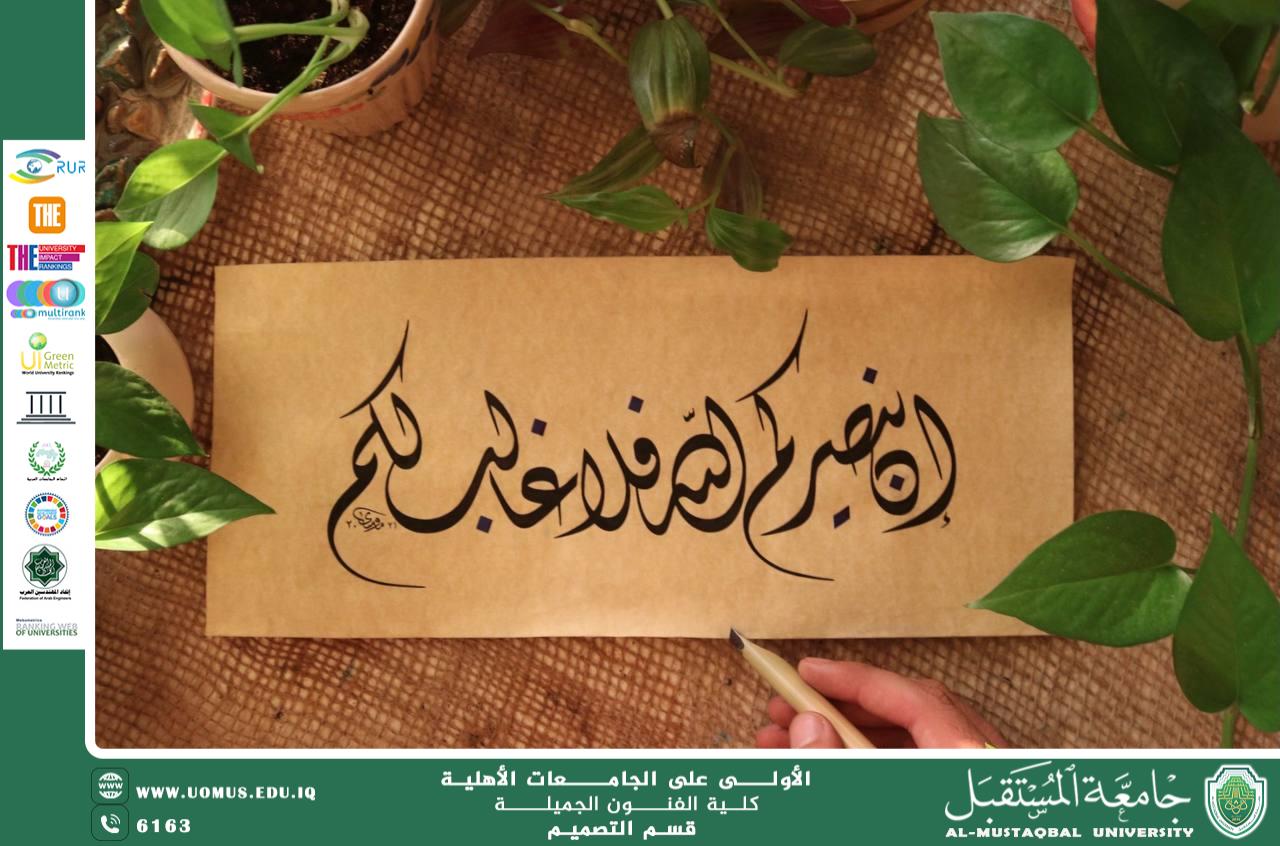
An Article " Green Letters: Towards Sustainable Use of Arabic Calligraphy Materials " By Assistant Lecturer Musa Diaa
In a time when voices advocating for sustainability and environmental preservation are growing louder, it has become essential for traditional arts to engage with this global movement. Arabic calligraphy stands out as one of the most significant arts that can intersect with the concept of sustainability, especially regarding the materials used in its practice and the environmentally conscious techniques applied in its production.<br /><br />Arabic calligraphy emerged as a visual art that expresses the cultural and civilizational identity of the Islamic world. This art flourished through the use of natural tools such as bamboo pens, organic inks, and handmade paper. However, in modern times, a significant shift has occurred in the materials used, with many traditional components being replaced by industrial materials that can harm the environment.<br /><br />This transformation raises an important question: How can Arabic calligraphy become part of the global movement toward sustainability? The answer lies in returning to the roots and exploring eco-friendly alternatives that preserve the authentic character of calligraphy without harming the environment.<br /><br />Important steps in this regard include using biodegradable or reusable tools, such as calligraphy pens made from natural wood or bamboo instead of plastic. Additionally, ink can be produced from plant-based sources, like charcoal or botanical extracts, rather than synthetic chemical inks that contain toxic substances harmful to soil and water when discarded.<br /><br />Calligraphy artists can also play an educational role by promoting a culture of sustainability through their artworks, integrating environmental messages within their calligraphic compositions. Imagine a calligraphic piece spelling out "Do Not Waste" using plant-based ink on recycled paper! This type of art not only carries aesthetic beauty but also conveys a profound ethical message.<br /><br />Sustainability in Arabic calligraphy goes beyond tools and materials; it extends to workshops, exhibitions, and educational curricula. In teaching sessions, students can be trained to craft their own tools from natural materials, enhancing environmental awareness alongside artistic skills.<br /><br />Interestingly, some contemporary initiatives have started to adopt this approach, such as projects in the Gulf region that integrate sustainability concepts into Islamic arts or use Arabic calligraphy in environmental awareness campaigns.<br />In conclusion, sustainability is no longer a luxury or a secondary option — it has become a moral and artistic necessity. Arabic calligraphy, this ancient art, is capable of reshaping itself to be part of this green journey. Just as letters carry the spirit of language, they can also carry the spirit of the earth — when used with awareness and creativity.<br /><br />Al-Mustaqbal University the first university of Iraq .