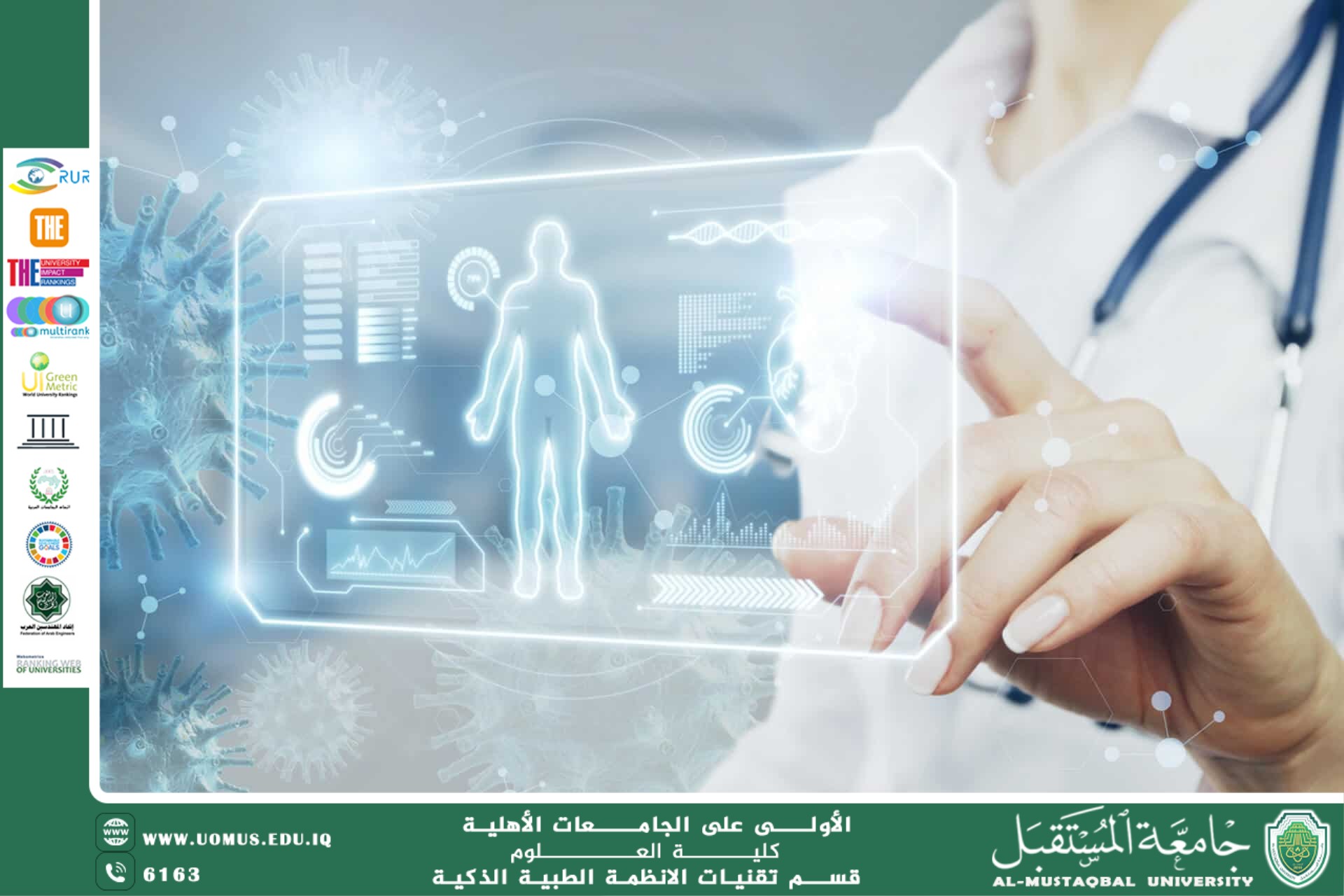
How Artificial Intelligence Is Changing the Future of Personalized Medicine(Huda Khudair Hani).
Personalized medicine represents one of the modern trends in healthcare. It is based on tailoring treatment according to the individual characteristics of the patient, such as genetics, lifestyle, and environment. With the development of artificial intelligence technologies, it has become possible to analyze vast amounts of biological and medical data and provide accurate recommendations tailored to each patient.<br /><br />Artificial intelligence is capable of processing genomic data and a patient’s medical history to detect genetic predispositions to certain diseases, allowing for early preventive measures. Machine learning techniques are also used to predict how a patient will respond to medications, thereby avoiding side effects and offering optimal treatment.<br /><br />Through the analysis of medical images and clinical data, intelligent systems can provide more accurate diagnoses and support clinical decisions made by physicians. For instance, AI algorithms can compare data from a new patient with millions of previous cases to select the best therapeutic approach.<br /><br />Additionally, artificial intelligence contributes to accelerating medical research by simulating clinical trials and identifying new drug targets. However, this advancement requires a strong regulatory framework to protect patient privacy and ensure transparency in algorithm usage.<br /><br />Integrating artificial intelligence with personalized medicine is not merely an improvement in care—it represents a qualitative transformation that places the patient at the center of the medical process and provides physicians with more powerful decision-making tools.<br /><br />Al-Mustaqbal University is the first university in Iraq<br />