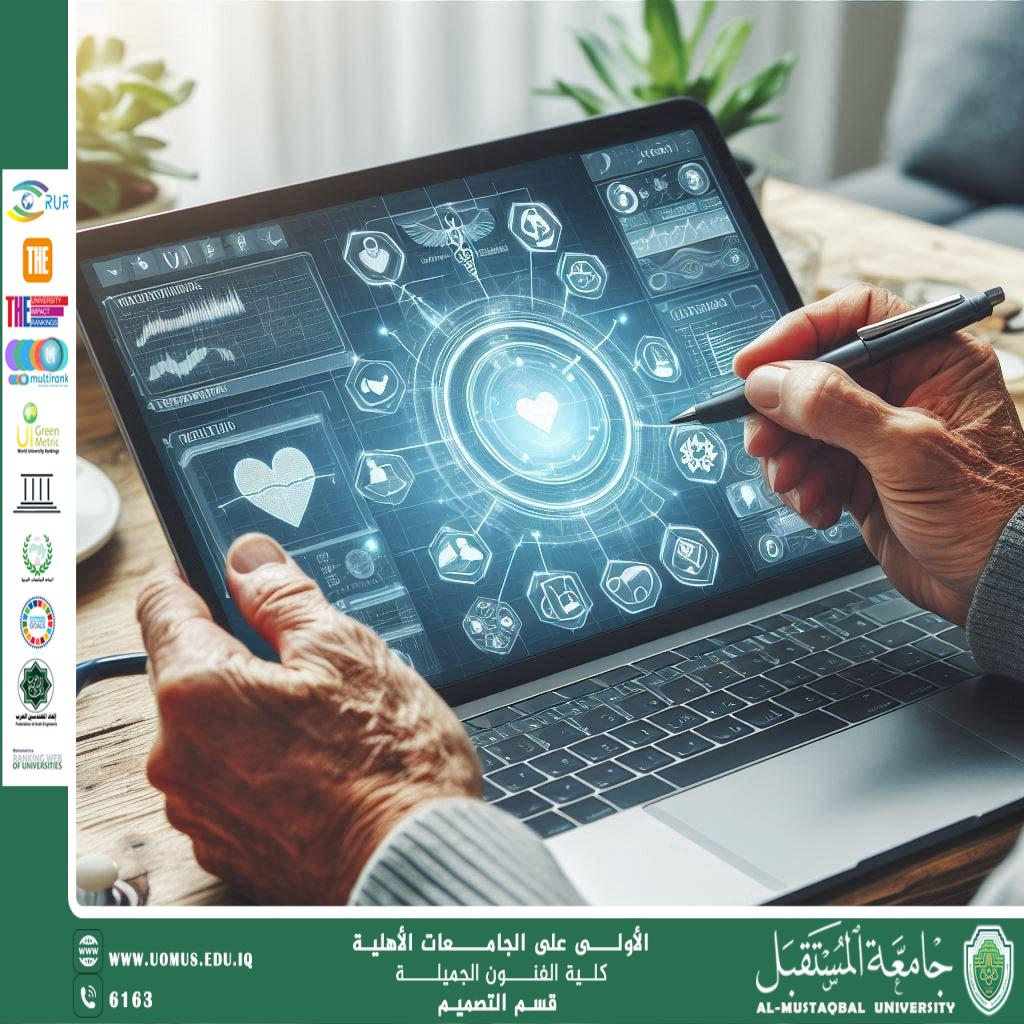
An Article " Designing Smart Medical System Interfaces with Consideration for the Elderly and People with Disabilities – Towards Inclusive and Sustainable Healthcare" By programmer fatima hussien jawad
As smart medical systems rapidly evolve, interface design has become a critical factor in ensuring fair and efficient access to healthcare services. It is therefore essential to develop user interfaces that accommodate the needs of elderly individuals and people with disabilities—ensuring inclusive care that respects individual differences and bridges the digital divide.<br /><br />Older adults may struggle with vision, hearing, or fine motor skills, requiring simple interfaces with large fonts, clear icons, and accessible voice-command options. People with disabilities may benefit from alternative interaction tools such as screen readers, gesture-based controls, or customizable interfaces tailored to their abilities.<br /><br />Designing with inclusivity in mind is not a technical luxury—it is a human necessity that enhances health equity and directly supports the Sustainable Development Goals, particularly:<br /><br />Goal 3 (Good Health and Well-being): by enabling everyone, without exception, to access smart healthcare services effectively and safely.<br /><br />Goal 10 (Reduced Inequalities): by narrowing the digital gap across communities and integrating elderly and disabled users into an inclusive digital healthcare environment.<br /><br />Embedding universal design principles into smart medical systems not only improves the quality of care, but also reinforces values of dignity, empowerment, and social justice—paving the way toward a more inclusive and sustainable healthcare future.<br />Al-Mustaqbal University the first university of Iraq .