Dr. Angham Saleem Mohammed Al-Dulaimi, Head of the Department of Archaeology, writes an article titled “Pictographic Writing.”
Pictographic Writing
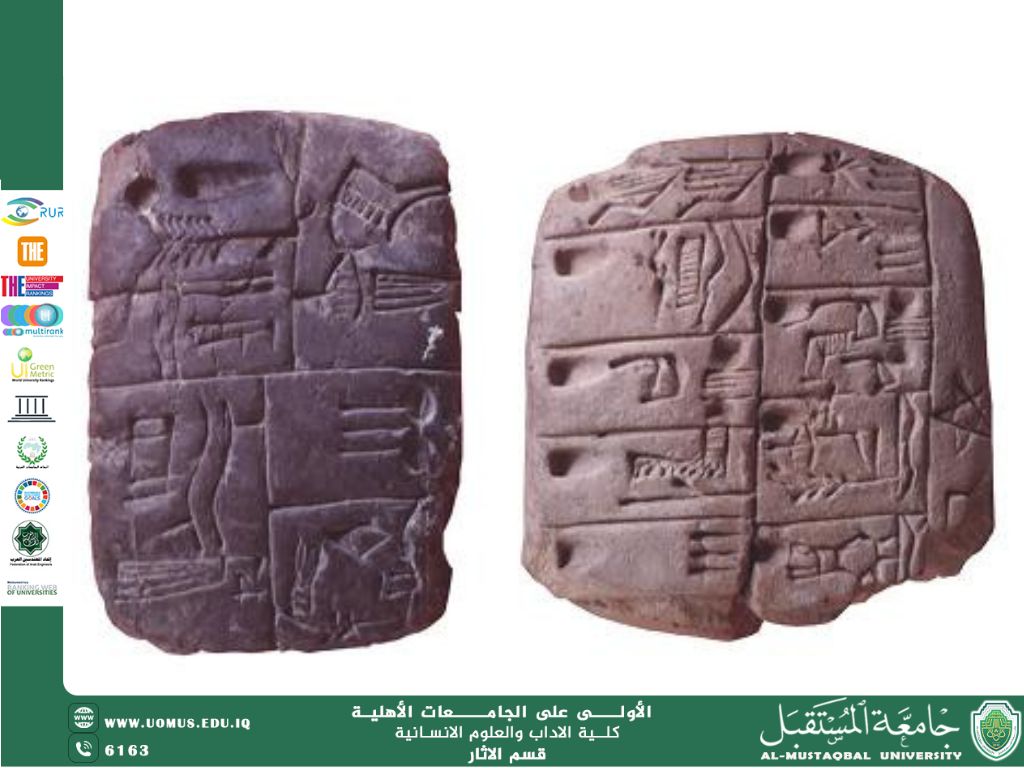
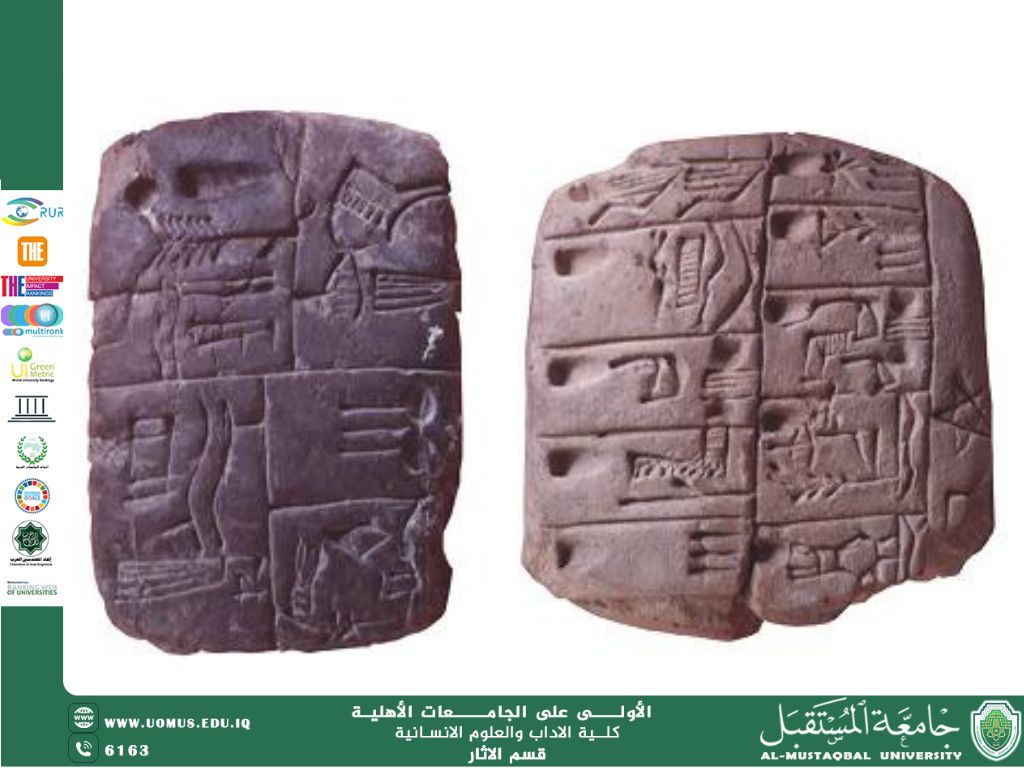
Ancient Mesopotamia (ancient Iraq) is considered the first homeland in which writing appeared in human history, specifically in the city of Uruk in southern Iraq near the end of the 4th millennium BCE.
The earliest writing system began with pictographs, which the Sumerians used to record economic, religious, and administrative activities before it later evolved into cuneiform writing.
Pictographic writing was first used during the period known as the Late Uruk Period (c. 3400–3200 BCE), when the need arose for a system that could organize trade and record the management of storehouses and temples. These pictographs were inscribed on clay tablets using a pointed stylus and represented images of the objects being recorded. The writing consisted of simple depictions of physical items, such as:
A fish = drawing of a fish
Grain = amount of barley
In its early stages, pictographic writing was not intended for literature or mythology. Instead, it served as a tool for organizing economic activities and temple administration. These pictorial signs could only represent tangible objects, not abstract concepts. This limitation led to the gradual development of symbolic representations. For example:
A bull’s head symbolized cattle or livestock
A vessel with lines indicated liquids or measurement
A foot sign symbolized movement or going
These symbols later became the foundation for the transformation into a more abstract cuneiform writing system. With continued use, Sumerian scribes simplified the pictographs and converted them into wedge-shaped signs made with a reed stylus with a triangular tip. This development occurred between 3200 and 2900 BCE, during which the symbols began to acquire phonetic values representing syllables.
Through this evolution, Mesopotamia became the first region in the world to develop a fully integrated writing system used in literature, science, and law.