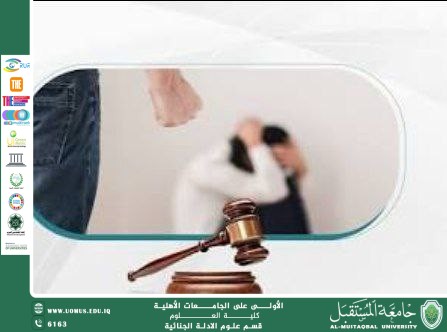

Domestic Violence and Its Impact on Children: A Legal and Social Study(M.M. Fatima Abbas Barhi)
Domestic violence is considered one of the most pressing issues threatening the stability of both the family and society. It encompasses various forms, including physical, psychological, and emotional abuse, leaving profound effects on children who witness or experience such behavior. Children in these environments often suffer from behavioral and psychological problems that may extend Into later stages of their lives, making legal and social intervention essential to protect them.
Article 41 of the Iraqi Family Protection Law No. 5 of 2015 states:
"Any acts of domestic violence against a spouse or children shall be punishable by imprisonment or fines as determined by the court, and the public prosecutor may take immediate protective measures for children at risk."
This provision demonstrates the Iraqi legislature’s commitment to protecting the most vulnerable family members, especially children, from physical or psychological harm.
Additionally, Article 398 of the Iraqi Penal Code No. 111 of 1969 states:
"Anyone who assaults minors or causes them physical or psychological harm shall be punished with imprisonment, regardless of familial relationship."
This reflects the seriousness with which the law holds individuals accountable for violence within the family or against children, placing the responsibility on all members to safeguard children’s rights.
Beyond the legal framework, society plays a pivotal role In addressing domestic violence. Raising awareness among families about the effects of violence on children’s psychological and social development, along with providing psychological support, contributes to mitigating the negative consequences of this phenomenon. Educational programs and civil society initiatives also help establish a culture that rejects domestic violence and encourages reporting of any violations.
Moreover, the Iraqi Child Protection Law No. 37 of 2013 emphasizes the necessity of providing a safe environment for children both inside and outside the family, ensuring their rights to education, health care, and psychological well-being. This law serves as a vital tool to protect children from all forms of harm, including emotional threats or neglect, which may not be immediately visible but directly affect a child’s development.
In conclusion, domestic violence poses a real threat to childhood, family stability, and societal well-being. Therefore, a combination of strict legal measures and social and educational interventions is essential to protect children and raise family awareness about their rights and responsibilities. Iraqi legislation, including Family Protection, Child Protection, and Penal laws, provides legal safeguards for children, while society complements the law through psychological and educational support, thereby enhancing family stability and promoting a healthier society overall.
Al-Mustaqbal University – the first university in Iraq.
SDG3