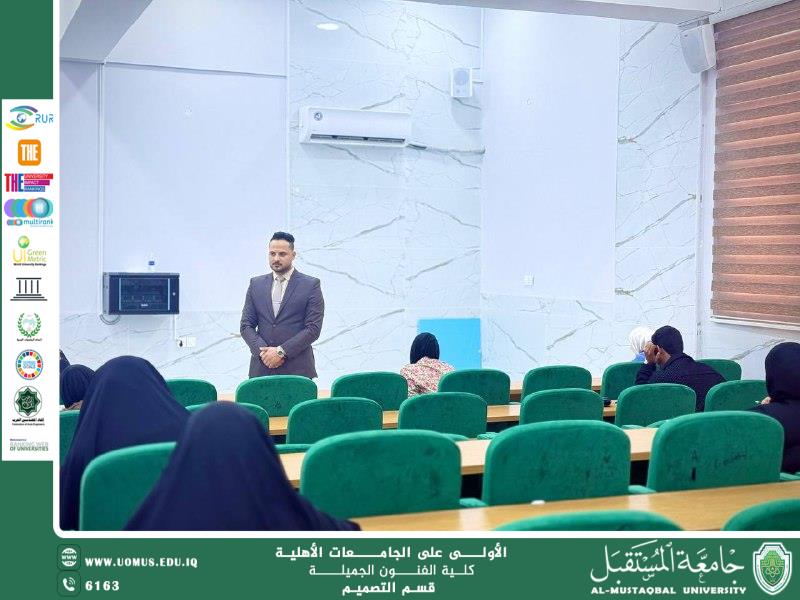

"Intellectual Property Law in Visual Arts" by Assistant Lecturer Montadar Hussein Tarish
Intellectual property (IP) plays a pivotal role in the world of visual arts, as it ensures the protection of artists’ and creators’ rights and enhances their ability to innovate and develop artistic works without fear of imitation or infringement. It provides a legal framework that safeguards both the moral and financial rights of artists over their creative works, whether paintings, digital art, 3D designs, or sculptural and installation pieces.
The Importance of Intellectual Property Protection in Visual Arts
IP laws allow artists to control the use of their works, including distribution, exhibition, reproduction, or commercial use. They also provide the right to receive financial compensation in case of unauthorized use and guarantee recognition for their creative efforts.
With the digital age and the widespread use of social media and digital arts platforms, protecting visual works has become more important than ever, as they can be copied and shared rapidly without the creator’s consent. Therefore, legal regulations play a crucial role in preventing infringements, ensuring a fair artistic environment that respects creators’ rights and encourages continued innovation.
The Link Between Intellectual Property Protection and Sustainable Development
Intellectual property law contributes to Sustainable Development Goal 4: Quality Education, as it supports the development of artistic culture within society and encourages innovation and creativity among students and young artists. By securing their rights, new generations are motivated to learn and practice, while preserving the cultural and artistic heritage for the future. Furthermore, it helps build a sustainable creative economy that promotes artistic production and protects cultural resources from unlawful exploitation.
Conclusion
Protecting intellectual property in visual arts is not merely a legal measure; it is a cornerstone for sustaining artistic creativity. It ensures that artists retain their rights, fosters a culture of innovation, and supports the development of a society that values and respects artistic work. By implementing these laws, artists can refine their skills and contribute to enriching the cultural and artistic landscape sustainably, aligning with global sustainable development goals.
Almustaqbal University, The First University in Iraq