Scientific Article by Lecturer Hassan Faez Abd Al-Hussein on How to Use Artificial Intelligence in Image Analysis
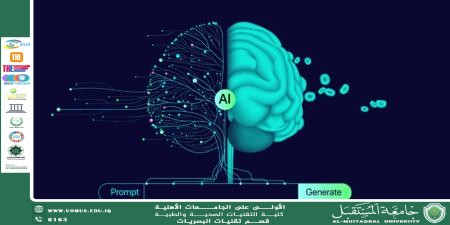
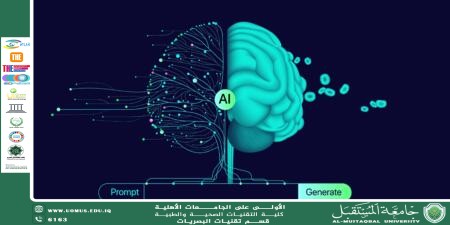
Artificial Intelligence (AI) has become a central component in image analysis due to its remarkable ability to accurately interpret visual content. With the advancement of deep learning techniques and neural networks, computers can now understand scenes, detect patterns, and recognize details with accuracy approaching human capabilities. AI-based image analysis depends on employing these algorithms to treat images as analyzable data from which meaning can be extracted—whether they are medical, industrial, security images, or even everyday photos used in common applications.
The process of image analysis typically begins with collecting a sufficient amount of visual data required for the system to learn. The diversity and quality of the images form a crucial foundation for obtaining accurate results. After data collection, images undergo a series of preprocessing steps aimed at enhancing quality and unifying characteristics—such as adjusting lighting, resizing, or removing noise—ensuring that the model learns from clear and consistent data.
Once the data is prepared, the most important stage begins: training the model, which is often based on convolutional neural networks (CNNs), considered among the most powerful tools for understanding images. These networks analyze the image layer by layer—initially extracting edges and simple shapes, then gradually moving toward more complex features. Eventually, the model gains the ability to recognize objects, classify them, or even locate them within the image.
The applications of AI in image analysis extend far beyond object recognition. They include understanding the overall scene context, detecting hidden patterns, and analyzing subtle details that may be difficult for the human eye to notice. In the medical field, for example, AI assists in early disease detection through reading medical imaging. In security, it is used for facial recognition and movement tracking, while in industry, it plays a vital role in quality inspection and defect detection.
AI has not only transformed the way we handle images but has elevated image analysis to new levels of precision and speed, making it an essential tool across modern sectors. As algorithms continue to evolve and computational capabilities increase, image analysis will grow even more intelligent and capable of deeply understanding the visual world—opening the door to innovative and future-oriented applications in various fields.
Al-Mustaqbal University — First Among Private Universities