
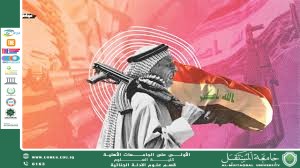
The Legal Characterization of the Role of Iraqi Tribes and Its Impact on State Sovereignty and Social PeaceAsst. Lect. Ali Hassan Mahdi
The tribal structure represents one of the most prominent social features of Iraqi society, as its roots extend to periods preceding the emergence of the modern state. Historically, tribes have contributed to organizing social relations, resolving disputes, and maintaining social balance, particularly during times of weakness of central authority.
However, the development of the modern state is based on fundamental principles, most notably the rule of law, the state’s monopoly over the legitimate use of force, and equality before the judiciary. This gives rise to the challenge of reconciling the traditional tribal role with the requirements of a legal state.
The importance of this research lies in its attempt to provide a legal characterization of the role of Iraqi tribes, to clarify the extent of its compatibility with statutory laws, and to analyze its effects on the authority of the state, social security, and the democratic process, with the aim of presenting practical proposals to enhance the positive role of tribes and reduce their negative aspects.
First: The Concept of the Tribe and Its Status in Iraqi Society
A tribe is a social organization based on kinship ties or shared affiliation, characterized by the presence of customary leadership represented by tribal sheikhs, and a system of customs and traditions that regulate the behavior of its members.
Historically, the Iraqi state has recognized the existence of tribes and, at times, benefited from them in maintaining security and resolving disputes. However, such recognition did not imply granting them legal authority parallel to that of the state.
Second: The Tribal Role in Dispute Resolution and Its Compatibility with Statutory Law
Tribes play an active role in settling disputes through what is known as tribal arbitration (fasl), reconciliation, and mediation. This role often aims to prevent disputes from escalating into armed violence or prolonged revenge.
Nevertheless, this role faces several legal challenges, most notably:
The contradiction of certain tribal customs with the principle of the personal nature of punishment stipulated in the Iraqi Penal Code.
(The principle of the personal nature of punishment in Iraqi law is a fundamental legal principle meaning that punishment is imposed only on the person who committed the crime and does not extend to others regardless of their relationship to the offender. Its legal basis is explicitly stated in the Iraqi Constitution of 2005, Article 19 (Eighth), and the Iraqi Penal Code No. 111 of 1969 is founded in its general philosophy on this principle, whereby only the perpetrator or accomplice is held criminally liable within the limits of their participation.)
Imposing financial or social obligations without legal basis.
تجاوز سلطة القضاء، أو الضغط على الأطراف للقبول بالأحكام التي تصدرها العشائر استنادًا إلى customary tribal rulings.
Accordingly, resorting to tribal customs outside the legal framework constitutes a violation of the principle of the rule of law and leads to the emergence of a form of parallel justice, which weakens the role of the judiciary and limits the effectiveness of state institutions.
Third: The Impact of Tribal Weapon Possession and Armed Conflicts on State Authority
The state’s monopoly over the use of weapons is one of the fundamental pillars of the modern state. However, the Iraqi reality witnesses the possession of weapons by some tribes outside the legal framework and their involvement in armed conflicts for various reasons, including revenge, disputes over influence, or competition over resources.
The legal and security consequences of this phenomenon include:
Undermining the authority and prestige of the state.
Disrupting the work of security forces.
Threatening social peace and creating an environment conducive to violence and chaos.
A clear violation of applicable laws that criminalize the possession of weapons without a license.
Such behavior therefore constitutes a direct threat to national security and represents one of the most significant manifestations of the weakening of the state.
Fourth: The Role of Tribes in Influencing the Electoral Process
Tribes play an influential role in directing voters’ choices, as some members tend to vote for tribal candidates out of social loyalty rather than based on criteria of competence or integrity.
Although this behavior does not constitute an explicit legal violation, it leads to:
Weakening the principle of free and informed choice.
Reinforcing narrow affiliations at the expense of national identity.
A decline in the level of competence within legislative and executive institutions.
This negatively affects the quality of the democratic system and limits its ability to achieve development and reform.
Fifth: The Legal Characterization of the Role of Tribes
The role of tribes may be legally characterized as follows:
A legitimate social role in reconciliation and mediation, provided it does not conflict with the law.
An illegitimate role when it exceeds acceptable customary limits, involves the use of violence, imposes coercive obligations, or interferes with the work of the judiciary.
Accordingly, tribes do not possess a legal status that authorizes them to exercise judicial or security authority, and any such practice constitutes a violation of the law.
Sixth: Proposals to Enhance the Positive Role of Tribes and Limit Their Negative Aspects
Strengthening the rule of law and affirming that the judiciary is the sole authority competent to resolve disputes.
Regulating tribal mediation within clear legal frameworks.
Restricting the possession of weapons to the state and enforcing the law without exception.
Promoting legal awareness and constitutional culture among tribal sheikhs and members.
Preventing the exploitation of tribal influence in political and electoral activities.
Involving tribes in supporting social peace as social partners, not as parallel authorities.
Conclusion
Iraqi tribes constitute an important social asset; however, the continuation of certain practices outside the legal framework poses a real challenge to state-building. The legal characterization of their role requires integrating their positive aspects within the legal system while firmly confronting any practices that undermine state sovereignty or threaten social peace, thereby achieving a balance between social particularity and the requirements of the modern state.
Al-Mustaqbal University – the first university in Iraq.
SDG4