The Comprehensive Guide to Machine Learning and Deep Learning
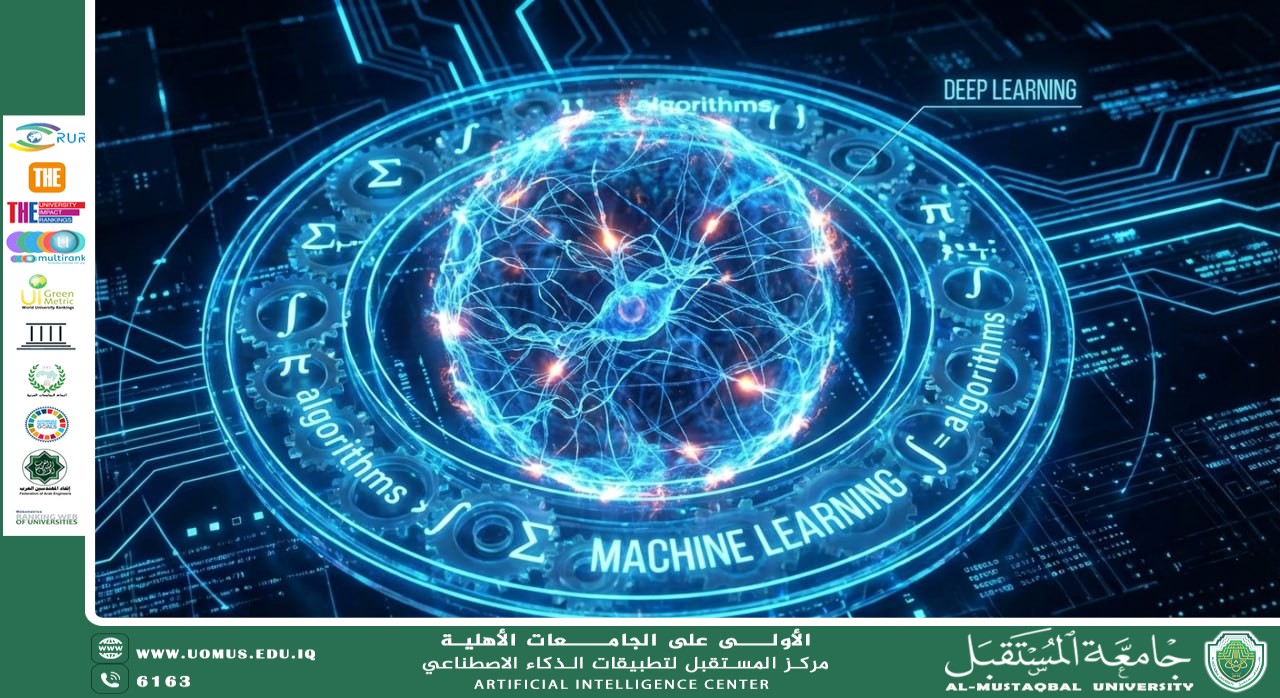
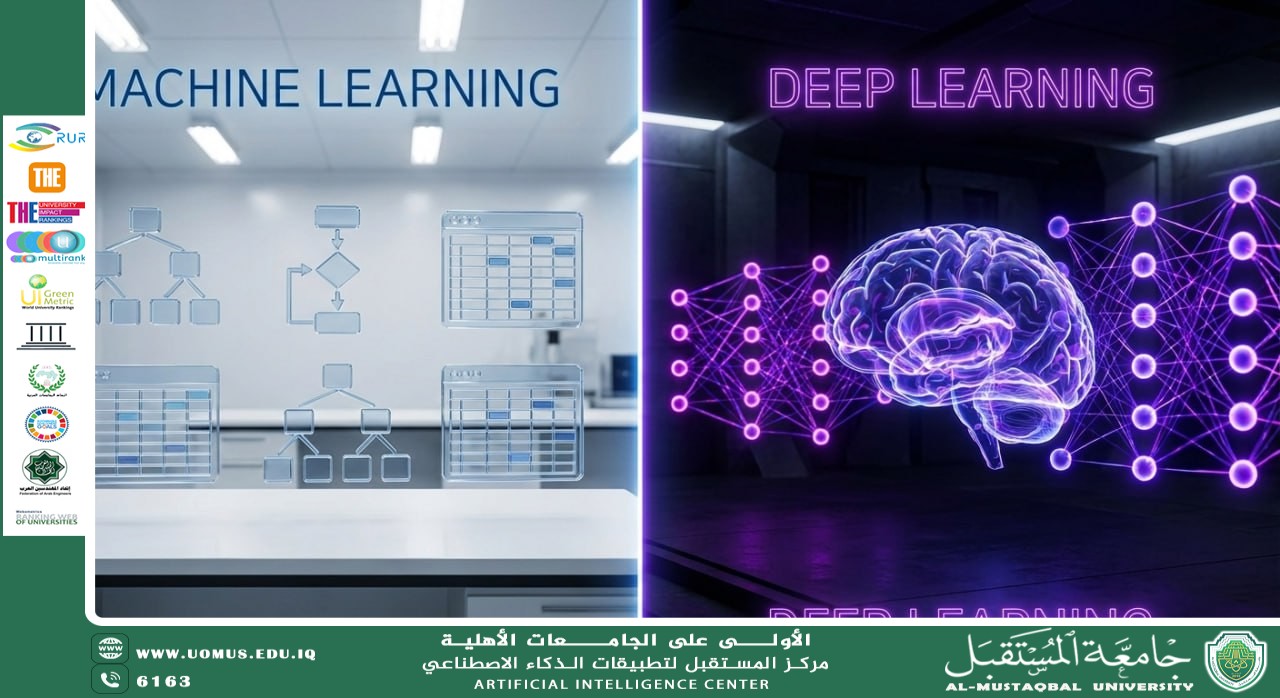
1. The Conceptual Framework To understand the technical divide, we must first establish the hierarchy. Artificial Intelligence (AI) is the broad science of mimicking human abilities. Machine Learning (ML) is a specific subset of AI that trains machines how to learn from data. Deep Learning (DL) is a specialized evolution of ML that uses multi-layered neural networks to solve the most complex tasks. 2. Machine Learning: The Statistical Approach Machine Learning is rooted in mathematical statistics and "Explicit Feature Engineering." The Role of the Human Expert: In ML, the machine's success depends heavily on the human. Before the data is fed into the algorithm, a human expert must manually select "features" (variables) that are relevant to the outcome. If you are predicting house prices, the human must decide that square footage and location are the key inputs. The Power of Small Data: One of the major advantages of ML is that it performs exceptionally well even with limited datasets. It is efficient, cost-effective, and doesn't require supercomputers. Interpretability (The Glass Box): ML models are often transparent. Because a human selected the variables, it is easy to understand why a model made a specific prediction. This "Explainable AI" is crucial in fields like medicine, where a doctor needs to know the logic behind a diagnosis. Common Algorithms: This field relies on logical models like Linear Regression, Support Vector Machines (SVM), and Random Forests. 3. Deep Learning: The Neural Revolution Deep Learning mimics the human brain's structure through Artificial Neural Networks (ANNs). It represents the transition from "learning by rules" to "learning by representation." Automatic Feature Extraction: This is the "Magic" of Deep Learning. You don't tell the machine what to look for; you simply provide raw data (like millions of images). Through a process called Backpropagation, the network discovers patterns—starting from simple edges in the first layers to complex objects in the final layers—entirely on its own. The Depth of Layers: A network is considered "Deep" when it has numerous "Hidden Layers" between the input and output. These layers act as filters that refine the data at every step, allowing the machine to understand nuances like sarcasm in text or emotions in a human voice. The Black Box Problem: Unlike ML, DL is often a "Black Box." Because the machine creates its own features, it is incredibly difficult for humans to explain the exact mathematical path taken to reach a conclusion. Hardware and Data Hunger: DL requires two things in massive quantities: Big Data and massive computational power (GPUs). Without millions of data points, a DL model will likely perform worse than a simple ML model. 4. Technical Comparison and Performance Performance Scaling: Traditional ML reaches a plateau; after a certain point, adding more data does not improve accuracy. DL, however, scales almost infinitely—the more data you feed it, the smarter it gets. Execution and Training: ML is fast to train but requires more manual preparation. DL requires days or weeks of training on specialized hardware but provides an "End-to-End" solution where the machine handles the entire pipeline from raw data to final prediction. 5. Conclusion Machine Learning is the tool of choice for structured data and business analytics where logic and speed are paramount. Deep Learning is the powerhouse behind the "Impossible" tasks—self-driving cars, real-time translation, and generative AI—where the complexity exceeds human ability to define rules.
Images Attachments