An article "Drawing as a Cognitive Means of Expression in Modern Visual Arts" By Muhammad Yaarub
28/12/2025 Share :
Drawing is considered one of the oldest and most profound forms of human expression. Throughout history, its role has extended beyond aesthetics to become a fundamental cognitive tool for conveying ideas, documenting experiences, and interpreting the surrounding world. In the context of modern visual arts, drawing has evolved into a contemporary visual and intellectual language that reflects awareness, identity, and social, cultural, and scientific transformations.
In modern art, drawing is no longer limited to the mere imitation of nature. Instead, it has become a form of visual thinking, where lines, shapes, space, light, and shadow are employed as cognitive symbols that convey philosophical, psychological, and existential concepts. Artistic value is no longer measured solely by technical mastery, but by the artwork’s ability to provoke questions, stimulate contemplation, and invite the viewer to explore deeper meanings behind visual forms.
Modern art movements such as Expressionism, Abstraction, and Surrealism have significantly expanded the concept of drawing as a cognitive medium. Drawing has become a means of expressing inner emotions, subconscious realities, and mental perceptions rather than simply representing external appearances. Through this transformation, drawing functions as a channel of intellectual communication between the artist and society, reflecting contemporary human concerns, including social, environmental, and cultural issues.
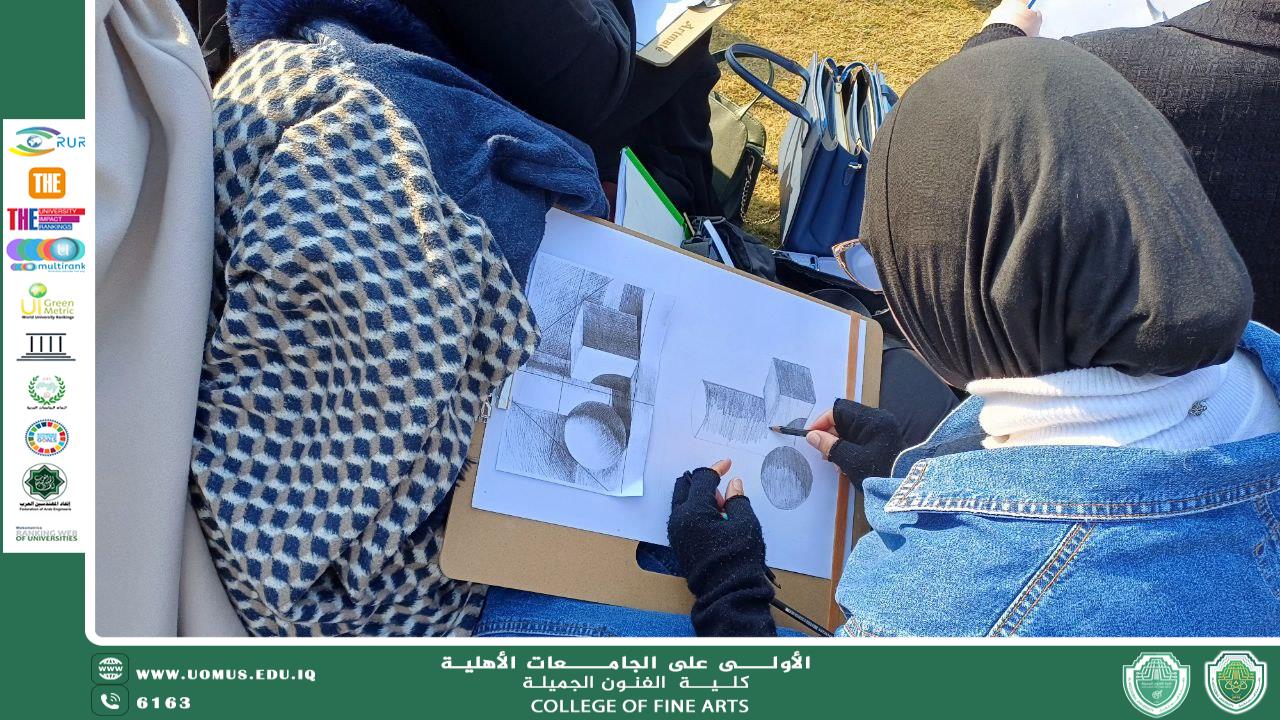
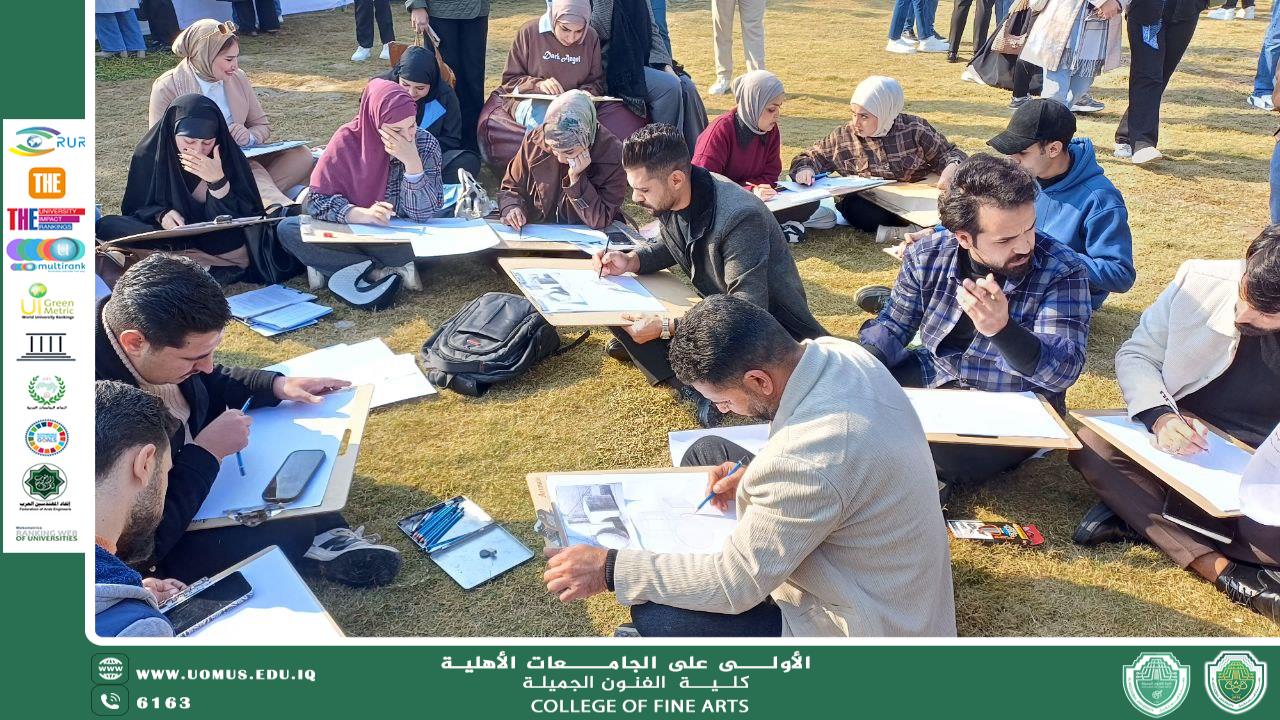
In academic and educational contexts, drawing plays a vital role in developing critical thinking, enhancing observation skills, refining aesthetic awareness, and linking theoretical knowledge with practical application. Teaching drawing is not limited to training the hand and eye; it contributes to building comprehensive visual literacy that enables learners to read, analyze, and understand images and their cultural messages.
Accordingly, the use of drawing as a cognitive means of expression aligns with Sustainable Development Goal 4: Quality Education (SDG 4) by promoting inclusive and high-quality art education that fosters creativity, supports critical thinking, and encourages sustainable learning based on understanding and analysis. This approach contributes to preparing conscious generations capable of participating effectively in building a knowledge-based society.
Almustaqbal University, The First University in Iraq.