Urban Design Engineering between Imagination and Implementation
10/01/2026 Share :
Urban design engineering represents one of the most complex and interdisciplinary fields of knowledge due to its direct connection with humans, the environment, society, and the economy simultaneously. It is not merely an urban planning process or spatial organization, but rather a comprehensive vision that combines creative imagination on one hand and realistic, practical capabilities on the other. From this perspective, an ongoing dialectic emerges between the designer’s ideal future aspirations and the technical, economic, and social constraints imposed by reality.
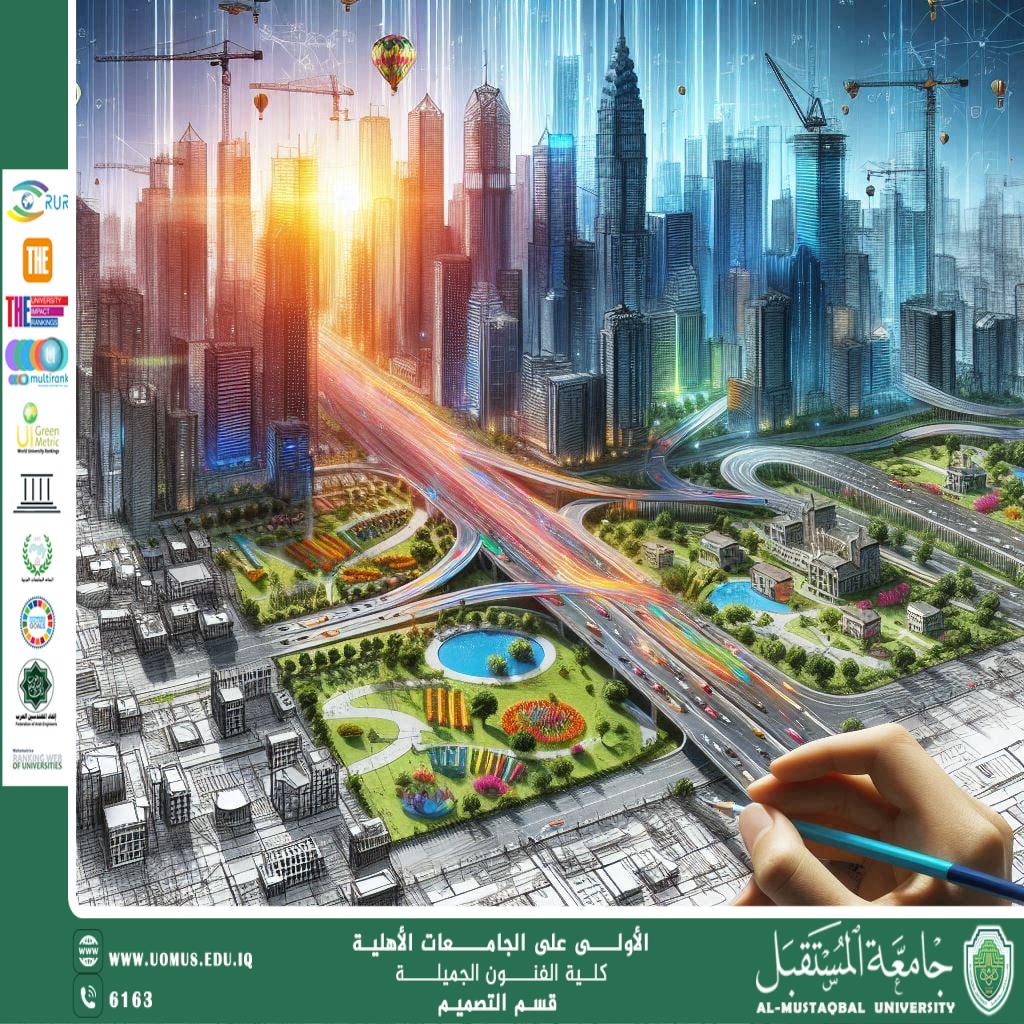
Imagination in urban design serves as a fundamental intellectual tool that enables designers to anticipate the future and envision more efficient and humane ways of living. Design imagination contributes to developing innovative and unconventional solutions to contemporary urban challenges such as population density, environmental degradation, and weak infrastructure. It also allows for envisioning smart and sustainable cities that respond to human psychological and physical needs. This imaginative dimension is an extension of the creative aspect of design, where art, engineering, technology, and the humanities intersect to shape the image of future cities.
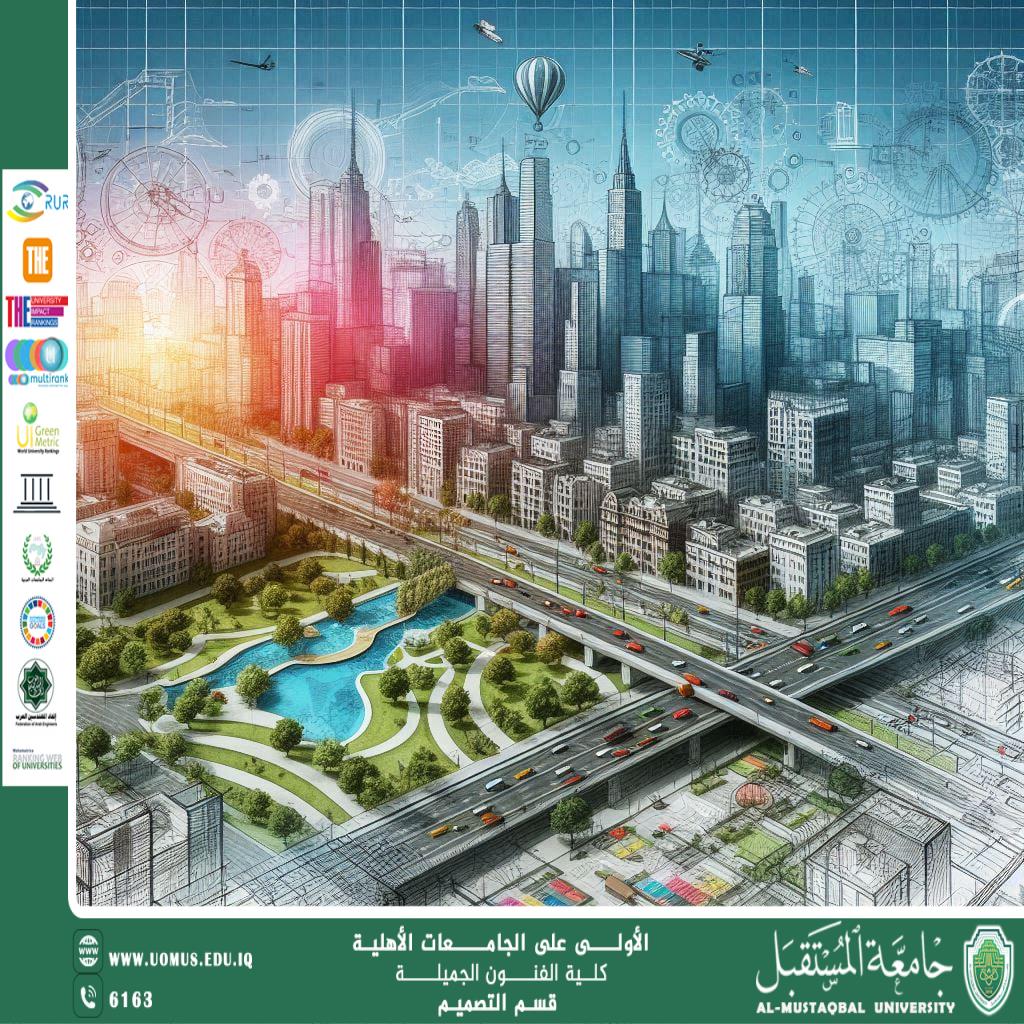
However, imagination cannot remain within the realm of theory alone; it must be subjected to the equation of real-world implementation. Urban design engineering relies on precise data related to geographical location, natural resources, economic capacity, legal regulations, and prevailing social systems. These factors impose clear limits on the extent to which imaginative visions can be transformed into executable projects. Here, engineering plays a crucial role as a bridge between abstract ideas and practical application, translating imagination into feasible and buildable plans.
The central challenge in urban design lies in the gap that may arise between ambitious design visions and implementation realities. In many cases, creative ideas face obstacles such as limited funding, technological constraints, or the absence of long-term strategic planning, leading to the distortion or reduction of original concepts into partial solutions. Moreover, neglecting the human and social dimensions in some urban projects may result in cities that appear technologically advanced but lack social vitality and functionality.
Urban design engineering plays a pivotal role in balancing imagination and implementation by adopting flexible and adaptive design methodologies. Successful urban design is grounded in a clear future-oriented vision while simultaneously respecting the cultural and social context of communities. Integrating sustainability principles into urban design further helps bridge the gap between ambition and reality by optimizing resource use, minimizing environmental impact, and ensuring long-term urban continuity.
Technological advancements have introduced new tools that have significantly narrowed the distance between imagination and implementation, such as digital modeling, virtual simulation, and geographic information systems. These tools allow designers to test their ideas and assess their impacts prior to execution, enhancing accuracy and reducing potential risks.
In conclusion, urban design engineering is based on a continuous dialectic between imagination and implementation, as neither can exist independently of the other. Imagination provides creative and human-centered visions, while implementation ensures their transformation into tangible realities that serve society. The value of contemporary urban design lies in its ability to harmonize these two dimensions, contributing to the creation of balanced cities that combine aesthetics with functionality and ambition with realism. This approach aligns with Sustainable Development Goal 11 (Sustainable Cities and Communities) by promoting inclusive and sustainable urban planning and improving quality of life through resilient and well-designed urban environments.
Almustaqbal University, The First University in Iraq.