
An Article "Jawad Salim and the Freedom Monument in Baghdad: An Enduring Artistic and National Epic " By: Assistant Professor Dr. Ali Atiya Al-Saadi – Scientific Assistant of the College of Fine Arts
19/06/2025 Share :
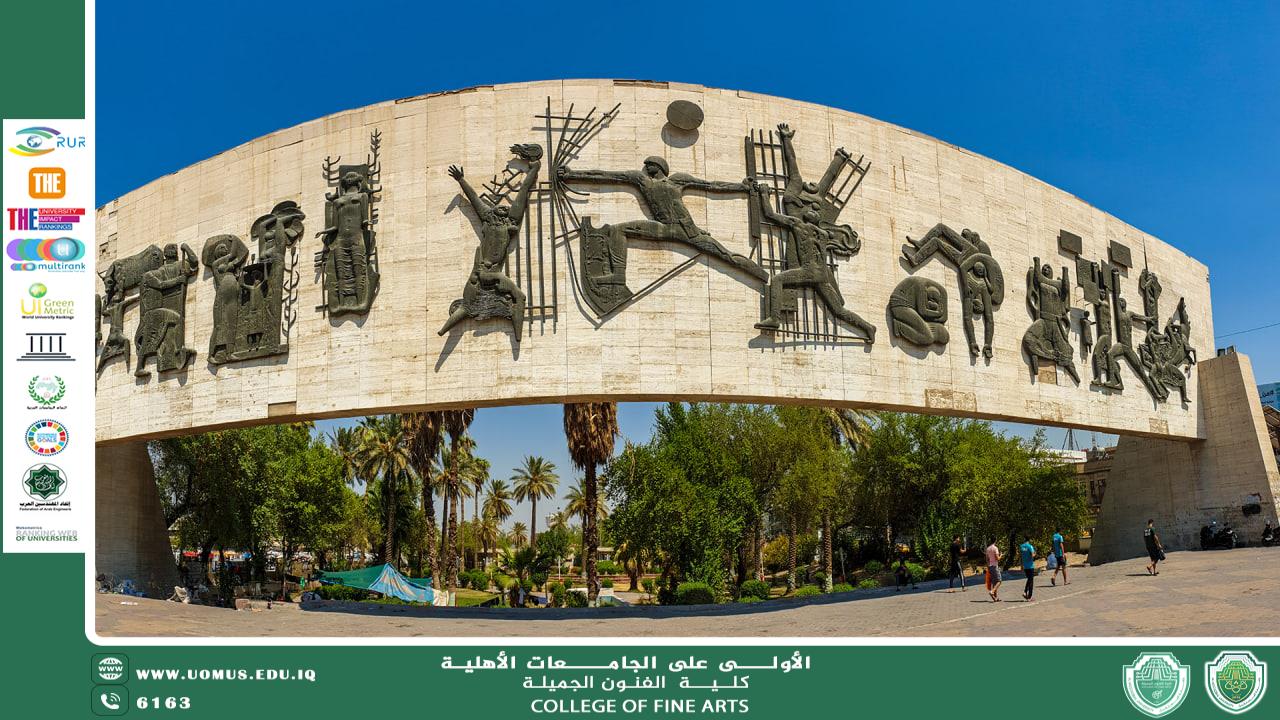
The Freedom Monument in Baghdad’s Tahrir Square is one of Iraq’s most iconic works of art and a lasting symbol of the people’s struggle for dignity and liberation. Designed by the renowned Iraqi sculptor Jawad Salim, the monument commemorates the historical turning point of the July 14, 1958 revolution, reflecting the country’s deep political, social, and cultural transformations.<br /><br />The monument consists of 14 raised bronze reliefs mounted on a long travertine wall measuring 50 meters in length and nearly 10 meters in height. The sequence reads from right to left, portraying a timeline of oppression, resistance, and ultimately, triumph and freedom.<br /><br />At the center, a soldier is seen breaking the bars of a prison—an evocative symbol of liberation. Nearby, a woman holds a torch representing enlightenment and freedom, followed by figures of a worker, a mother, and a child—all representing the unity and resilience of the Iraqi people.<br /><br />Salim drew inspiration from ancient Iraqi art, especially from the Sumerian and Babylonian civilizations, merging it with a modern visual language to create a powerful dialogue between heritage and progress, between history and future vision.<br /><br />This monument is more than an artwork; it is a visual document that captures the hopes of an entire nation. Over time, it has become a central landmark in Baghdad’s collective memory and a stage for public expression and civic voice.<br /><br />The Freedom Monument remains an inspiring example of the intersection between art, history, and politics—a source of national pride and a cultural legacy that must be preserved not only for what it symbolizes from the past, but for what it promises to future generations who believe that art speaks when words fall short.<br /><br />Almustaqbal University, The First University in Iraq.