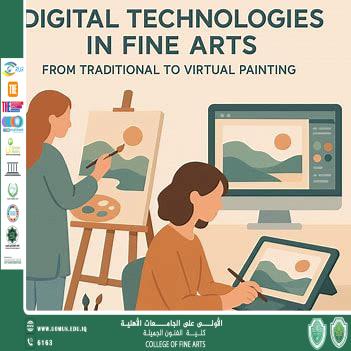
An Article "Digital Techniques in Fine Arts: From Traditional Canvas to Virtual Artwork" By Prof.Dr. Huda Hashem Al-Rubaie, Dean of the College of Fine Arts
23/09/2025 Share :
In recent decades, fine arts have undergone a profound transformation driven by the rapid advancement of digital technologies. While artists once relied solely on traditional tools such as brushes, paints, and canvas, today they have access to an expansive digital realm that allows for greater diversity and creativity in artistic expression.<br /><br />Digital techniques enable artists to transition from traditional canvases to virtual artworks using computers, tablets, and specialized design software. This transformation extends beyond the means of production to the very nature of artistic interaction, as viewers can now experience art in three-dimensional formats or through virtual and augmented reality. Such innovations open new horizons for both the practice and appreciation of fine arts.<br /><br />Moreover, digital art contributes to the sustainability of the arts by reducing reliance on traditional, often costly and environmentally harmful materials such as chemical-based paints, non-recyclable canvases, and paper. This aligns with Sustainable Development Goal 12: Responsible Consumption and Production, by encouraging eco-friendly and sustainable artistic practices.<br /><br />The shift from traditional to virtual art does not diminish the value of classical approaches but rather adds a new dimension that reflects the spirit of our time. It offers artists greater freedom to explore and innovate, making art more engaging for younger generations and more aligned with contemporary technological changes.<br /><br />Almustaqbal University, The First University in Iraq.