The Director of the Dean of the Faculty of Arts' Office sheds light in a new article on the relationship between intelligence and sustainable development.
02/12/2025 Share :
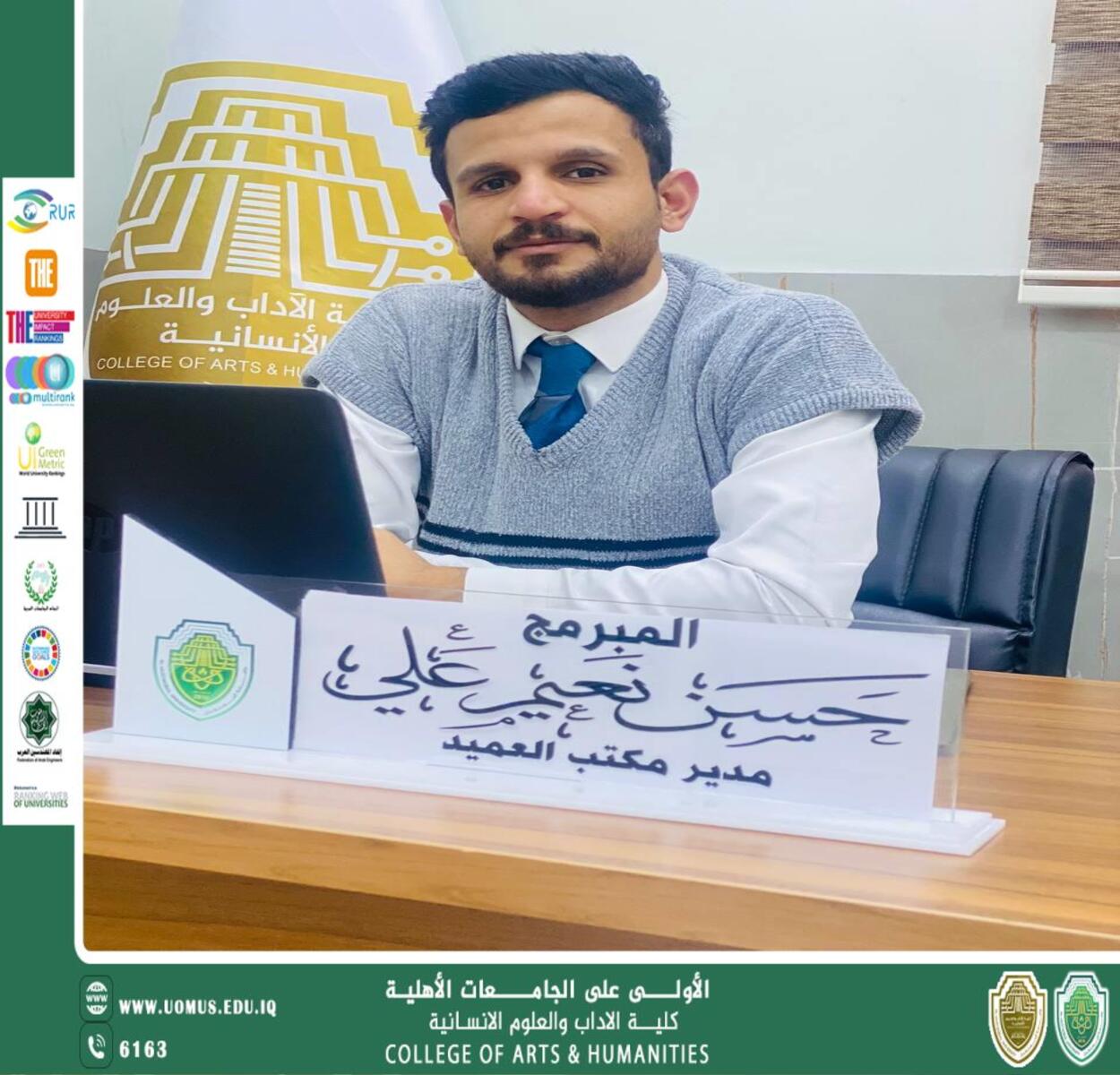
Hassan Naim Ali, the office manager of the Dean of the College of Arts at Al-Mustaqbal University and a programmer, writes an article entitled "Artificial Intelligence and Its Pivotal Role in Achieving Sustainable Development."
Sustainable development is the overarching framework through which societies aspire to achieve a balance between economic growth, social well-being, and environmental protection. In an era of accelerating scientific developments, intelligence—in its natural human dimensions and its technological initiatives such as artificial intelligence—has emerged as one of the most important drivers that can contribute to strengthening sustainable development paths, especially in academic and administrative institutions.
First: Human Intelligence as the Basis of Sustainable Development
Human intelligence, including critical thinking, innovation, decision-making, and problem-solving abilities, is the cornerstone of achieving comprehensive development. Sustainable projects are not based on material resources alone, but rely on individuals who are able to:
• Analyze environmental and social challenges and understand the roots of the problem.
• Innovate strategic solutions that balance current and future needs.
• Manage resources efficiently using knowledge and scientific thinking.
• Make informed decisions based on data and environmental awareness.
In academic institutions such as the College of Arts, this intelligence is manifested in preparing cadres capable of raising awareness, conducting research, and creating societal change.
Second: Artificial Intelligence as a Supporting Tool for Sustainability
Artificial intelligence has become a key element in supporting sustainable development plans globally, as its algorithms and technologies contribute to:
• Energy management through smart systems that reduce waste and increase consumption efficiency.
• Environmental protection through analyzing climate data and predicting environmental changes.
• Improving educational services with digital learning methods that reduce paper use and enhance the quality of education.
• Developing electronic government systems that rely on automation and improve the quality of public services.
Third: The Role of Universities in Promoting the Relationship Between Intelligence and Sustainability
Universities are among the most important environments that integrate innovation and sustainable education, through:
• Adopting scientific research that employs artificial intelligence in environmental and development issues.
• Holding training workshops that raise students' awareness about the role of technology in sustainability.
• Encouraging student projects that use smart technologies to solve community problems.
• Developing smart management within colleges through electronic archiving, reducing waste, and enhancing work efficiency.
Fourth: Intelligence as a Value that Drives Sustainability
Intelligence is not limited to mental or technical abilities, but includes:
• Social intelligence: building effective relationships that promote cooperation towards sustainable goals.
• Emotional intelligence: understanding oneself and managing stress to support a healthy work environment.
• Administrative intelligence: organizing work in modern ways that reduce waste and increase productivity.
These patterns of intelligence form an integrated system that makes the individual an active element in achieving development within his institution.
Conclusion
The relationship between intelligence—in its human and technical sense—and sustainable development is a complementary relationship. The higher the levels of awareness, innovation, and rational management of resources, the greater the ability of societies and institutions to build a sustainable future. With the increasing use of smart technologies in universities, the role of specialized cadres in computing and management emerges to support this transformation and achieve the vision of modern education.
Al-Mustaqbal University is the leading private university.