Climate Change: The Greatest Global Challenge Scientific Article by: Asst. . Dr. Karrar Majid Ubaid
Climate change is considered one of the most significant environmental challenges facing the world today, due to its wide-ranging impacts that affect all aspects of life on Earth. These changes refer to long-term shifts in temperature and weather patterns. The phenomenon has intensified since the Industrial Revolution as a result of increasing human activities, particularly the burning of fossil fuels such as coal, oil, and natural gas.
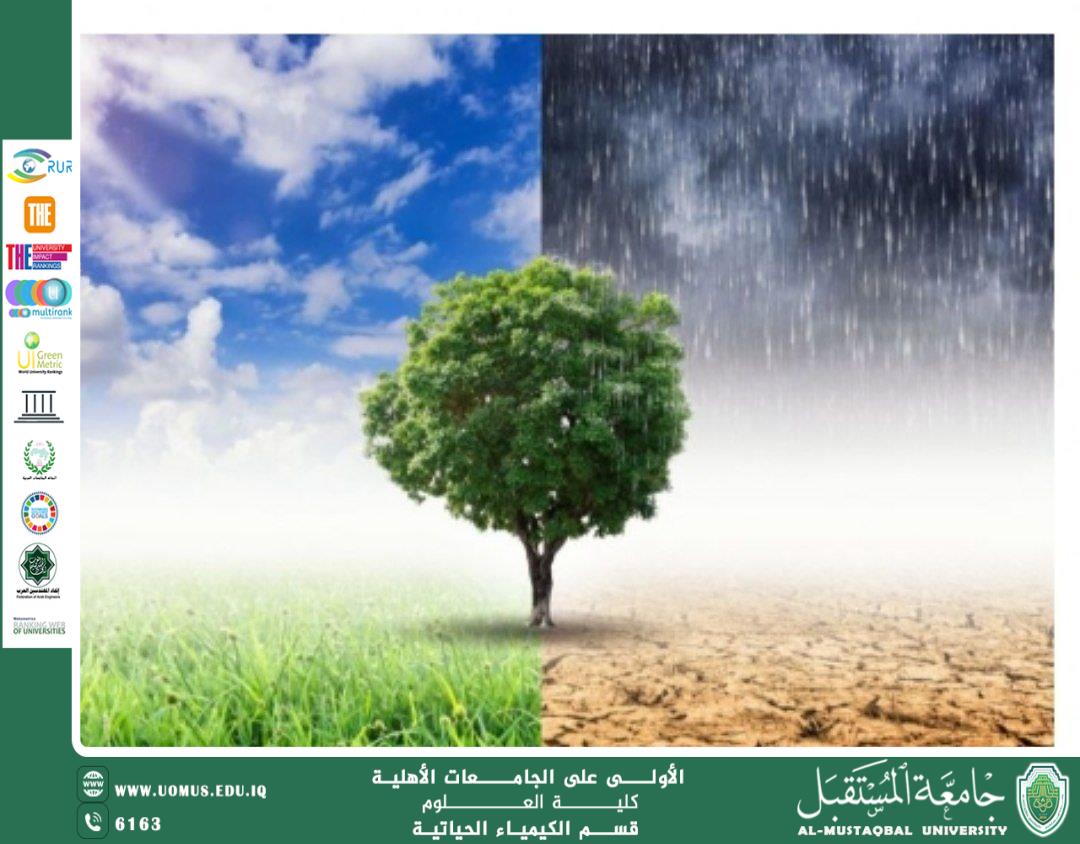
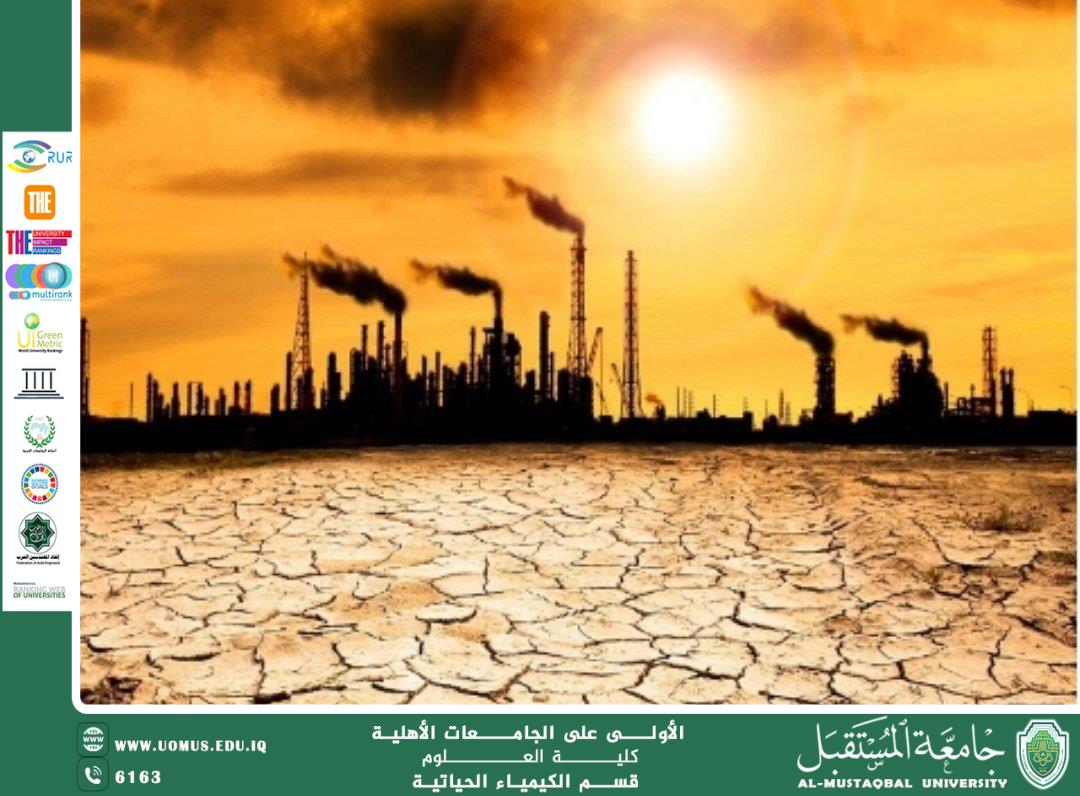
These human activities have led to the emission of vast amounts of greenhouse gases, most notably carbon dioxide and methane, which trap heat in the atmosphere and cause what is known as global warming. Among the most prominent manifestations of climate change are rising global temperatures, melting polar ice caps, sea level rise, and the increasing intensity of natural disasters such as floods, droughts, and hurricanes.
Climate change negatively affects ecosystems and natural resources, threatening food and water security in many regions. It also increases the likelihood of disease spread and exacerbates poverty and human displacement. Moreover, climate change poses a direct threat to biodiversity.
To confront this crisis, urgent measures must be taken at both individual and international levels. These include transitioning to renewable energy sources, reducing carbon emissions, promoting sustainable transportation systems, expanding afforestation efforts, and protecting forests. International agreements, such as the Paris Climate Agreement, represent important steps toward global cooperation to mitigate the impacts of climate change.
In conclusion, climate change is not merely an environmental issue, but also an ethical, economic, and social challenge that requires global solidarity and strong political will to preserve the planet for future generations.
Al-Mustaqbal University
Ranked First Among Private Universities in Iraq