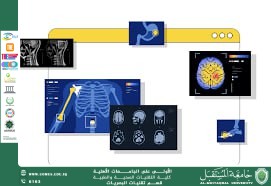
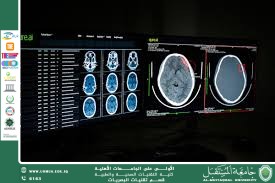
A scientific article by lecturer Fatima Haider Jassim entitled "Medical Image Analysis Using Artificial Intelligence and Its Impact on Improving Medical Decision-Making"
Digital technologies have witnessed rapid development in recent decades, with Artificial Intelligence (AI) playing a pivotal role in bringing about a qualitative transformation across various fields, particularly in the healthcare sector. Medical image analysis is considered one of the most prominent applications that have benefited from AI tools, as these technologies have contributed to improving diagnostic accuracy, accelerating medical procedures, and supporting physicians in making clinical decisions based on precise and objective data.
The Concept of Artificial Intelligence in Image Analysis
Artificial intelligence in image analysis refers to the use of intelligent algorithms, particularly Machine Learning and Deep Learning techniques, to extract accurate patterns and meaningful information from digital images. These techniques mainly rely on artificial neural networks, such as Convolutional Neural Networks (CNNs), which have demonstrated high efficiency in processing medical images including X-ray images, computed tomography (CT) scans, magnetic resonance imaging (MRI), and fundus (retinal) images.
Application of Artificial Intelligence Tools in Medical Image Analysis
AI tools are applied in medical image analysis through several stages, beginning with image data collection and preprocessing to enhance image quality. This is followed by training intelligent models on large, diagnostically labeled datasets. Subsequently, these models are used to detect abnormalities, classify diseases, and accurately identify affected regions. This application has contributed to reducing human errors caused by fatigue or variations in experience, as well as improving analysis speed compared to traditional methods.
The Role of Artificial Intelligence in Supporting Medical Decision-Making
Artificial intelligence does not aim to replace physicians, but rather to support them and enhance their ability to make sound medical decisions. AI-based image analysis systems provide accurate reports and quantitative indicators that assist physicians in evaluating medical conditions more objectively. These systems also enable comparison of current results with previous records, helping to monitor disease progression and assess treatment effectiveness. Thus, medical decisions become based on a combination of clinical expertise and intelligent data analysis.
Benefits of Using Artificial Intelligence for Physicians and Patients
The use of AI tools in medical image analysis contributes to improving the quality of healthcare by increasing the accuracy of early diagnosis, reducing waiting times, and lowering operational costs. It also allows physicians to focus on complex clinical aspects instead of manual image analysis. For patients, this leads to faster and more accurate diagnoses, which positively impacts treatment outcomes and recovery chances.
Challenges and Ethical Considerations
Despite its significant advantages, the use of artificial intelligence in medical image analysis faces several challenges, most notably data quality, privacy protection, and ensuring the reliability of results. Ethical issues also arise regarding medical responsibility in the event of diagnostic errors. Therefore, the implementation of AI in healthcare requires clear regulatory frameworks and effective integration between artificial intelligence systems and human expertise.
University of Al-Mustaqbal – The First and Leading Private University