
Insulin Resistance: The Molecular Basis of Metabolic Disorders Prepared by: Assist. Lect. Abbas Hamza Khudhair Department of Biochemistry – College of Science – Al-Mustaqbal University
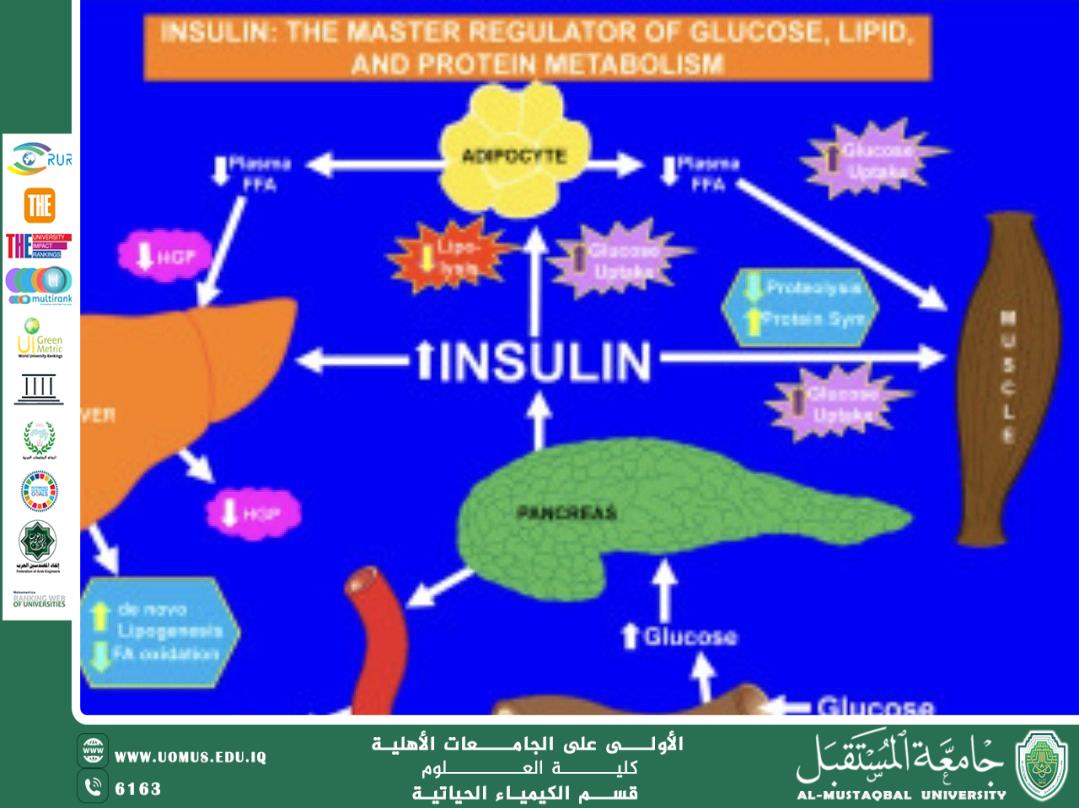
Insulin resistance is a common metabolic disorder that occurs when body cells—particularly in skeletal muscle, liver, and adipose tissue—lose their normal responsiveness to insulin. As a result, glucose uptake becomes inefficient, leading to elevated blood glucose levels.
Biochemical Mechanism
Under physiological conditions, insulin binds to its membrane receptor, activating an intracellular signaling cascade that includes insulin receptor substrate (IRS), phosphoinositide 3-kinase (PI3K), and protein kinase B (Akt). This pathway ultimately promotes the translocation of the glucose transporter (GLUT4) to the cell membrane, facilitating glucose entry into the cell.
In insulin resistance, defects occur within these signaling pathways due to multiple contributing factors, including:
Obesity and visceral fat accumulation
Chronic low-grade inflammation
Oxidative stress
Altered intracellular phosphorylation signaling
These alterations reduce receptor sensitivity to insulin. Consequently, pancreatic β-cells increase insulin secretion as a compensatory mechanism, often resulting in hyperinsulinemia.
Clinical Significance
Insulin resistance is strongly associated with several major health conditions, including:
Type 2 diabetes mellitus
Metabolic syndrome
Cardiovascular diseases
Non-alcoholic fatty liver disease (NAFLD)
Persistent insulin resistance may eventually lead to β-cell dysfunction and impaired insulin secretion, culminating in overt diabetes.
Diagnosis and Biomarkers
Insulin resistance can be evaluated through:
Fasting insulin measurement
HOMA-IR (Homeostatic Model Assessment of Insulin Resistance)
Oral glucose tolerance test (OGTT)
Ongoing research is exploring molecular biomarkers related to inflammation, oxidative stress, and mitochondrial dysfunction to improve early detection and therapeutic targeting.
Conclusion
Insulin resistance represents a pivotal early event in the development of metabolic diseases. Understanding its molecular and biochemical mechanisms is essential for developing effective preventive and therapeutic strategies.
Al-Mustaqbal University – Ranked First Among Iraqi Private Universities