Green Synthesis of Nanoparticles from Plant Waste and Their Applications in Environmental Pollution Removal Prepared by: Dr. Mustafa Ali Al-Awadi College of Science – Al-Mustaqbal University
Environmental pollution has significantly increased in recent decades due to industrial activities, agricultural practices, and rapid urban expansion. This has led to elevated levels of contaminants in water, soil, and air, making the search for sustainable scientific solutions a global priority. Among the promising modern approaches is nanotechnology, particularly the green synthesis of nanoparticles using plant waste such as fruit and vegetable peels and tree leaves.
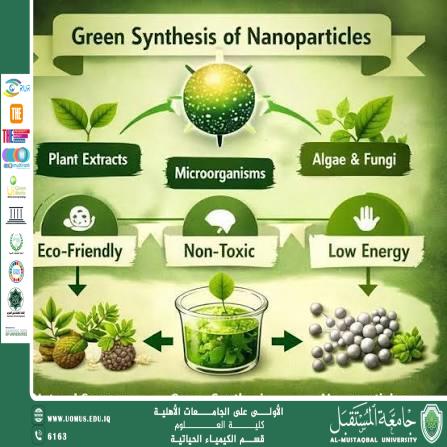
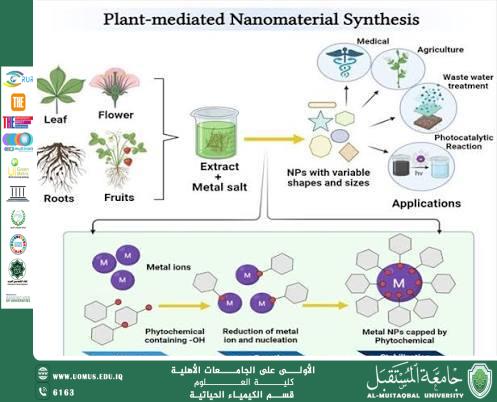
Green synthesis relies on plant extracts as natural reducing and stabilizing agents for nanoparticle production. These plant wastes contain bioactive compounds such as phenolics, flavonoids, sugars, and organic acids, which can reduce metal ions and form stable nanoparticles without the need for toxic chemical reagents. This method is cost-effective, environmentally friendly, and contributes to reducing organic waste by converting it into valuable functional materials.
Biogenically synthesized nanoparticles have demonstrated high efficiency in environmental applications. They can be used to remove toxic heavy metals from water, including lead, cadmium, and mercury, through adsorption and surface interaction mechanisms. In addition, these nanoparticles can assist in degrading organic pollutants and industrial dyes via photocatalytic processes or advanced oxidation reactions, thereby improving water quality and reducing health risks.
This approach strongly aligns with the principles of sustainable development and the circular economy, as it transforms agricultural waste from an environmental burden into a useful resource while promoting eco-friendly and locally applicable technologies. Universities and research centers play a vital role in advancing such innovations and translating laboratory findings into practical environmental solutions.
Green synthesis of nanoparticles represents an integrated scientific model that combines technological innovation with environmental protection. It highlights the importance of applied scientific research in supporting public health, preserving natural resources, and building a more sustainable future.
Al-Mustaqbal university is ranked first among Iraqi private universities