A Scientific Article by Lecturer M.M. Hanadi Tahseen Muslim : Oxidative Stress and Its Relationship to Chronic Diseases: A Biochemical Perspective
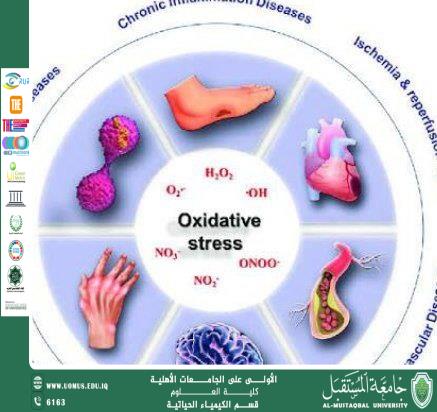
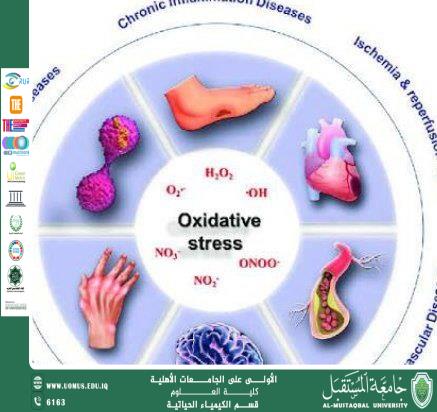
The study of oxidative stress represents one of the fundamental topics in biochemistry due to its close association with many chronic diseases that pose significant global health challenges. Oxidative stress occurs as a result of an imbalance between free radicals and antioxidants within the cell, leading to damage of essential biological components such as proteins, lipids, and nucleic acids.
Free radicals are molecules or atoms that contain an unpaired electron, which makes them highly reactive. One of the primary endogenous sources of free radicals is normal metabolic processes, particularly those occurring in the mitochondria during energy production. Although their formation is a natural part of cellular activity, excessive production beyond physiological limits can result in cumulative cellular damage over time.
Recent studies indicate that oxidative stress plays a critical role in the development and progression of several chronic diseases, including cardiovascular diseases, diabetes mellitus, and certain neurodegenerative disorders, in addition to contributing to premature aging processes. This is largely attributed to its effects on cellular membranes through lipid peroxidation, as well as its impact on proteins and DNA, potentially altering their structure and biological function.
On the other hand, the human body possesses an integrated defense system composed of antioxidant mechanisms. These include enzymatic antioxidants such as superoxide dismutase and catalase, as well as non-enzymatic antioxidants such as vitamin C, vitamin E, and glutathione. These compounds function to neutralize free radicals and minimize their harmful effects, thereby maintaining cellular homeostasis.
Understanding the biochemical mechanisms underlying oxidative stress provides medical and science students with a deeper molecular perspective for interpreting various pathological conditions. It also enhances their analytical thinking skills when evaluating laboratory findings and biochemical markers associated with chronic diseases.
The importance of this topic lies in bridging theoretical knowledge with clinical application, as recognizing the relationship between biochemical alterations and clinical outcomes enables students to build a strong scientific foundation that supports their academic and research careers.
Al-Mustaqbal University Ranked First Among Iraqi Private Universities