
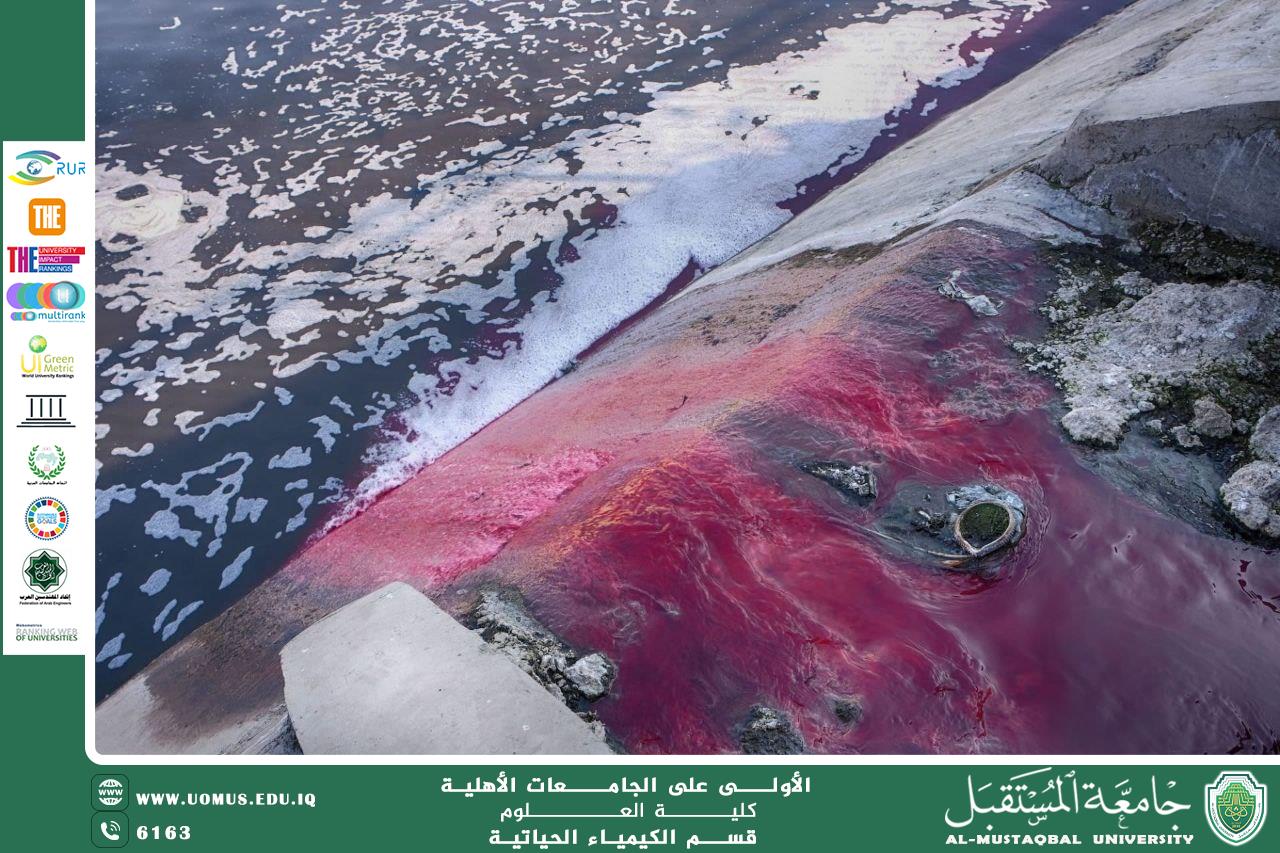
Scientific Article by Assistant Professor Dr. Karrar Majeed Obeid Title: Dye Pollution in Water
Water pollution caused by industrial dyes is considered one of the most serious modern environmental problems resulting from rapid industrial expansion, particularly in textile, leather, paper, plastic, cosmetic, and pharmaceutical industries. Thousands of synthetic dyes are used to color various products; however, a significant proportion of these dyes is discharged into water bodies through inadequately treated industrial wastewater, leading to severe environmental and public health consequences.
Industrial dyes possess complex chemical structures and high stability against light, heat, and chemical agents, which makes them resistant to natural degradation in aquatic environments. When released into rivers, lakes, and groundwater, dyes reduce light penetration into water, thereby limiting photosynthesis in aquatic plants and microorganisms. This disruption affects oxygen balance and leads to ecological instability within aquatic ecosystems.
Many dyes, particularly azo dyes, contain aromatic compounds that may break down into toxic or carcinogenic substances under environmental conditions. The presence of such contaminants in water used for drinking or irrigation can result in serious health risks, including liver and kidney disorders, neurological problems, and potential mutagenic and genotoxic effects.
Water-polluting dyes are classified into several main categories, including cationic, anionic, and nonionic dyes, as well as reactive, direct, and disperse dyes. The environmental risk associated with each dye depends on its chemical composition, solubility, persistence, and biodegradability.
Various treatment methods have been developed to remove dyes from contaminated water, including physical, chemical, and biological approaches. Physical treatment methods primarily involve adsorption using activated carbon or nanomaterials, which are widely recognized for their efficiency, simplicity, and industrial applicability. Chemical treatments include advanced oxidation processes such as hydrogen peroxide and ozone, which degrade dye molecules into less harmful compounds. Biological methods rely on microorganisms, including specific bacteria and fungi capable of degrading complex dye structures.
In recent years, scientific research has increasingly focused on nanotechnology-based solutions, such as metallic nanoparticles and nanocomposites. These materials exhibit high surface area and strong catalytic activity, enhancing pollutant removal efficiency even at low concentrations and offering promising sustainable solutions for wastewater treatment.
In conclusion, mitigating dye pollution in water requires the development of cost-effective and efficient treatment technologies, alongside strict environmental regulations for managing industrial effluents before discharge. Transitioning toward green industries and promoting wastewater reuse are essential steps to achieve environmental sustainability and protect water resources for future generations.
Al-Mustaqbal University Ranked First Among Iraqi Private Universities