Digital Health: A Modern Revolution in Advancing Healthcare and Promoting Community Health
Professor Dr. Aqeel Hanzhal Taresh presented a scientific article entitled “Digital Health”, in which he addressed the growing role of digital technologies in advancing modern healthcare systems and enhancing healthcare services, as well as their contribution to improving quality of life and promoting community health.
Over the past decades, the world has witnessed rapid technological development that has led to the emergence of the concept of Digital Health, which has become one of the most important modern trends in the development of healthcare systems worldwide. Healthcare is no longer limited to patients visiting hospitals or medical centers; rather, digital technologies have become essential tools for disease prevention, early diagnosis, medical follow-up, and the promotion of public health.
Reports from the World Health Organization indicate that the use of digital technologies can significantly improve population health and support healthcare systems in making data-driven decisions while expanding access to healthcare services.
Concept of Digital Health
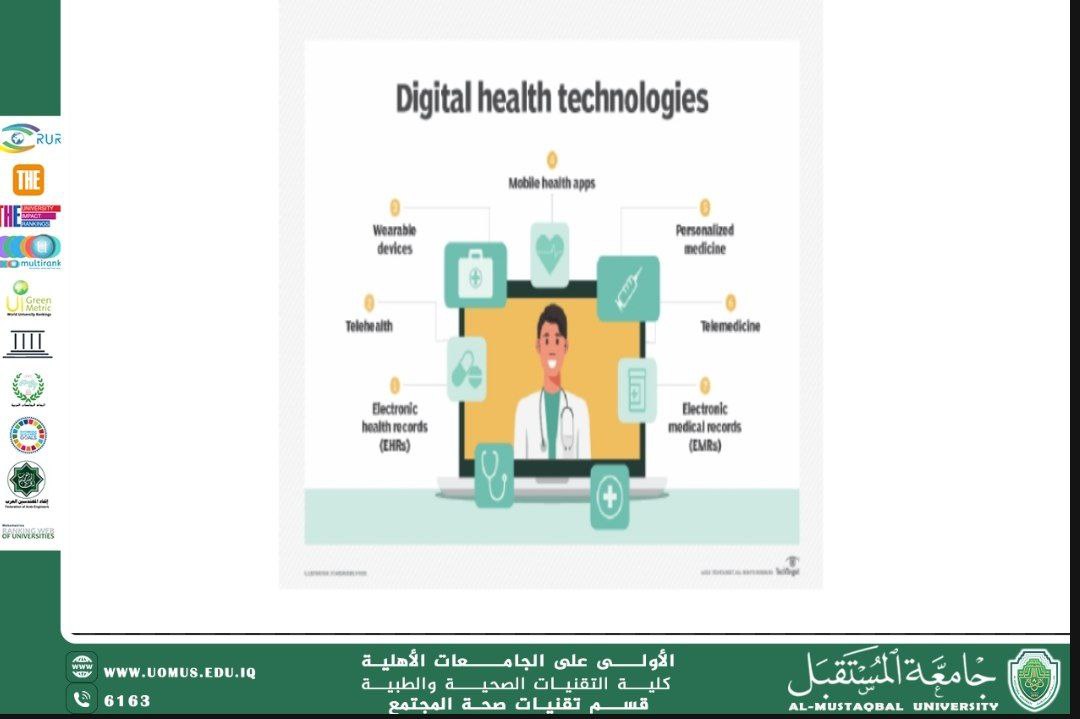
Digital health refers to the use of information and communication technologies in the healthcare sector, including smart applications, wearable devices, telemedicine, and artificial intelligence technologies, with the aim of preventing diseases, improving healthcare delivery, and enhancing quality of life.
Digital health also represents the integration of medical technology with computer science and data analytics to provide more accurate, efficient, and effective healthcare services.
Key Components of Digital Health
Telemedicine
Telemedicine enables physicians to provide medical consultations through the internet or telephone without requiring the patient's physical presence, thereby improving access to healthcare services, especially in remote or underserved areas.
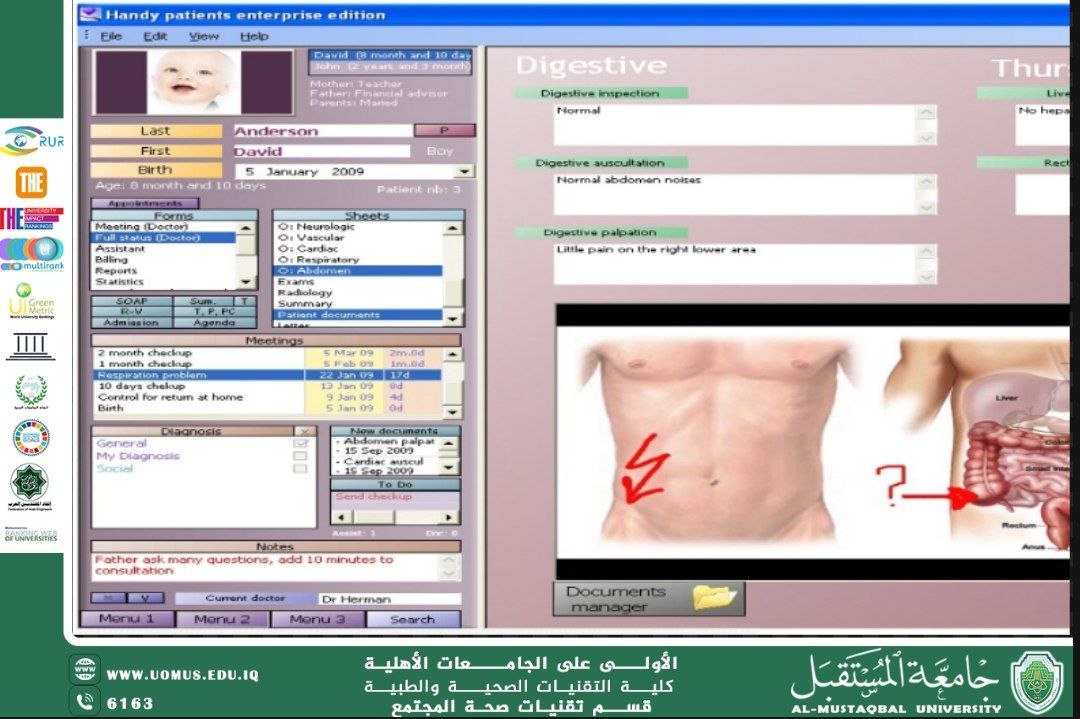
Electronic Health Records
Electronic Health Records (EHRs) are digital systems used to store patients’ medical data instead of traditional paper files. These systems help reduce medical errors and facilitate the tracking of patients’ medical history.
Mobile Health (mHealth)
Mobile health includes smartphone applications that help in:
Monitoring blood pressure and blood glucose levels
Providing medication reminders
Promoting physical activity and healthy nutrition
Wearable Devices
Wearable technologies such as smartwatches can measure and monitor:
Heart rate
Physical activity levels
Sleep quality
Artificial Intelligence in Healthcare
Artificial intelligence plays a significant role in analyzing large medical datasets, predicting diseases, and supporting clinical decision-making, thereby assisting healthcare professionals in making more accurate diagnoses.
Importance of Digital Health in Community Health
Digital health plays a vital role in the field of Community Health Techniques, as it contributes to:
Rapid and accurate collection of health data
Monitoring chronic diseases at the community level
Implementing digital health awareness campaigns
Supporting disease prevention and early detection programs
Improving access to healthcare services for remote populations
According to the World Health Organization, even modest investments in digital health interventions such as telemedicine and health messaging can save millions of lives and reduce hospital admissions globally.
Benefits of Digital Health
Numerous studies highlight several key benefits of digital health, including:
Improving the efficiency of healthcare services
Reducing healthcare costs
Enhancing patient engagement in managing their health
Improving the accuracy of diagnosis and treatment
Expanding healthcare access in rural areas
Smart technologies also enable continuous monitoring of chronic diseases, which helps improve patient health management.
Practical Applications of Digital Health
There are many real-world applications of digital health, including:
Artificial intelligence-based applications for chronic disease monitoring
Online medical consultation platforms
Digital epidemiological surveillance systems for tracking disease outbreaks
Health awareness campaigns through social media platforms
These digital solutions have significantly improved patient follow-up and reduced hospital admissions through remote monitoring systems.
Challenges Facing Digital Health
Despite its significant advantages, digital health faces several challenges, such as:
Protecting the privacy and security of health data
Limited digital infrastructure in some countries
The need to train healthcare professionals in digital technologies
The digital divide among different age and social groups
Al-Mustaqbal University The First University in Iraq