Trees and Orchards in Ancient Iraq
An article written by the Head of the Department of Archaeology, Dr. Angham Salim Al-Dulaimi
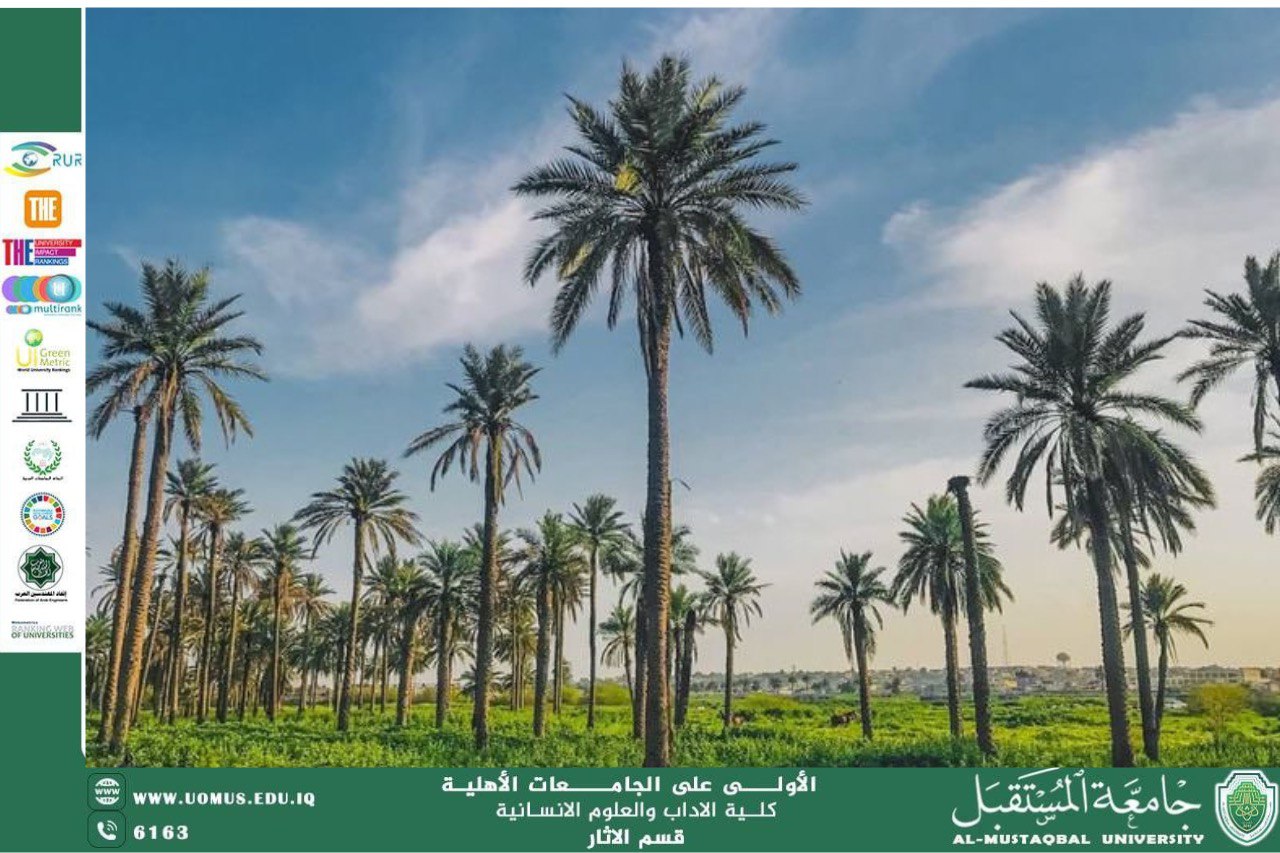
Trees and orchards occupied an important place in the lives of the inhabitants of Mesopotamia, as they were closely connected with the agricultural environment, the economy, and religious life alike. Cuneiform texts clearly reflect this interest in planting trees and organizing orchards, especially in major cities. The Sumerians and Babylonians realized the importance of trees in improving the environment and providing food, shade, and beauty for their cities; therefore, they devoted great attention to planting and maintaining orchards.
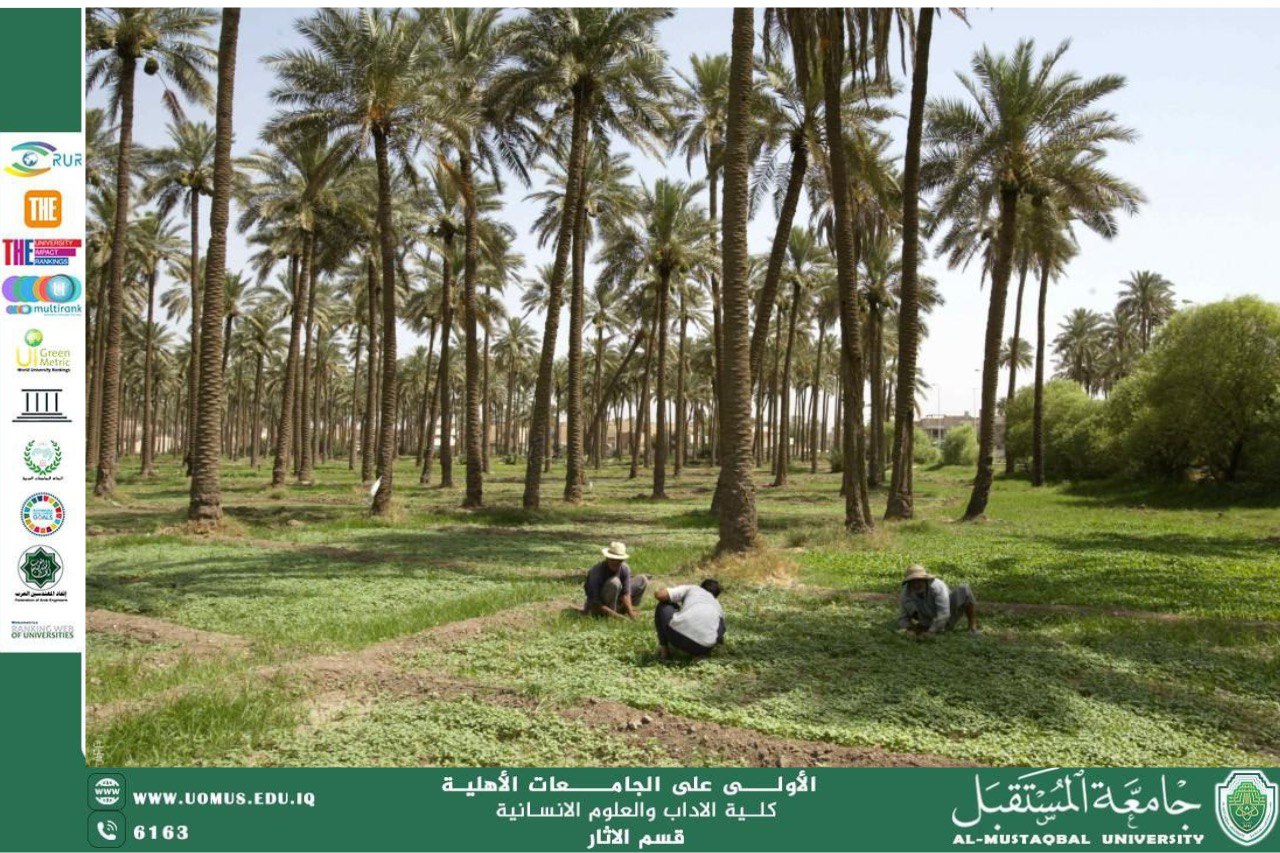
Sumerian and Babylonian cuneiform texts indicate the existence of vast areas of orchards within cities or in their outskirts. These orchards contained various types of fruit trees such as date palms, pomegranates, and figs, in addition to trees planted for decoration or for providing shade. In Sumerian texts, the word “GIŠ” appears to denote a tree or wood. Other terms referring to orchards also appear in the Akkadian language, such as “kirû,” meaning orchard. The kings of Mesopotamia paid particular attention to planting trees in their capitals and major cities, and orchards were considered a symbol of prosperity and stability.
Some cuneiform texts mention that kings planted trees in temples, palaces, and royal gardens. One Akkadian text states:
“ina kirî ša āli iṣṣū rabûti ušēriš”
“In the orchards of the city I planted great trees.”
This text shows the rulers’ concern for planting trees in cities not only for economic purposes but also for aesthetic and environmental reasons.
Another text refers to the care and irrigation of orchards:
“kirî u iṣṣū ana balāṭi āli”
“Orchards and trees are for the prosperity of the city.”
These texts indicate that tree planting was part of urban planning in ancient cities. Orchards were an important element in the life of society, providing food and economic resources for the population.
It is also worth mentioning that evergreen trees received special attention because they symbolized continuity and renewed life. Some trees were associated with religious rituals and seasonal celebrations that expressed the relationship between humans and nature and the renewal of life.
Today, this interest in trees can still be observed through certain environmental festivals and activities. Among them is the Tree-Planting Festival held at Al-Mustaqbal University, which aims to raise awareness about the importance of planting trees and preserving the environment. This festival represents a symbolic continuation of practices that existed in Mesopotamian civilizations, where people long ago understood the importance of trees and orchards for the prosperity of cities and the continuity of life.
The study of cuneiform texts clearly reveals that the Sumerians and Babylonians did not view trees and orchards merely as natural resources; rather, they regarded them as an essential part of the ecological and cultural system of the city. For this reason, they paid great attention to planting and caring for them, making them an important element in urban and economic planning. Thus, trees and orchards remain a testament to the deep relationship between the Mesopotamian people and their natural environment—a relationship that has continued through the ages to the present day.