
Faculty Member Ali Ihsan Abdul Ali of the Department of Archaeology wrote an article titled "The Description of Hilla by Foreign Travelers Through the Ages."
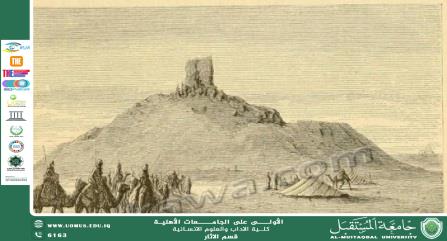
Description of Hilla by Foreign Travelers Through the Ages<br />Prepared by: Faculty Member Ali Ihsan Abdul Ali<br />Aligned with Sustainable Development Goal 4 (Quality Education)<br /><br />Introduction<br />Over the centuries, the city of Hilla has been visited on multiple occasions by foreign travelers who came for tourism, commerce, or scholarly purposes. These travelers recorded their impressions and observations of the city, thereby contributing to the documentation of its political, administrative, social, economic, military, and urban conditions over time. Although these impressions reflect personal perspectives, they remain an important source for understanding the city’s past.<br /><br />Accounts from Notable Travelers<br />Among these travelers, the Spanish traveler Benjamin al-Tatili (1130–1173 CE) pointed out the major landmarks of Hilla. He described the great Babylon Tower, which he referred to as "Nimrud Tower" or "Tower of Division." According to his account, the tower was built of brick, with foundations extending for two miles and a width of 240 cubits, while its height reached 100 "qasabah" (a traditional unit of measure). He also mentioned that the tower featured winding paths that allowed one to ascend to its summit, from which the surrounding areas could be seen up to a distance of 20 miles.<br /><br />The Iranian historian Abro (1362–1430 CE), in his work Dhail Jamia' al-Tawarikh ("The Tail of the Comprehensive Histories"), noted that Hilla became renowned during the eighth and ninth Islamic centuries for its production of pottery. These pottery pieces were distinguished by their floral and zoomorphic embroidery, with artisans demonstrating exceptional artistic skills that enhanced their commercial value and appeal.<br /><br />In 1629 CE, the traveler Philip al-Karmali described the inhabitants of Hilla, noting that they descended from well-known Arab tribes and were characterized by generosity and warm hospitality. He also explained that while the majority of the population were Muslims, there were also communities of Christians, Armenians, Yezidis, and Nestorians. Al-Karmali described the city as large, surrounded by mud walls, and featuring a bridge composed of large boats tethered by chains to the riverbanks.<br /><br />The Portuguese traveler Pedro, who visited the region between 1604 and 1605 CE, mentioned a caravanserai known as Khan al-Mahawil during his journey from Karbala to the ruins of Babylon. He noted that the surrounding area was fertile and the climate more temperate, and that the caravanserais were more comfortable—among them, one built by a Turkish lady as an act of devotion.<br /><br />In 1656 CE, the traveler Fenthano described Hilla as a city rich in palm trees and various plants, with a mild climate and bisected by the Euphrates River. He also noted the presence of several markets and modest industries, highlighting the warm treatment of visitors by the city's residents.<br /><br />In 1658 CE, the traveler Sebstiani, in his memoirs recounting his journey from Kufa to Hilla, described the road running alongside a river bordered by palm trees, noting that the area was densely inhabited. He attributed Hilla’s significance to its strategic location on the banks of the Euphrates.<br /><br />In 1663 CE, the Portuguese traveler Godinho commented on the enchanting nature of Hilla, describing it as a peaceful city surrounded by orchards, resembling a vast garden. He praised its temperate climate and gentle air, though he noted that its narrow and winding alleys made navigation difficult without a local guide.<br /><br />Al‑Mustaqbal University – The Premier University in Iraq.