
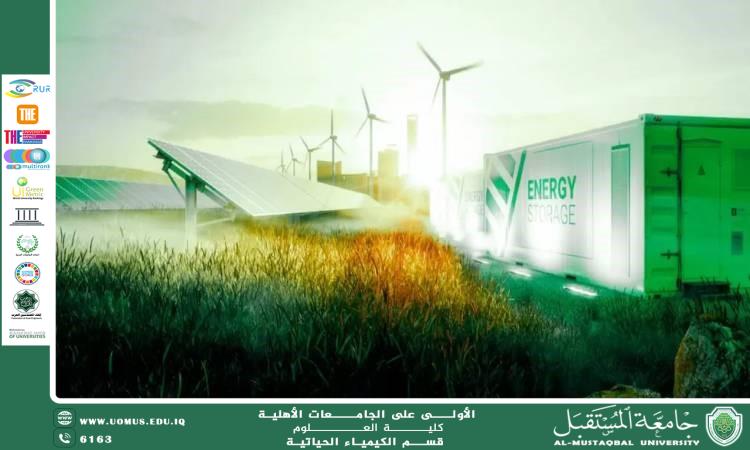
A scientific article by Prof. Dr. Nasser Abdul Hassan Nasser titled(Hydrogen Energy as a Strategic Tool for Investment in Sustainable Development)
With the global shift accelerating towards achieving sustainable development goals and reducing the carbon footprint, many countries and major institutions have started to focus on hydrogen energy as a promising source of clean power. This trend reflects a growing awareness of the importance of developing environmentally friendly alternatives that can play a strategic role in the new global economy, especially in light of climate change and increasing environmental pressures.<br />The Importance of Hydrogen Energy in Sustainable Development:<br />Green hydrogen, produced using renewable energy sources such as solar and wind, is considered a cornerstone in achieving a global vision based on environmental sustainability and a clean economy. Adopting this type of energy helps reduce harmful emissions and enhances countries' ability to adapt to the demands of the global energy transition. It also contributes to reducing dependence on depletable natural resources such as oil and coal, ensuring a more secure future for upcoming generations.<br />The Role of Investment in Hydrogen Energy:<br />1. Stimulating Innovation:<br />Investment in the hydrogen sector encourages the development of new technologies in areas such as electrolysis, energy storage, and transmission—potentially revolutionizing global energy systems. It also enhances the role of universities and research centers in offering innovative and sustainable solutions.<br />2. Job Creation:<br />Expanding this sector requires a skilled workforce in various fields such as engineering, scientific research, maintenance, and environmental science. This opens up employment opportunities for thousands of individuals, particularly in communities aiming for economic transformation.<br />3. Economic Diversification:<br />Relying on hydrogen energy helps countries—especially oil-dependent ones—diversify their economies and reduce reliance on oil revenues, which strengthens their economic stability and improves their investment climate.<br />4. Enhancing Energy Security:<br />Hydrogen can be produced domestically using available resources, which reduces the need to import energy and gives nations greater control over their energy sources—especially during crises or periods of high traditional energy prices.<br />Key International Examples:<br />• Germany:<br />Launched a national green hydrogen strategy involving billions of euros in investments to develop infrastructure, support research, and expand industrial and commercial hydrogen applications—positioning itself as a global leader in this field.<br />• Saudi Arabia:<br />Is building "NEOM", a smart city envisioned as a global hub for green hydrogen production and export, using abundant solar and wind resources. The city serves as a global model for sustainable energy transformation.<br />• Japan:<br />One of the first countries to bet on hydrogen for transportation. Japan is expanding its use in cars, trains, and even electricity generation, as part of a national plan to reduce emissions and enhance energy independence.<br />Challenges Facing Hydrogen Investment:<br />1. High Production Costs:<br />Producing green hydrogen remains expensive compared to conventional energy sources, requiring government support and financial incentives to encourage private sector investment.<br />2. Need for Integrated Infrastructure:<br />Transport, storage, and distribution networks require massive investments and long-term planning, especially in countries that have yet to develop flexible and upgradable energy systems.<br />3. Competition with Other Energy Sources:<br />Despite being clean, hydrogen still faces competition from more mature renewable sources like solar and wind in terms of cost and application. This makes scaling up hydrogen usage a challenge that requires precise strategy and international collaboration.<br />Investing in hydrogen energy is no longer just a future option—it has become a strategic necessity to face global environmental and economic challenges. With growing governmental support, increasing public awareness, and advancing technologies, hydrogen represents a cornerstone in building a more resilient, sustainable, and environmentally just global economy. Through strong international partnerships and carefully planned investments, this promising energy source can help redefine the future of energy and the global economy.<br /><br />Al-Mustaqbal University, the first university in Iraq.<br />