"A scientific article by Lecturer Dr. Karrar Majid Obaid, titled:Renewable Energy and the Green Future "
Renewable energy is one of the most critical global issues of the 21st century, representing the optimal solution to the energy crisis and climate change. With significant population growth and the excessive consumption of fossil fuels, the world is in urgent need of clean energy sources that preserve the environment and ensure resource sustainability for future generations.
First: The Concept of Renewable Energy
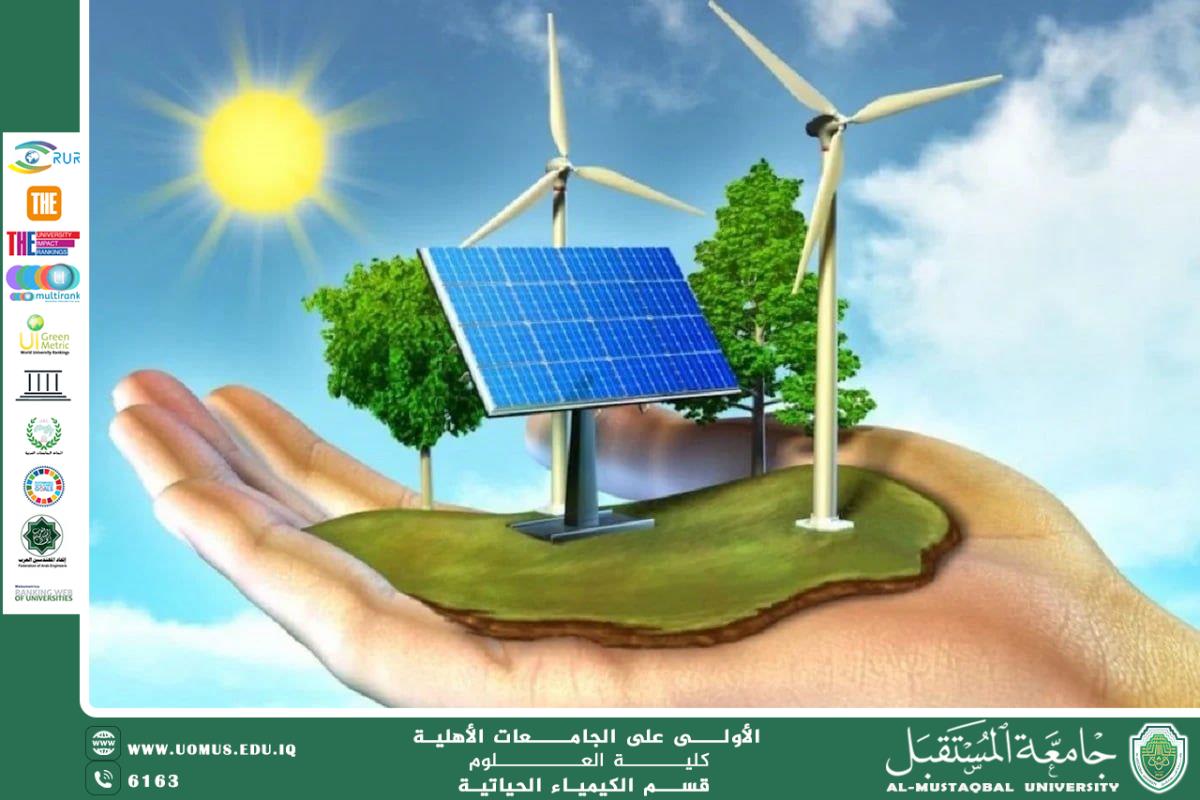
Renewable energy is derived from natural sources that are inexhaustible or constantly replenished, such as sunlight, wind, water, biomass, and geothermal energy. These sources are characterized by not causing polluting emissions or greenhouse gases, unlike fossil fuels (oil, coal, and gas).
Second: Types of Renewable Energy
1. Solar Energy
Solar panels are used to convert sunlight into electricity or heat. It is one of the cleanest and most widespread energy sources, used in homes, farms, and even modern vehicles.
2. Wind Energy
It relies on air movement to rotate massive turbines that convert kinetic energy into electricity. Wind farms are widespread in Europe, China, and the United States.
3. Hydropower
It is extracted from the movement of water in dams and rivers. It is one of the oldest types of renewable energy and is used to generate a significant portion of the world's electricity.
4. Biomass Energy
It is produced from organic materials like plants and agricultural waste, converted into biofuels such as ethanol and biodiesel.
5. Geothermal Energy
It relies on the Earth's internal heat to generate electricity or provide heating. It is widely used in countries like Iceland and New Zealand.
Third: The Importance of Renewable Energy in Building a Green Future
1. Reducing Environmental Pollution
It reduces carbon dioxide emissions and toxic gases that lead to global warming.
2. Achieving Energy Security
It reduces countries' dependence on imported oil and provides permanent local energy sources.
3. Stimulating the Green Economy
It creates new job opportunities in manufacturing, maintenance, and scientific research in clean energy.
4. Preserving Natural Resources
Because it is derived from nature without depleting it, it ensures energy sustainability for future generations.
Fourth: Challenges Facing Renewable Energy
· High initial installation costs for solar systems or wind turbines.
· The need for energy storage, as some sources depend on variable natural factors like sun and wind.
· Lack of environmental and technical awareness in some developing countries.
Fifth: The Future of Renewable Energy
The world is moving towards achieving carbon neutrality by 2050, which means reducing carbon emissions to zero. Countries are racing to establish green cities that rely entirely on clean energy, such as "NEOM" in Saudi Arabia and "Masdar City" in the UAE. New technologies are also developing, such as flexible solar cells and advanced batteries for energy storage and efficiency improvement.
Renewable energy represents the path towards a green and sustainable future, balancing human needs with environmental protection. With continued scientific and technological progress, clean energy will become the foundation for a safe life, a strong economy, and a healthy planet for future generations.
Al-Mustaqbal University, The First University in Iraq.