Lecturer Russul Mushtaq organized a scientific article entitled “The Role of the Enteric Nervous System in Regulating Mood and Behavior
This scientific article was organized by Lecturer Russul Mushtaq from the Department of Community Health Technologies, addressing one of the contemporary topics in medical sciences, namely the role of the Enteric Nervous System (ENS) in influencing human mood and behavior.
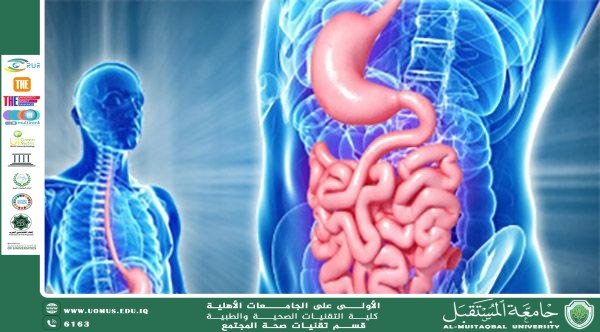
Recent research has demonstrated that the gastrointestinal tract is not limited to digestive functions alone; rather, it possesses a sophisticated neural network known as the Enteric Nervous System, which is sometimes referred to as the “second brain” due to its relative independence from the central nervous system and its ability to regulate numerous physiological processes within the body.
Modern scientific studies have also revealed a strong relationship between the gut and the brain known as the Gut–Brain Axis, a complex communication system that links the gastrointestinal tract with the central nervous system and directly influences psychological states and behavior.
The Enteric Nervous System is considered one of the largest neural networks in the human body outside the brain, consisting of more than 500 million neurons distributed throughout the walls of the gastrointestinal tract.
This system is composed of two main neural networks: the Auerbach’s plexus (myenteric plexus) and the Meissner’s plexus (submucosal plexus). These two networks work in coordination to regulate intestinal motility, digestive enzyme secretion, hormonal release, and gastrointestinal blood flow.
Although the Enteric Nervous System operates with a degree of independence, it maintains continuous communication with the central nervous system through multiple neural pathways, most notably the vagus nerve, which serves as a major communication channel transmitting neural signals between the gut and the brain.
The Gut–Brain Axis represents a bidirectional communication system that involves neural pathways, hormones, neurotransmitters, as well as the gut microbiome, which consists of a vast community of microorganisms residing in the gastrointestinal tract.
Studies indicate that approximately 90% of serotonin, one of the most important neurotransmitters responsible for mood regulation, is produced in the gut by specialized intestinal cells, highlighting the crucial role of the digestive system in influencing mental health.
The gut microbiota also plays a fundamental role in this interaction. Certain beneficial bacterial species such as Lactobacillus and Bifidobacterium contribute to the production of important neuroactive compounds including GABA and serotonin, which directly affect mood regulation and behavior.
Conversely, an imbalance in the gut microbiome may increase the likelihood of developing psychological disorders such as anxiety and depression. Studies have also demonstrated a relationship between chronic gastrointestinal diseases such as irritable bowel syndrome (IBS) and Crohn’s disease, and higher rates of psychological disturbances.
The Enteric Nervous System represents one of the most significant modern discoveries in the fields of neuroscience and psychiatry, as it highlights the profound connection between gastrointestinal health and human mental well-being.
Understanding the mechanisms of communication between the gut and the brain opens new scientific horizons for developing innovative therapeutic strategies targeting the gut microbiome or vagus nerve stimulation in order to improve mood and reduce psychological disorders.
Therefore, maintaining gut health is no longer limited to digestive function alone, but has become an essential component in preserving human psychological and emotional balance.
Al-Mustaqbal University
The First University in Iraq