A Scientific Article Entitled The Effect of Sleep Deprivation on Cognitive Brain Functions
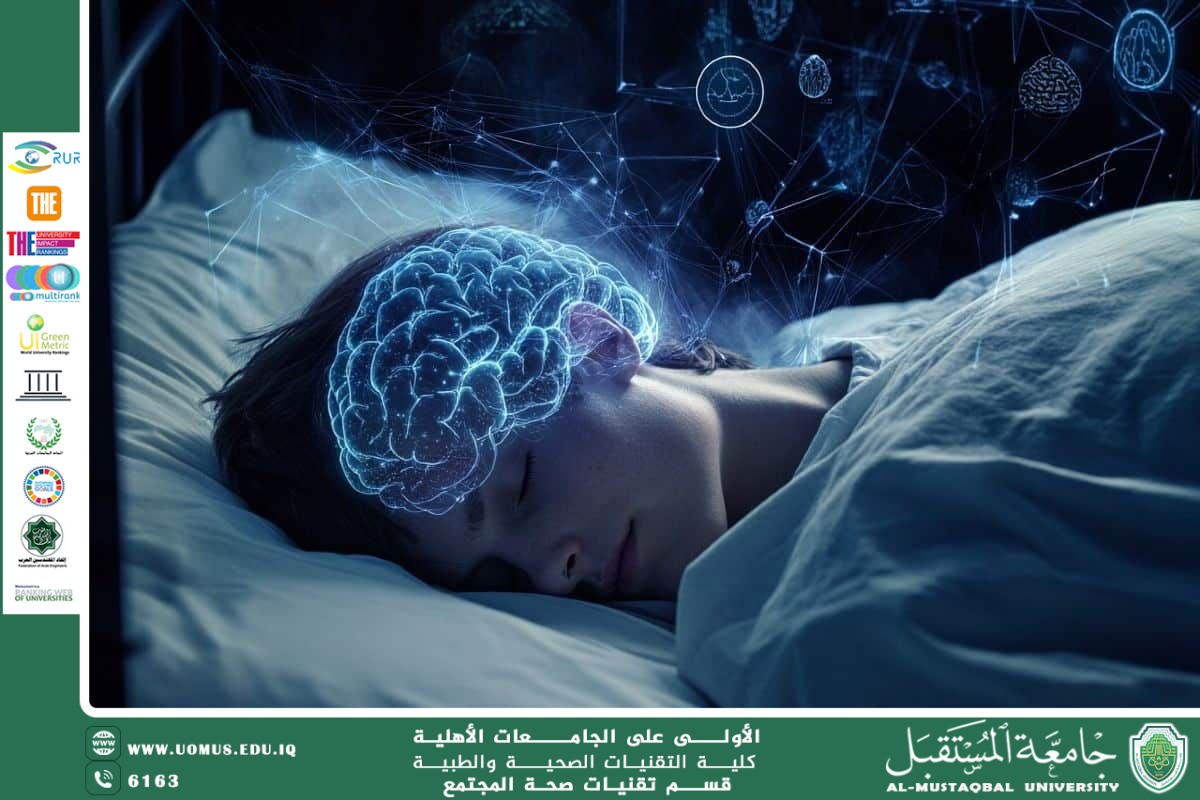
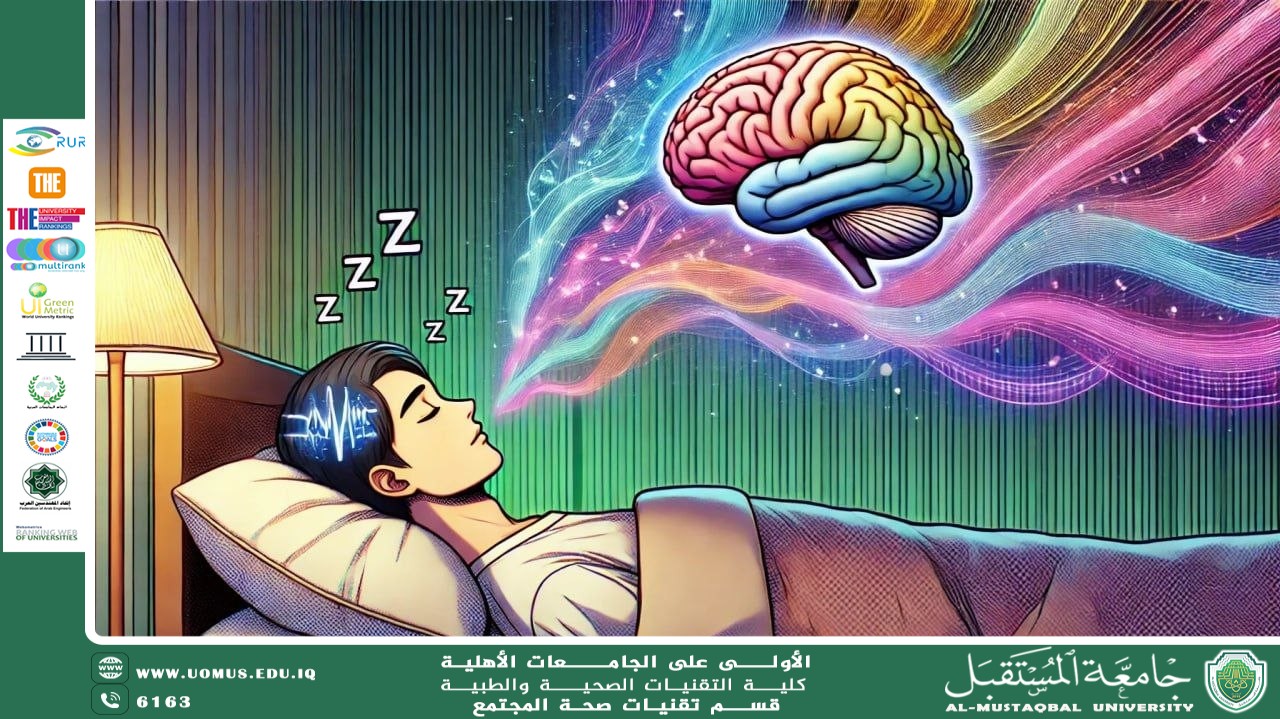
Ms. Rusul Mushtaq organized a scientific article addressing one of the important topics in medical sciences, namely the effect of sleep deprivation on cognitive brain functions. Sleep is considered one of the fundamental pillars for maintaining both physical and mental health, as it plays a crucial role in supporting brain efficiency and regulating its cognitive processes. Sleep is not merely a state of passive rest; rather, it is an active process during which the brain engages in self-repair and enhances memory and learning. With the acceleration of modern lifestyles and increasing daily stress, sleep deprivation has become a widespread phenomenon that directly affects cognitive and behavioral performance.
Sleep deprivation leads to significant impairments in cognitive functions, particularly attention and concentration, which are markedly affected after periods ranging from 24 to 36 hours without sleep. This results in reduced sustained attention due to decreased activity in brain regions responsible for cognitive processing. Memory and learning are also negatively impacted, as sleep plays a vital role in memory consolidation. In its absence, disruptions occur in information transfer within the brain, leading to impaired memory formation and difficulty in information retrieval. Decision-making processes are also affected due to reduced activity in the prefrontal cortex, resulting in impulsive judgments and poor risk assessment.
The effects of sleep deprivation are associated with neurological and physiological changes in the brain. There is a decrease in the level of the neurotransmitter dopamine, which is responsible for alertness and motivation, alongside an increase in adenosine levels, which induces drowsiness and suppresses neuronal activity. Additionally, communication between different brain regions—particularly between the hippocampus and the prefrontal cortex—is disrupted, negatively affecting short-term memory and overall cognitive performance.
The consequences of sleep deprivation are not limited to cognitive aspects; they extend to behavioral and psychological effects, including mood fluctuations, increased stress levels, and difficulty in emotional regulation. Furthermore, slower response times and decreased attention increase the likelihood of errors and accidents, سواء in occupational settings or during driving.
In the long term, chronic sleep deprivation is associated with an increased risk of neurological and psychological disorders, such as Alzheimer’s disease and depression. This is attributed to the accumulation of harmful proteins in the brain, such as beta-amyloid, along with the brain’s reduced ability to eliminate these substances during sleep.
Accordingly, sleep is a fundamental biological necessity for maintaining brain integrity and optimal cognitive function. Sleep deprivation leads to significant disruptions in mental and behavioral processes, highlighting the importance of obtaining adequate sleep as an essential component of a healthy lifestyle.
Al-Mustaqbal University
The First University in Iraq