Sustainable Nutrition: A Vision for the Future of Animal Production and Food Security
A research paper by Assistant Professor M.M. Rasha Fajr Kazar.
The livestock sector is a strategic pillar of the global food security system, given its pivotal role in providing high-quality protein. As environmental and climate challenges escalate and economic volatility increases, the concept of “sustainable nutrition” has emerged as an imperative to ensure the sector’s efficiency by balancing animal needs with the conservation of natural resources and the reduction of carbon emissions.
First: The Concept and Dimensions of Sustainable Nutrition
Sustainable nutrition goes beyond the concept of traditional feed provision to become an integrated strategy aimed at:
• Maximizing production efficiency: Achieving the highest growth and production rates with the least amount of feed.
• Environmental protection: Reducing greenhouse gas emissions (such as methane) and lowering the farm’s carbon footprint.
• Economic viability: Reducing production costs through the rational use of available resources.
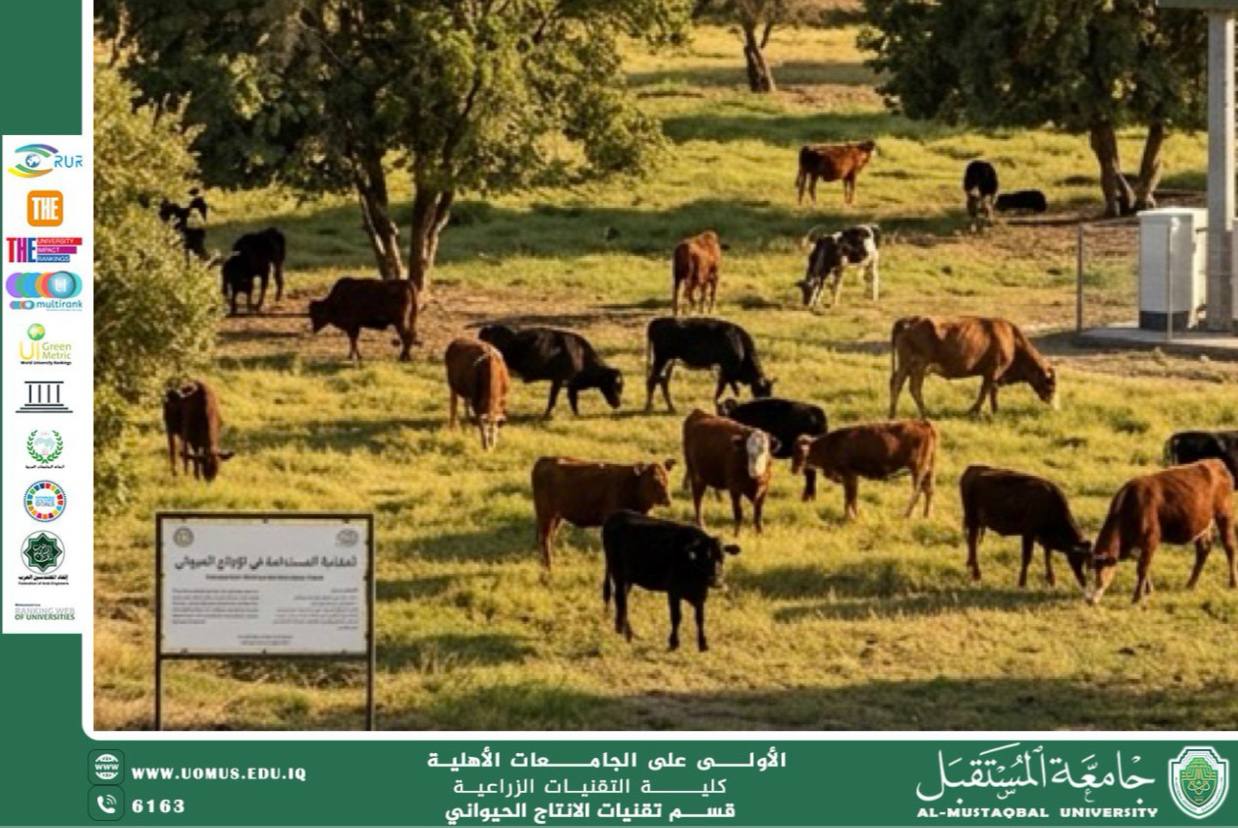
• Resource sustainability: Preserving soil and water by selecting renewable feed materials that do not compete with human food.
Second: Practical Strategies for Feed Sustainability
The modern approach to nutrition is based on five key pillars:
1. Recycling agricultural waste: Converting crop residues (such as straw, hay, and corn cobs) into feed resources with nutritional value after physical or chemical processing.
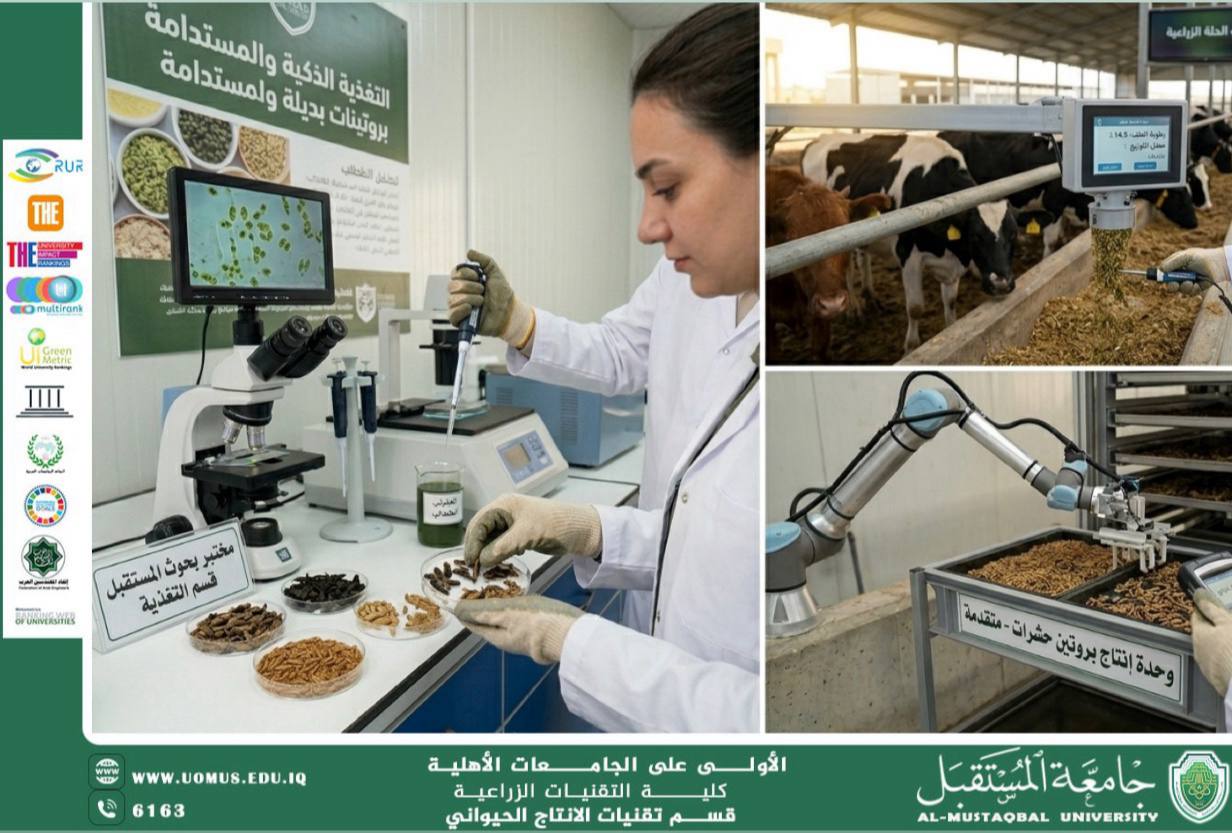
2. Alternative protein sources: A shift toward non-traditional feeds such as algae, insects, and food industry byproducts to reduce pressure on soy and corn.
3. Improving feed conversion efficiency (FCR): Using bio-additives such as enzymes and probiotics to enhance digestion and absorption.
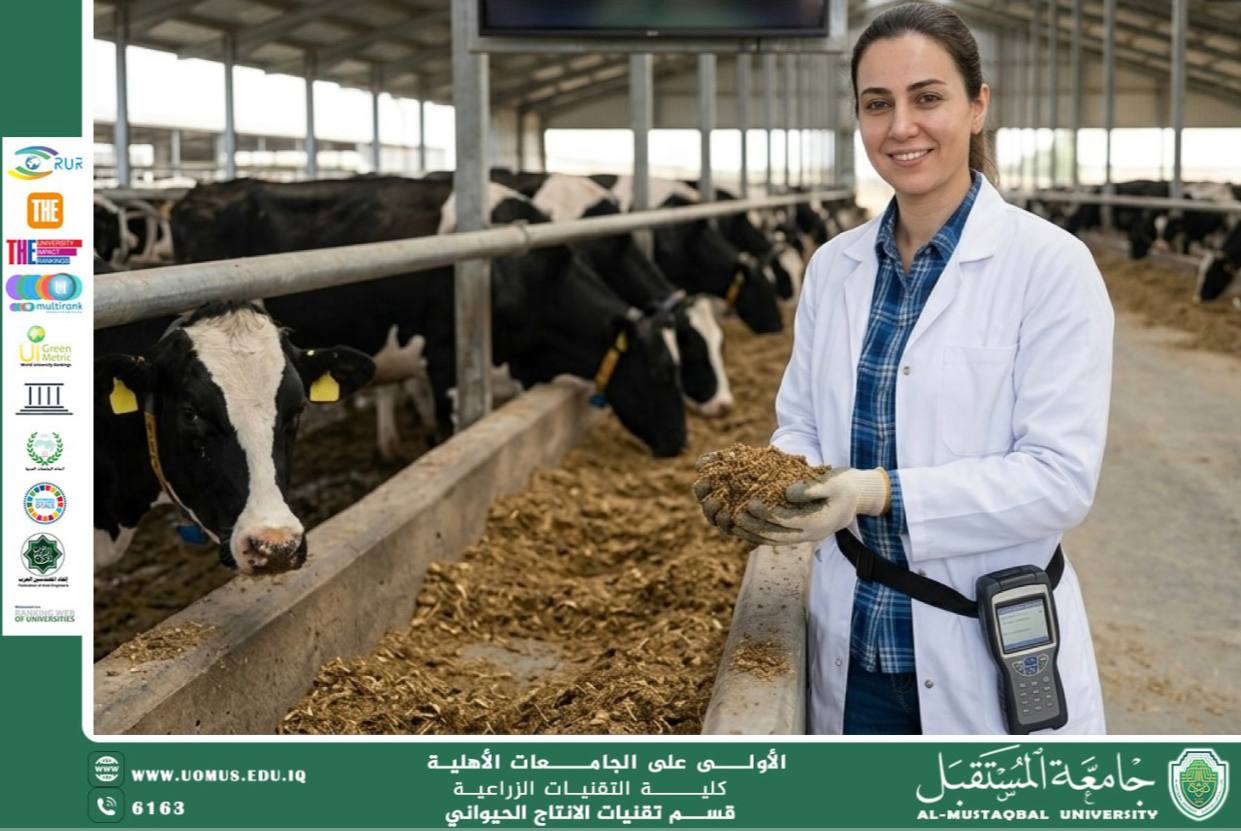
4. Precision feeding techniques: Utilizing smart technology to accurately provide animals with their actual nutritional needs, thereby preventing waste and reducing nitrogen and phosphorus emissions into the environment.
5. Adapted breeds: Selecting and breeding breeds with naturally high feed conversion efficiency and the ability to withstand harsh environmental conditions.
Third: Challenges and Obstacles
Despite significant gains, sustainable feeding faces obstacles that require innovative solutions, the most important of which are:
• A knowledge gap and lack of awareness of modern technologies among some farmers.
• The initial costs of some smart feeding systems.
• The impact of climate change on the abundance and quality of traditional forage crops.
Fourth: Strategic Impact on Food Security
This system contributes to strengthening countries’ food independence by:
• Reducing dependence on feed imports and conserving foreign currency.
• Ensuring the continuity of meat and dairy production at stable prices and high quality.
• Protecting ecosystems for future generations while continuing to meet growing market demands.
The shift toward sustainable nutrition in the livestock sector is no longer a scientific luxury, but rather a necessary path to addressing global crises. The success of this transition requires close collaboration between academic institutions, farmers, and policymakers to adopt policies that support innovation in feed alternatives and the application of green technologies, leading to comprehensive and sustainable agricultural development.
Al-Mustaqbal University… the leading private university in Iraq.