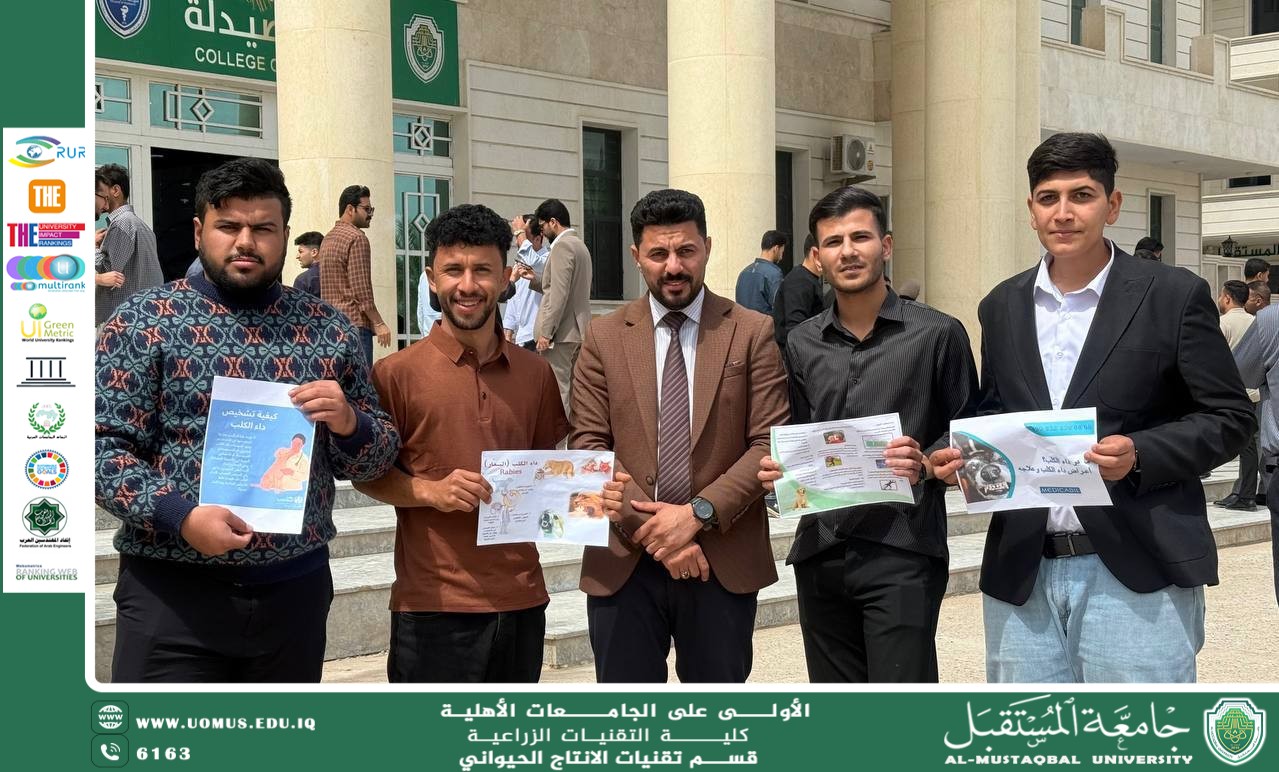
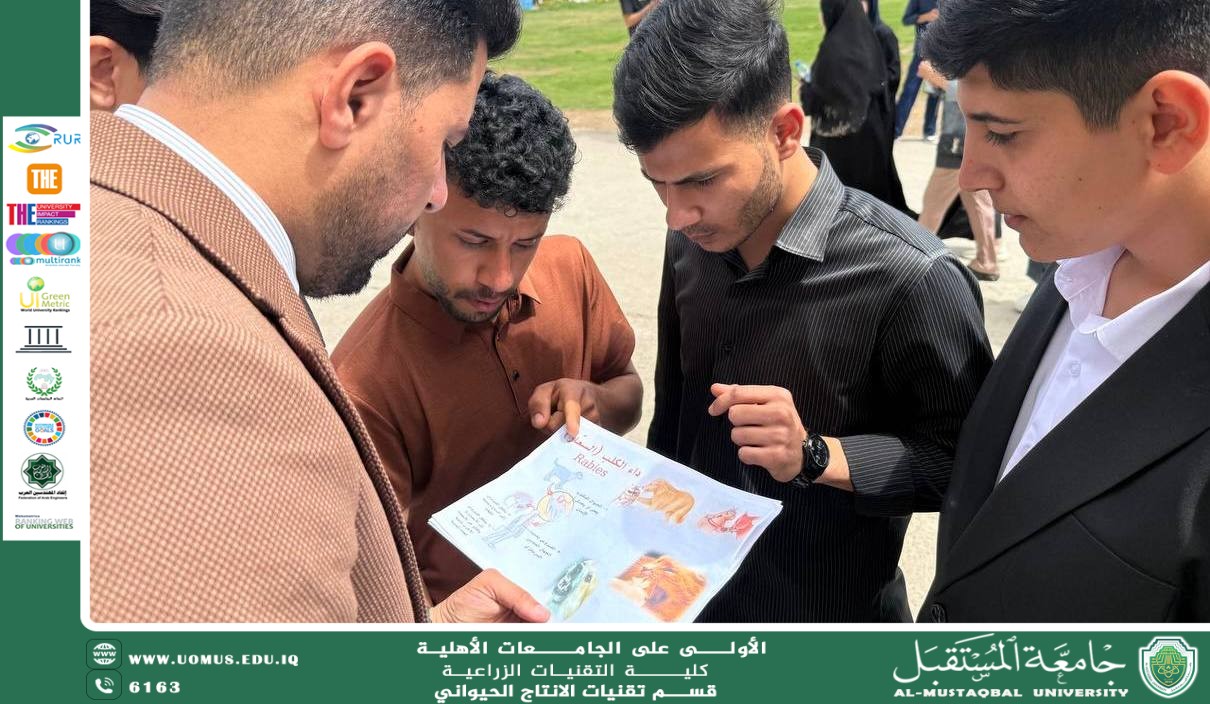
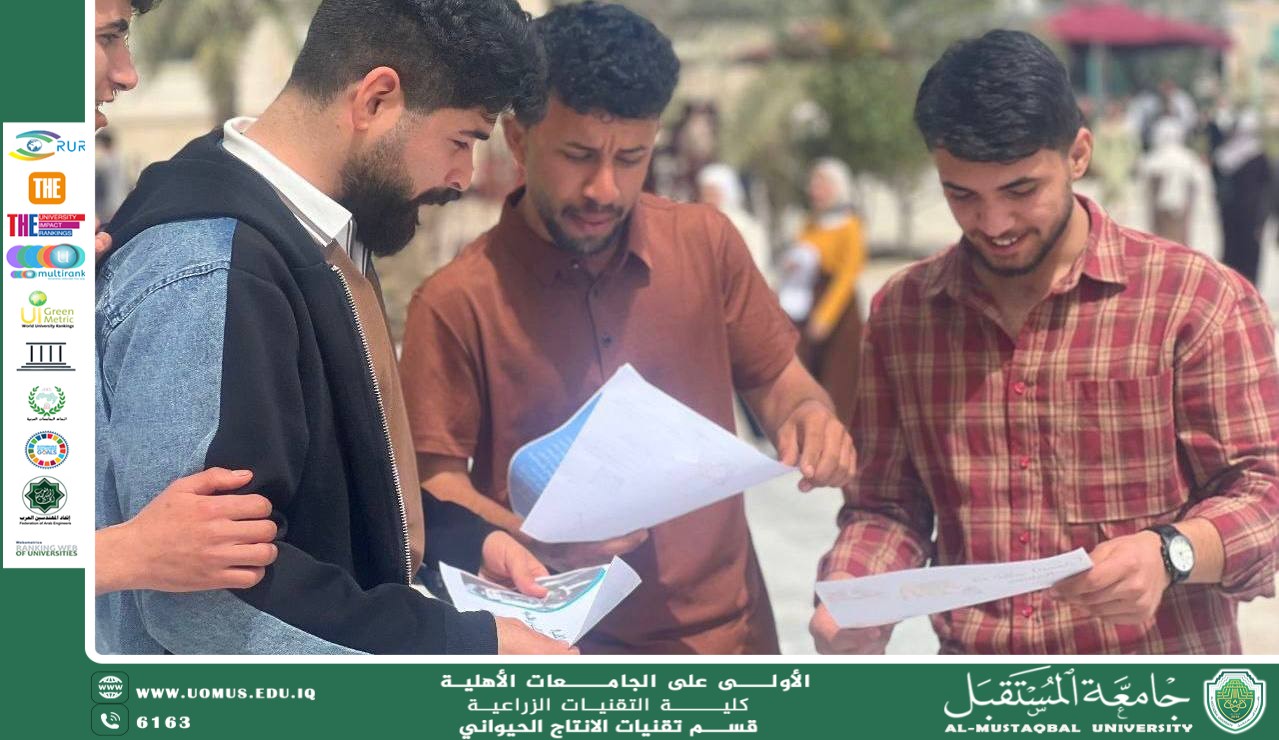
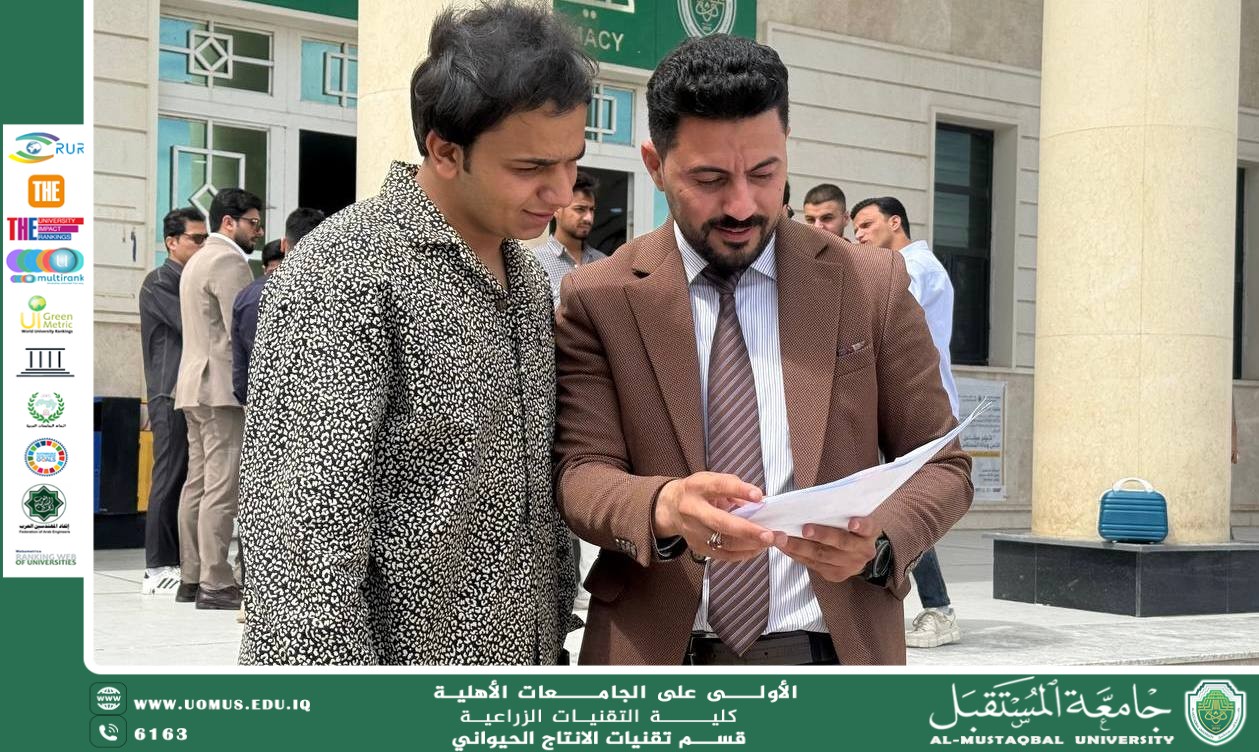
College of Agricultural Technology Organizes Awareness Campaign on Rabies and its Public Health Impact
Under the guidance and supervision of Professor Reda Abbas Hamid, the College of Agricultural Technology held an intensive awareness session on Sunday, March 29, 2026. The event focused on "Rabies" (Hydrophobia), one of the most critical health challenges facing the community, aiming to enhance public safety and minimize infection risks.
What is Rabies?
Rabies is a viral disease that attacks the central nervous system. It is primarily transmitted from animals to humans through saliva, most commonly via bites or scratches from infected animals, particularly stray dogs. It is considered one of the deadliest viral diseases; once clinical symptoms appear, it is nearly 100% fatal.
The spread of stray animals combined with a lack of health awareness poses a real threat to public health. Delays in seeking immediate medical attention after an exposure significantly increase the risk of mortality.
Objectives of the Awareness Activity
• Raising Awareness: Educating the community on the severity of the disease and its transmission methods.
• Behavioral Guidance: Training individuals on the correct emergency protocols to follow immediately after a potential exposure.
• Preventive Immunization: Emphasizing the necessity of regular vaccinations for pets.
• Reducing Infection Rates: Striving for a rabies-free community through continuous health education.
Prevention and Emergency Response
To stay safe and prevent the spread of the virus, the following steps are crucial:
1. Immediate Wound Care: Wash the wound thoroughly with water and soap for at least 15 minutes immediately after a bite or scratch.
2. Urgent Medical Consultation: Head to the nearest hospital or health center to receive the post-exposure vaccine and immunoglobulin without delay.
3. Pet Vaccination: Ensure all domestic animals are fully vaccinated and their boosters are up to date.
4. Avoid Stray Animals: Educate children to stay away from stray or unfamiliar animals, even if they appear friendly.
Al-Mustaqbal University… the leading private university in Iraq.