Challenges of Improving Community Health in Iraq Between Reality and Reform
Community health is a fundamental pillar for achieving sustainable development and enhancing population well-being. Iraq’s healthcare system was once among the most advanced in the Middle East; however, it has significantly deteriorated due to prolonged conflicts, economic sanctions, and political instability. International health reports indicate that the country continues to face major challenges, particularly weak infrastructure and limited access to essential healthcare services.
Healthcare infrastructure represents a critical barrier, as many hospitals and primary healthcare centers suffer from shortages of equipment, medicines, and basic services. Years of conflict have led to the destruction and neglect of numerous health facilities, thereby reducing the system’s capacity to deliver effective care. This issue is more pronounced in rural areas, where access to healthcare is significantly lower compared to urban regions.
Another major challenge is the shortage of qualified healthcare professionals, including physicians, nurses, and allied health workers. This is largely attributed to brain drain, where skilled personnel migrate abroad due to low salaries, poor working conditions, and security concerns. Additionally, the uneven distribution of healthcare workers further limits access to services in underserved areas.
Governance and financing issues also play a significant role in weakening the healthcare system. Underfunding, inefficient resource allocation, and administrative corruption contribute to reduced service quality and accessibility. The absence of a comprehensive health insurance system places a financial burden on individuals, often leading to delayed or forgone medical care.
Inequitable access to healthcare services remains a major concern. Rural populations and marginalized groups face multiple barriers, including transportation difficulties, financial limitations, and lack of nearby facilities. Gender disparities further restrict women’s access to maternal and reproductive health services, negatively impacting maternal and child health outcomes.
The quality of healthcare services varies considerably across the country due to inadequate training, limited supervision, and shortages of essential medicines. Primary healthcare services, which are crucial for improving community health, remain underdeveloped due to poor management and insufficient resources.
Iraq also faces a dual burden of communicable and non-communicable diseases, compounded by weak preventive care systems. Gaps in immunization coverage and limited health education programs hinder disease prevention efforts. Moreover, conflict-related mental health issues place additional strain on the healthcare system.
Finally, the lack of advanced health information systems and modern technologies limits effective planning and decision-making. Fragmented data systems hinder monitoring, evaluation, and policy development.
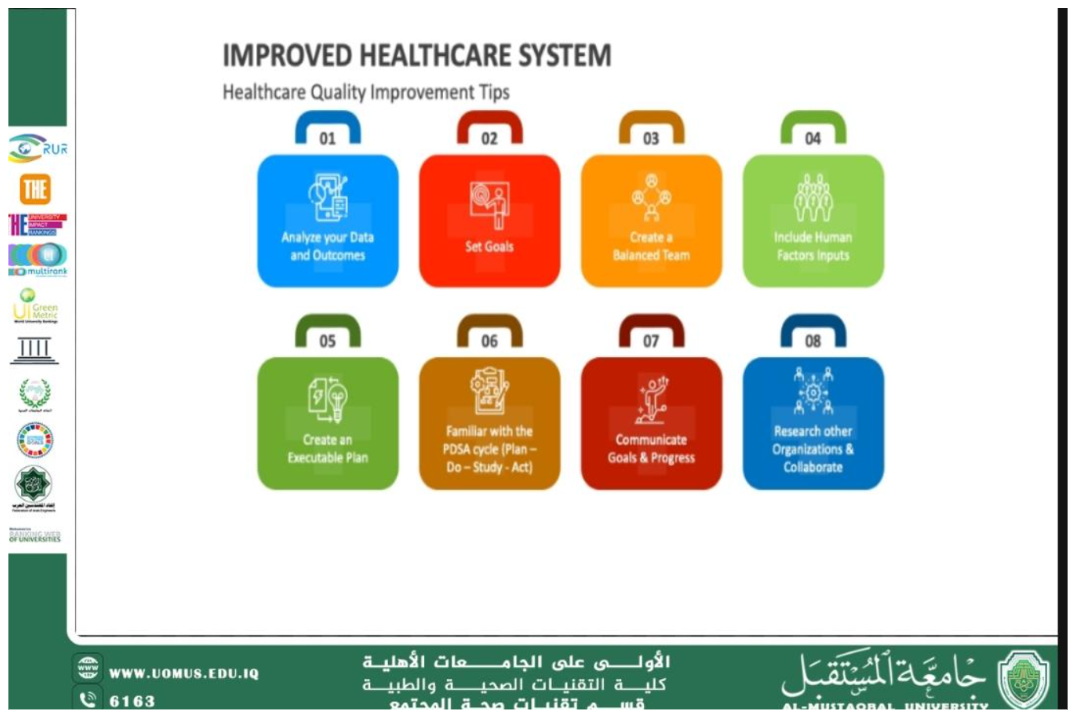
In conclusion, improving community health in Iraq requires addressing interconnected challenges, including infrastructure deficits, workforce shortages, governance issues, and inequitable access to services. Strengthening primary healthcare, increasing investment, enhancing workforce capacity, and adopting modern technologies are essential steps toward achieving sustainable improvements. Collaborative efforts between the government, international organizations, and local communities are crucial for building a resilient and equitable healthcare system.
Al-Mustaqbal University: The First University in Iraq.